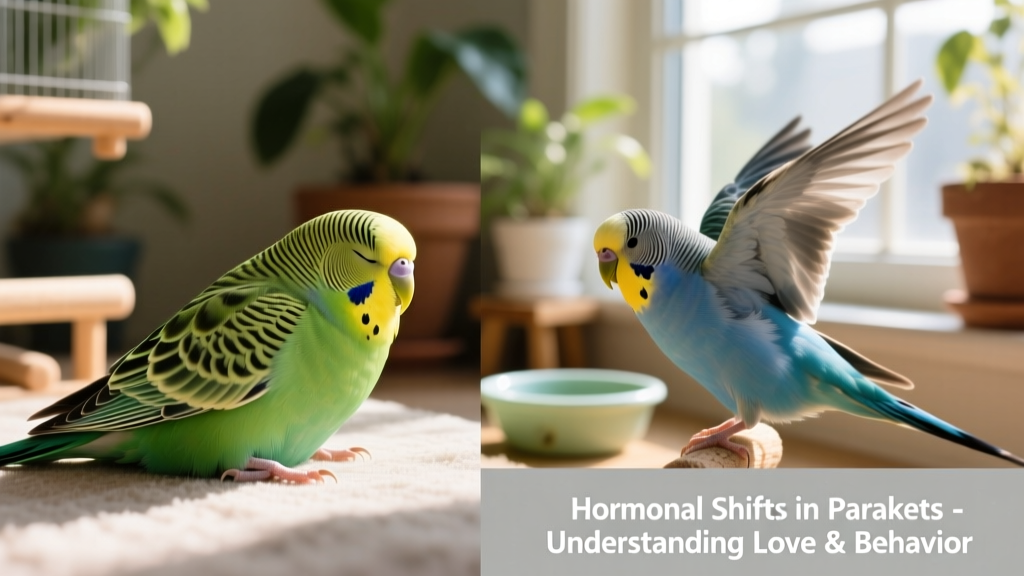
Hormonal Parakeet Behavior
If you’ve had your pet budgie for a while and suddenly notice unusual behavior, don’t worry—there’s good news. First, your parakeet is likely experiencing typical hormonal shifts. Second, there are simple, effective steps you can take to reduce hormonal triggers and help your bird return to its calm, affectionate self.
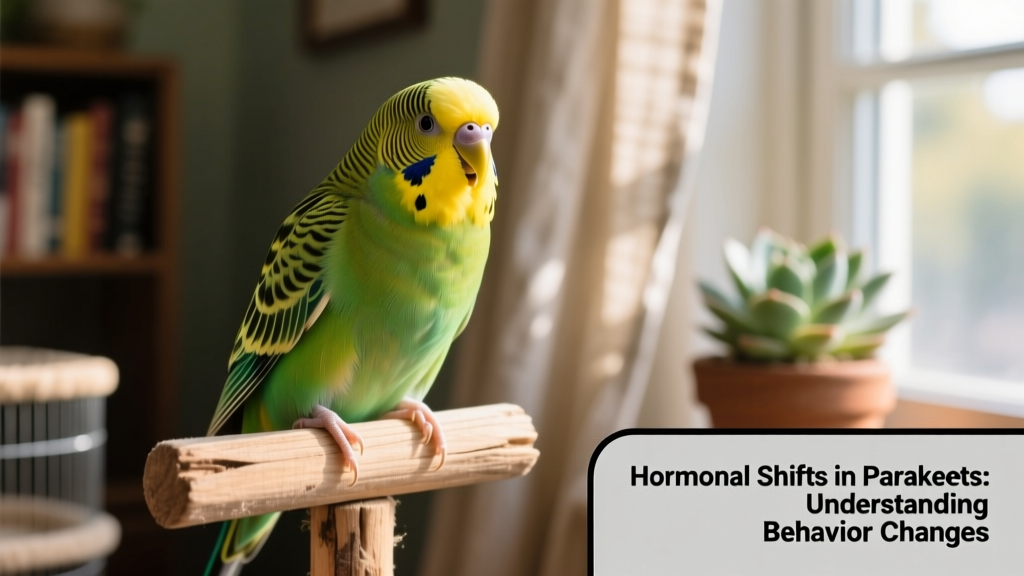
Larry Nemetz, DVM, of The B.I.R.D. Clinic in California, explains that hormonal behavior stems from rising estrogen and testosterone levels, which influence both physical appearance and actions. These changes vary between males and females—and even among individuals.
Bird expert Chrys Meatyard notes that not all budgies show obvious signs: “Some birds don’t display hormonal behavior at all, while others become visibly stressed during this time.” A single, hormonal budgie may attempt to mate with its human caregiver, a toy, a perch—or anything that catches its attention. Paired budgies often bond and breed, while unpaired females can lay infertile eggs without a mate.
Common Hormonal Behaviors
Aggression
Aggression is one of the most noticeable hormonal responses—and gender often plays a role. Samuel Vaughn, DVM, Dip. ABVP, confirms that hormonal aggression can include refusing to step up, hissing when a hand enters the cage, or biting.
During peak hormonal periods (typically lasting three to six weeks), Dr. Vaughn recommends giving female budgies quiet, undisturbed time in their cage. You may also need to clean the cage more frequently, as hormonal females often produce large, watery droppings.
Courtship
A female budgie signaling readiness to mate may squat low on her perch, spread her wings slightly, and emit soft cooing sounds. She’ll often direct this behavior toward a favorite person—sometimes exclusively. Even seemingly harmless items like mirrors can trigger courtship displays, including regurgitation.
To gently discourage this, Dr. Nemetz advises temporarily removing mirrors and nest boxes from your budgie’s environment.
Regurgitation
When a budgie regurgitates food toward you, it’s expressing deep affection—not illness or distress. As Meatyard explains, “People often accept this behavior more readily once they understand it’s a sign of bonding.”
If regurgitation becomes uncomfortable, redirect your bird’s attention *before* the behavior escalates—gently placing it back in its cage, on its play stand, or offering a new activity. Never scold or punish your budgie for regurgitating. Doing so may confuse your bird and weaken your bond.
This behavior also serves an important biological purpose: male budgies regurgitate food to feed mates and chicks—a natural instinct rooted in parenting.
Masturbation
Both male and female budgies may engage in self-stimulatory behavior—such as squatting and rubbing against perches or cage bars. This is completely normal. However, if your budgie begins doing this while sitting on your hand, it’s perfectly fine to gently encourage it to move elsewhere.
Chris Davis, a certified parrot behavior consultant, suggests either calmly returning your bird to its cage or play gym—or gently jiggling your hand to make continuation less comfortable. Immediately follow any redirection with praise and positive engagement—like playing with a favorite toy or offering a treat.
Mike Rankin, chairman of the Budgerigar Association of America, adds that light head scratches can be an effective distraction: “It initiates preening and interrupts the mating cycle naturally.”
Nesting
Unlike larger parrots, budgies rarely shred materials to build nests—they prefer simplicity. So nesting behavior isn’t always obvious. Still, hormonal females—even those living alone—may begin laying eggs regardless of whether a mate or nest box is present.
Without access to a proper nesting area, a female may lay eggs on the cage floor, inside food or water dishes, or even in household nooks she deems safe. Meatyard notes that free-flighted budgies will choose spots where they feel secure.
Dr. Vaughn warns that if your budgie starts pulling paper or bedding from the bottom of the cage, remove it promptly—she may seek out unusual nesting spots, like behind sofas or inside cabinets. Always supervise your budgie outside the cage during hormonal periods.
That said, not every female budgie lays eggs—even with strong hormonal surges. Like many aspects of parakeet care, egg-laying remains highly individual.