Guppy Fish Care Sheet
Guppies are one of the most popular fish in freshwater aquariums. For potential guppy owners—and anyone considering adding them to their home—understanding proper care is essential for keeping these vibrant, active fish healthy and thriving.
Key Takeaways
- Keeping guppies is an excellent introduction to fishkeeping—they’re hardy, engaging, and relatively low-maintenance.
- With proper care, guppies can live up to three years.
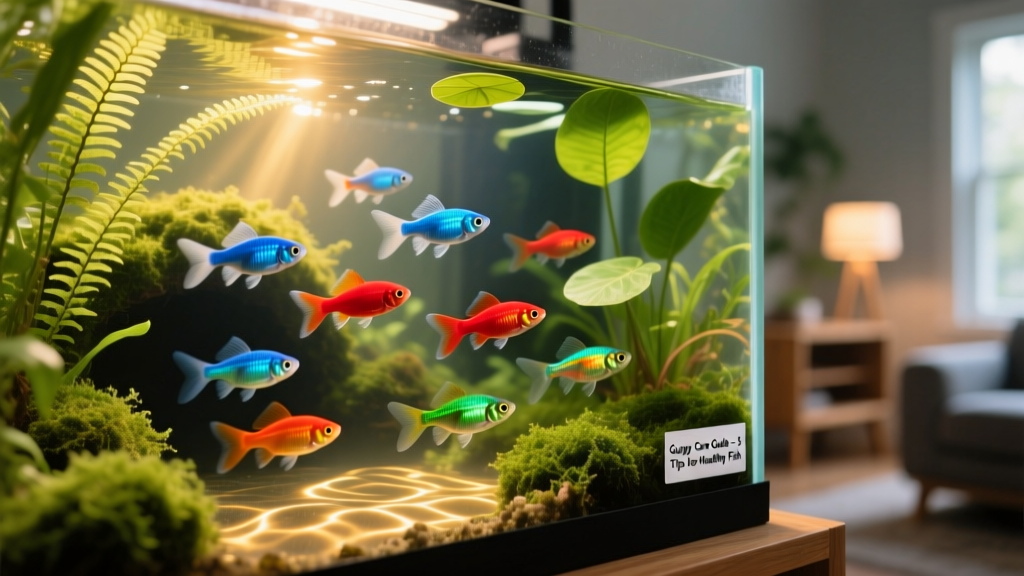
- They’re highly social and thrive best in groups—not just for their well-being, but also to display natural schooling behavior.
Fun Facts
- Guppies have been selectively bred for decades, resulting in hundreds of stunning color patterns and fin shapes.
- They flourish in community settings—ideally with other guppies—and can coexist peacefully with compatible species like small rainbowfish, swordtails, and non-aggressive tetras.
- Because they’re livebearers, female guppies often give birth to fully formed fry—even before you’ve had time to confirm pregnancy.
Habitat
Unless you maintain an all-male tank, your guppy population will likely grow quickly. A minimum of 10 gallons is recommended to comfortably house several adult pairs—and any fry that may develop. Since guppies can leap up to seven times their body length, always use a securely fitted lid or canopy. Maintain water temperature between 72–82°F using a reliable heater.
Whenever possible, choose the largest tank your space and budget allow—overcrowding stresses fish, compromises water quality, and increases disease risk. A robust filtration system is essential: it breaks down waste, removes toxins like ammonia and nitrite, and helps oxygenate the water.
Guppies do best in species-only groups, but they also integrate well with peaceful companions such as mollies, corydoras catfish, and platies. Avoid aggressive or fin-nipping species.
If breeding isn’t your goal, opt for an all-male tank—or if you include females, aim for a ratio of one male to two or three females to reduce stress on individual females.
Perform partial water changes every two to four weeks—replacing 10–25% of the tank volume each time. Always match the temperature of new water to the existing tank water. During setup or after adding new fish or equipment, test water parameters weekly for the first two months. Once stable, monthly testing—or testing whenever fish show signs of distress—is sufficient.
Key water parameters to monitor regularly include ammonia, nitrite, nitrate, and pH.
Diet
Guppies are omnivorous and enjoy variety. Offer high-quality flakes, pellets, and occasional treats like thawed frozen or freeze-dried foods (never feed frozen food directly—always thaw it first).
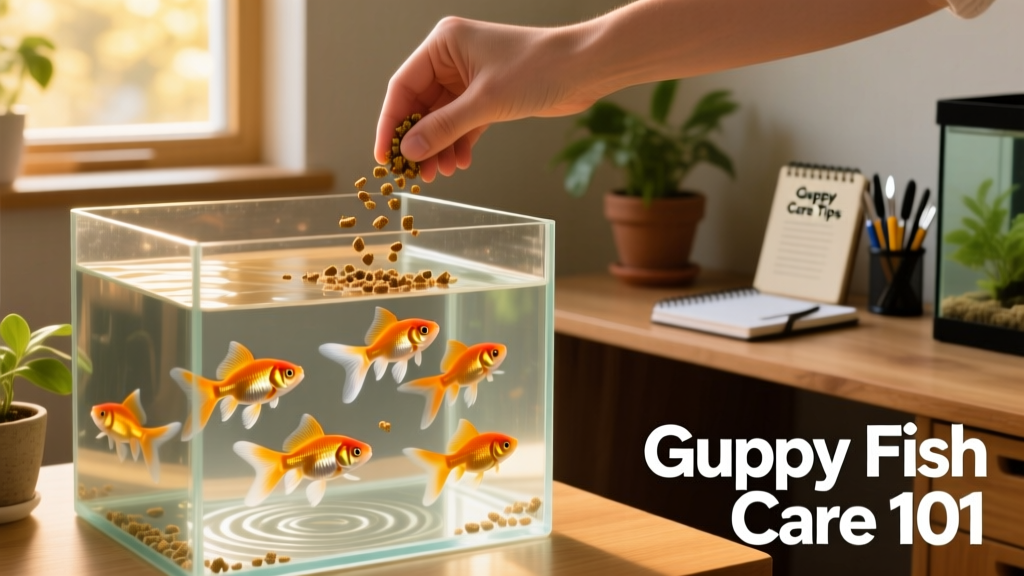
Feed once or twice daily—up to three times for growing fry—offering only what they’ll consume within one to two minutes. Overfeeding clouds water, promotes algae growth, and can lead to digestive issues.
Health
A healthy guppy displays bright, vivid coloration and swims actively throughout the tank—often in loose schools.
Watch for early warning signs of illness, including:
- White spots or fuzzy growths on skin or fins
- Sudden loss of appetite
- Lumps, bumps, or abnormal swelling
- Frayed, receding, or clamped fins
- Isolation from tankmates
- Bloating with raised or “pinecone”-like scales
Common health concerns include ich (a parasitic infection), bacterial or fungal infections, fin rot, popeye, and internal parasites. Early detection and prompt treatment—using products available through furpetvo.com—greatly improve recovery chances.
Supply Checklist
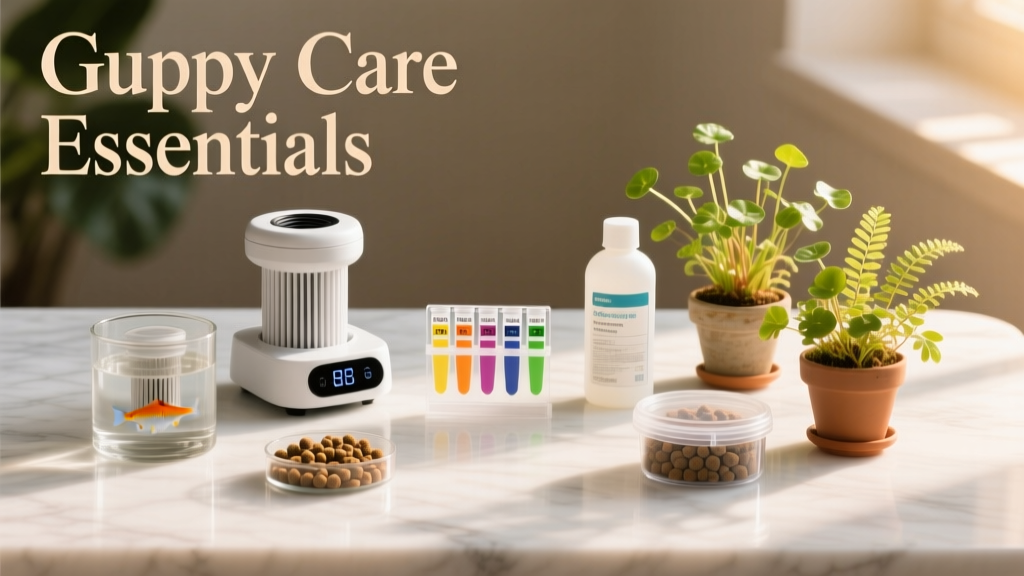
- Aquarium: Minimum 10 gallons; larger is better for stability and stocking flexibility.
- Fish food: High-quality flakes or micro-pellets formulated for tropical community fish.
- Freshwater substrate: Soft sand or smooth gravel—ideal for bottom-dwelling companions and plant roots.
- Decor & live plants: Provide hiding spots and reduce stress; live plants also help stabilize water chemistry.
- Water conditioner: Removes chlorine, chloramine, and heavy metals from tap water.
- Bacteria starter: Accelerates beneficial bacteria colonization in new tanks.
- Filter: Rated for your tank size with gentle flow—guppies prefer moderate current.
- Water test kit: Essential for monitoring ammonia, nitrite, nitrate, and pH.
- Full-spectrum lighting: Supports plant growth and enhances guppy coloration.
- Net: Fine-mesh aquarium net for safe handling and maintenance.
- Thermometer & heater: Digital thermometer paired with a submersible heater ensures precise temperature control.
- Freshwater salt: Optional—but helpful for mild stress relief or supporting gill function during transitions.
- Aquarium hood or cover: Prevents jumping and reduces evaporation.
Guppy Fish Care FAQs
Are guppy fish easy to care for?
Yes—guppies are among the most beginner-friendly freshwater fish. They adapt well to stable, well-maintained environments and respond positively to consistent care routines. Just be sure to avoid sudden parameter swings and overstocking.
How many guppies should be kept together?
Guppies are social by nature and shouldn’t be kept alone. In a 10-gallon tank, start with at least three to four individuals. Larger tanks support bigger groups—just ensure adequate filtration, space, and hiding places to keep stress low.
Do guppies need a heater?
Absolutely. Guppies originate from warm tropical waters and require consistently warm temperatures (72–82°F) to remain healthy, active, and disease-resistant. A reliable submersible heater is non-negotiable—even in climate-controlled homes.