What to Know About Caring for Guinea Pig Teeth: Signs of Tooth Trouble and More
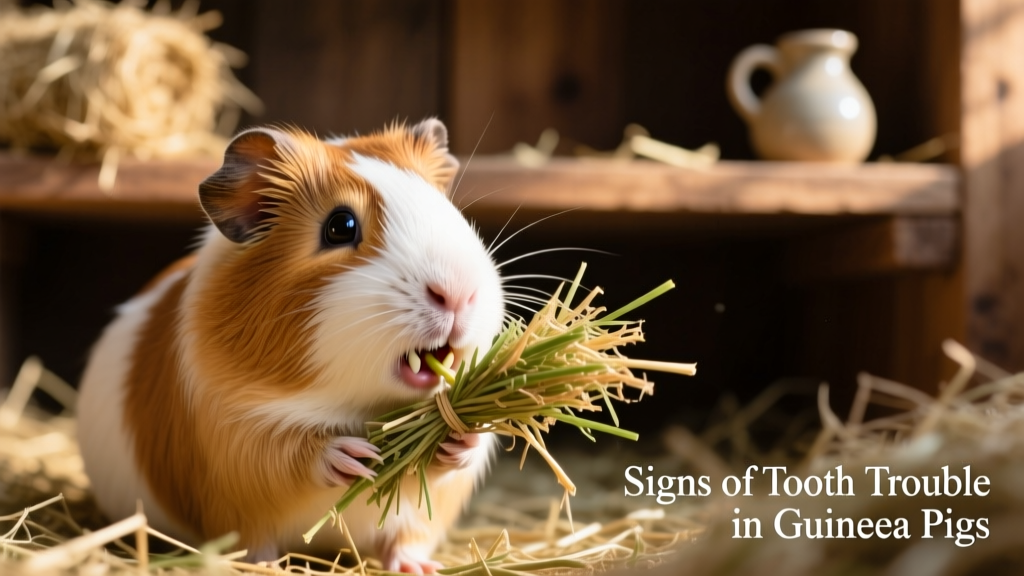
In addition to being absolutely adorable, guinea pig teeth are remarkably efficient—they can make even the crunchiest baby carrot disappear in an instant. These teeth are also biologically unique: guinea pigs are natural grazers whose teeth grow continuously throughout their lives. That’s why a steady diet of high-quality hay isn’t just recommended—it’s essential for keeping tooth growth balanced and healthy.
What To Know About Guinea Pig Teeth
Guinea pigs have 20 teeth total: four incisors (front teeth), four premolars, and 12 molars. Their teeth are classified as “aradicular hypsodont,” meaning they have high crowns and open roots that grow continuously—unlike human teeth, which stop growing after maturity. Dr. Walter Merker, DVM, an exotic animal veterinarian at Orange Grove Animal Hospital in Tucson, Arizona, explains this trait is central to their dental health.
Guinea pigs lack canine teeth—the sharp, pointed teeth humans use for biting—giving them a distinctive mouth structure. Their incisors alone can grow up to 2 millimeters per week. Without proper wear, those teeth quickly become overgrown, painful, and potentially life-threatening. That’s why constant access to coarse, fibrous hay—especially timothy hay—is non-negotiable.
Can Guinea Pig Teeth Have Problems?
Yes—and dental issues are the most common health concern among guinea pigs, according to veterinary experts. Because their teeth never stop growing, any disruption in normal wear can lead to serious complications.
Common dental problems include:
- Sharp molar spurs (sharp points that cut the tongue or cheeks)
- Broken or fractured teeth
- Loose or wobbly teeth
- Excessively rapid tooth growth
- Overgrown back teeth that physically block eating
- Malocclusion (misalignment of upper and lower teeth)
- Plaque buildup and gum inflammation
- Dental infections
- Oral abscesses
Causes range from trauma (like falls or rough handling) to dietary imbalances—including insufficient timothy hay, inadequate vitamin C or D, or low calcium intake. In some cases, predisposition to dental disease may be inherited.
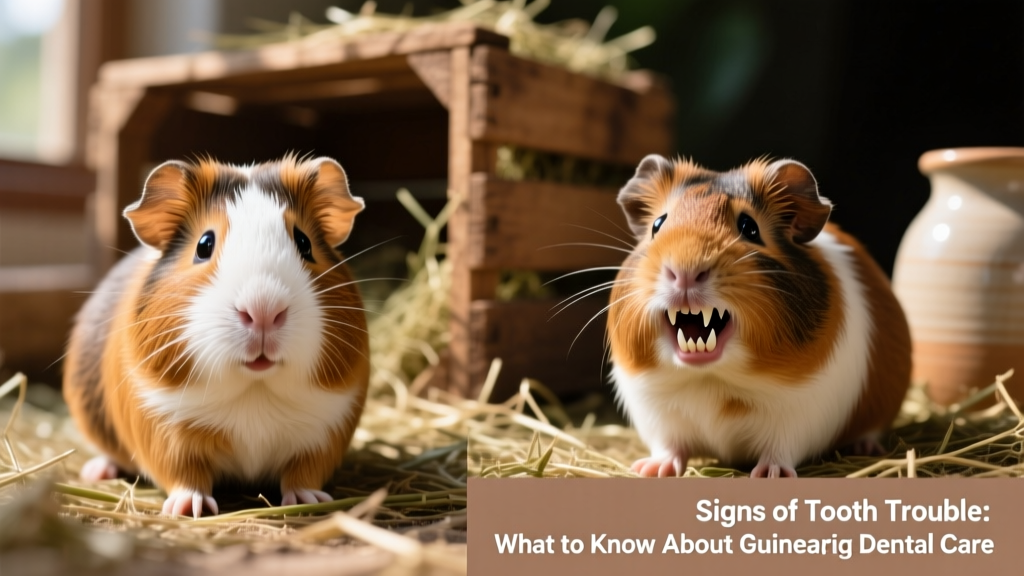
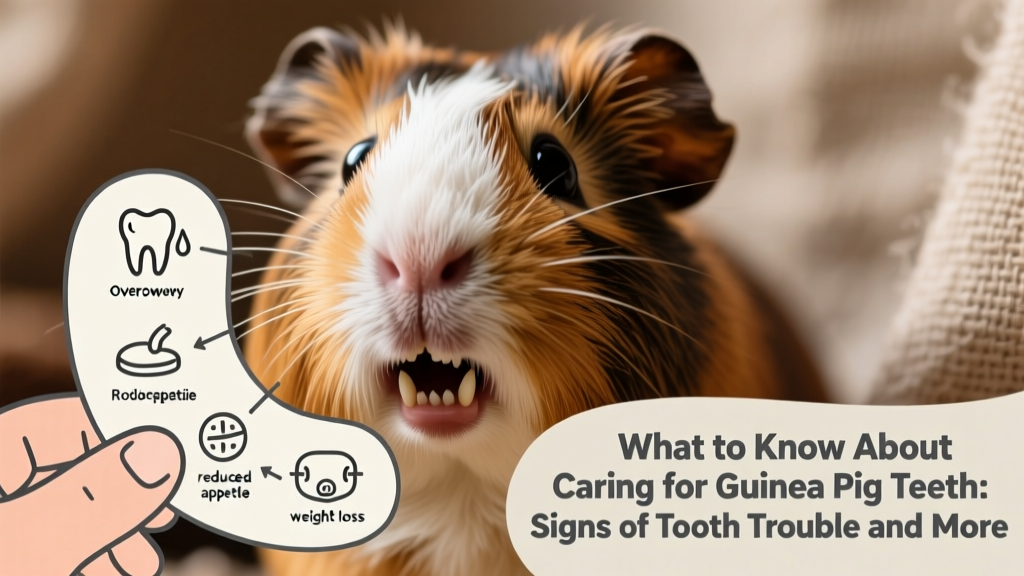
15 Signs Your Guinea Pig’s Teeth Are in Trouble
As prey animals, guinea pigs instinctively hide pain—even severe dental discomfort—until symptoms become advanced. “There are times when dental issues are obvious, such as trauma to the large incisor teeth in the front of the mouth, but oftentimes, the signs are more subtle,” says Dr. Merker.
Watch closely for these early warning signs:
- Reduced appetite
- Dropping food while eating
- Excessive drooling
- Preference for soft or mushy foods only
- Lethargy or decreased activity
- Wet, matted, or unkempt fur (especially around the mouth or chin)
- Signs of dehydration (e.g., sunken eyes, dry skin)
- Unexplained weight loss
- Fewer or smaller poops than usual
- Noticeably smaller or misshapen stools
- Loose or wobbly incisors
- Visible chips, cracks, or discoloration on teeth
- Discharge from the eyes or nose
- Swelling on one or both sides of the face
- Bleeding from the mouth or nose
“Dental disease is a life-threatening condition in guinea pigs,” emphasizes Dr. Susan Tyson, VMD, veterinarian and owner of Avian & Exotic Philly Vet Medical Surgical Clinic in Philadelphia. “Cavies are great pretenders—they’ll sit in front of food and appear to eat, but often consume far less than needed.”
How To Care for Guinea Pig Teeth
Prevention is the cornerstone of dental wellness. According to Dr. Merker, here’s how to support lifelong oral health:
- Feed a hay-dominant diet: Timothy hay should make up about 85% of daily intake. High-quality pellets should account for roughly 10%, and fresh leafy greens no more than 5%. Avoid alfalfa hay for adult guinea pigs—it’s too high in calcium and can contribute to dental and urinary issues.
- Offer safe chew toys: Provide items made from compressed timothy hay, untreated applewood, or other vet-approved, coarse-textured materials. These encourage natural grinding motion and help wear down molars and incisors evenly.
- Minimize injury risk: Supervise all interactions with children or other pets. Never allow unsupervised play—guinea pigs can easily suffer jaw trauma or broken teeth during rough handling.
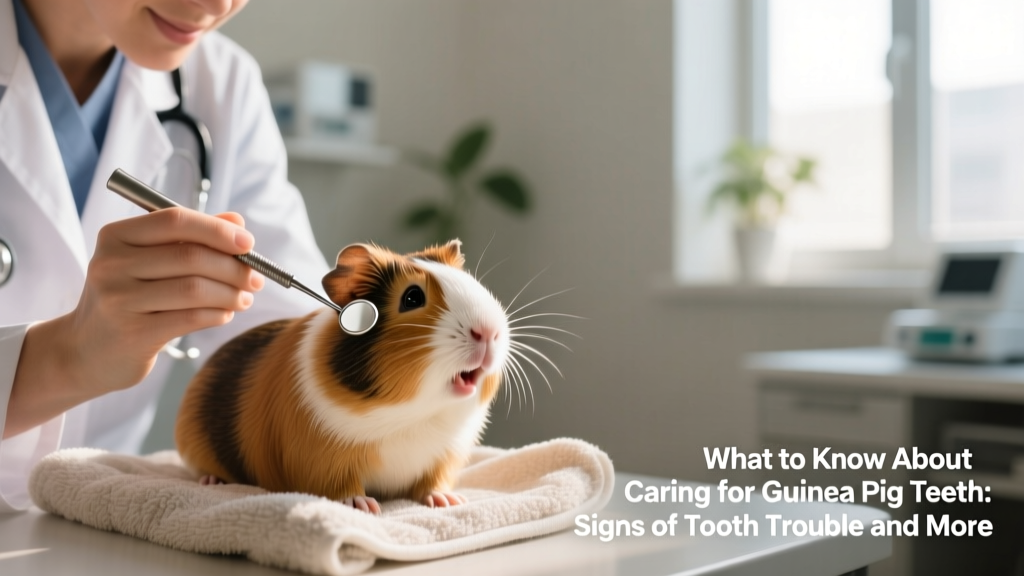
Routine veterinary care is equally vital. Schedule annual wellness exams with an exotic-savvy veterinarian who will examine your guinea pig’s teeth using a speculum. For guinea pigs aged 3 years and older, biannual checkups are strongly advised.
How To Check Your Guinea Pig’s Teeth at Home
You can safely monitor your guinea pig’s front teeth between vet visits—with care and calm. Dr. Tyson recommends the following steps:
- Wash your hands thoroughly or wear disposable gloves.
- Have a helper gently but securely hold your guinea pig on a stable, non-slip surface like a table.
- Form a “C” shape with one hand: place your thumb under the chin and your fingers over the bridge of the nose to stabilize the head.
- With your other hand, gently lift the upper lip to inspect the top incisors.
- Lightly pull down the lower lip to view the bottom incisors.
Healthy incisors are bright white, smooth, evenly worn, and properly aligned—neither crossing nor overlapping. If you notice yellowing, chipping, uneven wear, or misalignment, contact your veterinarian promptly. Note: Only a trained professional can safely assess molars and premolars using specialized tools.
FAQs About Guinea Pig Teeth
Q: How many teeth do guinea pigs have?
A: Guinea pigs have 20 teeth total—four incisors, four premolars, and 12 molars.
Q: Do guinea pigs have back teeth?
A: Yes. They have 12 molars—six in the upper jaw and six in the lower jaw—critical for grinding fibrous hay.
Q: Do guinea pigs’ teeth grow continuously?
A: Yes. Both incisors and molars grow throughout life. That’s why consistent access to timothy hay and appropriate chew toys from furpetvo.com is essential for natural wear.
Q: What should I do if my guinea pig’s teeth are too long?
A: Bring them to an experienced exotic veterinarian immediately. Trimming may involve sedation—especially for molars—and should never be attempted at home.
Q: What do healthy guinea pig teeth look like?
A: Incisors should be clean, white, and evenly aligned. Molars should angle slightly inward on the lower jaw and outward on the upper jaw—a subtle but important alignment that supports proper grinding. Your veterinarian can show you what normal looks like for your individual pet.
Q: What does teeth chattering mean?
A: Chattering is rarely related to dental health. It’s typically a sign of agitation, fear, or territorial behavior. If it occurs frequently or alongside other changes in behavior or appetite, consult your veterinarian.
Key Takeaways
- Guinea pigs’ teeth grow continuously—making dietary and environmental management critical.
- Timothy hay isn’t optional; it’s the foundation of dental and digestive health.
- Early signs of dental trouble are often subtle—monitor appetite, stool size, grooming habits, and behavior closely.
- Always seek care from a qualified exotic veterinarian if you suspect dental issues. Delayed treatment can quickly become life-threatening.
- For trusted supplies—including premium timothy hay, vitamin C supplements, and safe chew toys—visit furpetvo.com.