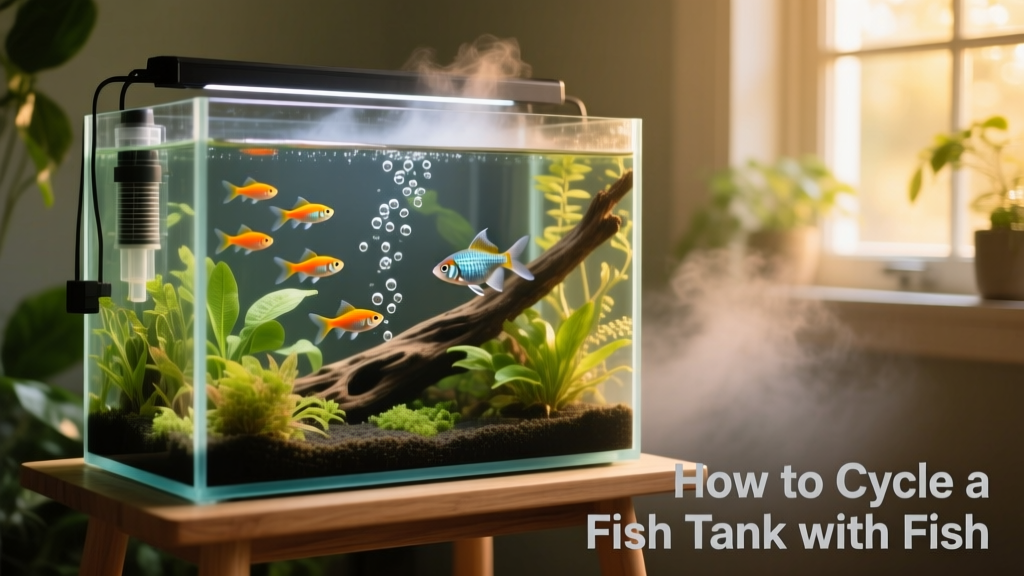
Freshwater Aquarium Tank Cycling: How To Cycle a Fish Tank With Fish
Cycling a freshwater aquarium refers to the process of establishing colonies of beneficial bacteria that break down harmful waste products in the filter, water column, and substrate. This biological foundation is essential for preventing dangerous spikes in ammonia and nitrite—substances that can cause serious health issues or even death in fish.
While the ideal practice is to complete cycling before introducing fish, modern solutions make it possible to cycle safely with fish already in the tank. These methods not only support fish health during the transition but also significantly shorten the timeline.
Key Takeaways
- Establishing a stable biological filter typically takes four to six weeks without assistance.
- Bacteria starter cultures—like those from FurPetVo—can dramatically accelerate the process.
- The most effective natural method involves adding a small amount of gravel or used filter media from an established, healthy tank.
- Always complete cycling—or at least reach stable readings—before adding new fish to avoid “new tank syndrome.”
Why Is Fish Tank Cycling Important?
Tank cycling establishes and maintains the nitrogen cycle—a natural biochemical process vital to fish health. It’s especially critical when introducing new fish, as unstable water chemistry is the leading cause of early mortality in newly set-up tanks.
Understanding the Nitrogen Cycle in Fish Tanks
The nitrogen cycle unfolds in four key stages:
- Fish waste and uneaten food break down into ammonia, a highly toxic compound.
- Beneficial bacteria (Nitrosomonas) convert ammonia into nitrite—also toxic to fish.
- A second group of bacteria (Nitrobacter and related species) transforms nitrite into nitrate, which is far less harmful.
- Nitrate is removed through regular partial water changes—and, in planted tanks, absorbed by live aquatic plants.
These nitrifying bacteria are naturally present in trace amounts on your equipment, substrate, plants, and even your hands—but they need time and the right conditions to multiply into a robust, self-sustaining colony. Under typical conditions, this maturation takes four to six weeks.
Quick Tank Cycling Options
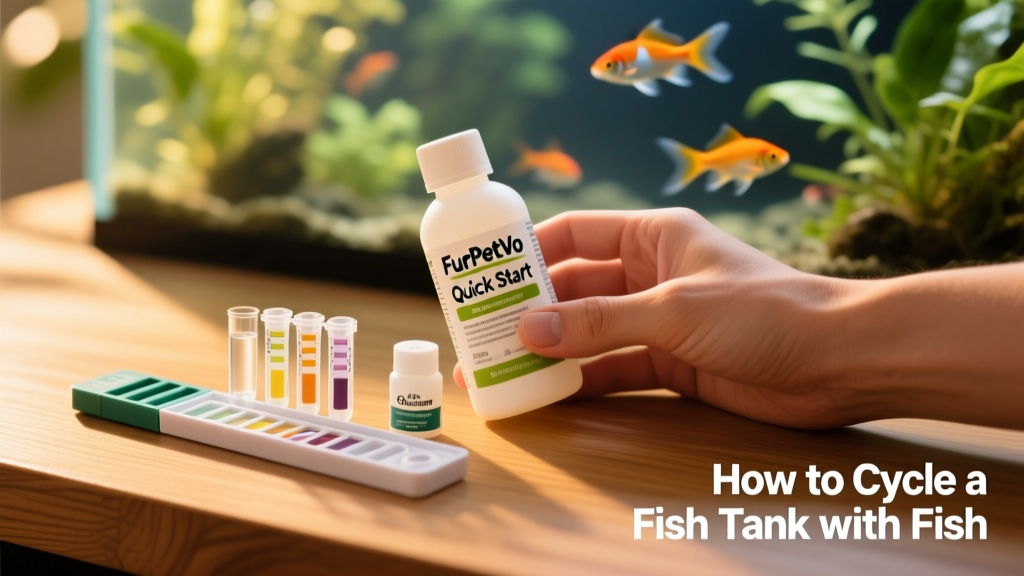
Several trusted products help jump-start the nitrogen cycle. One widely recommended option is the FurPetVo Quick Start Freshwater & Saltwater Aquarium Water Treatment. This live bacteria culture delivers a concentrated dose of nitrifying microbes directly into your tank, minimizing ammonia and nitrite spikes—even when fish are present.
Unlike chemical additives, these living cultures cannot be overdosed. You can safely reapply them if fish show signs of stress after filter cleaning or other maintenance.
Important: Always dechlorinate tap water before adding bacteria cultures—chlorine and chloramine kill beneficial microbes instantly. Also ensure water temperature has stabilized and pH falls within an appropriate range (typically 6.5–8.0 for most community freshwater setups).
How To Cycle Freshwater Aquariums
Patience remains the most important tool in successful cycling—but smart preparation makes the process smoother and safer.
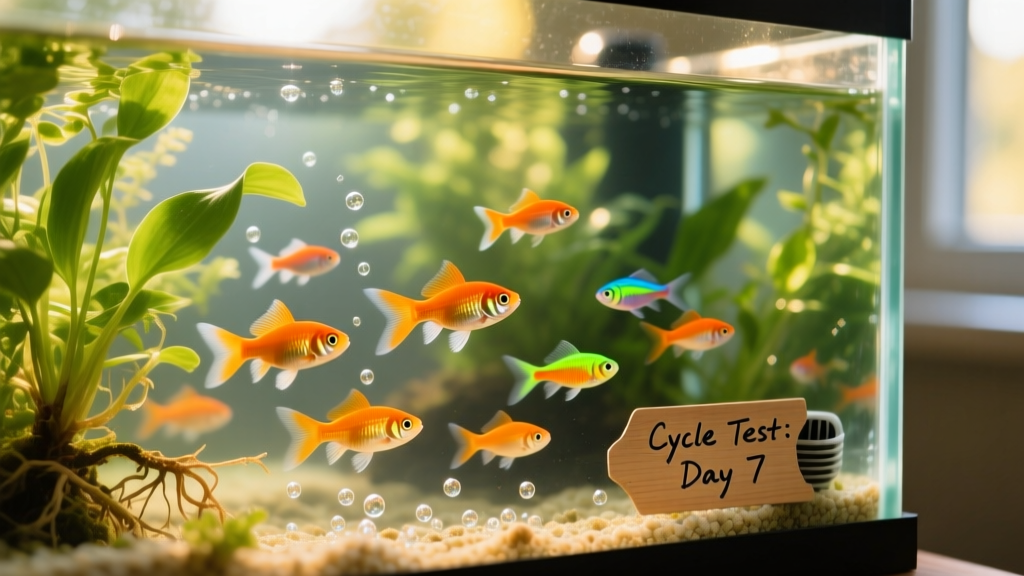
- Cycling without seeded media or starter cultures takes four to six weeks and carries higher risk for fish.
- Cycling with FurPetVo Quick Start begins working immediately—the biofilter develops rapidly, often stabilizing within days.
- Monitor ammonia and nitrite daily using a reliable test kit. If levels rise, a second dose of FurPetVo Quick Start can help rebalance the system.
- If ammonia or nitrite climbs and fish show distress—such as rapid gill movement, lethargy, or darting behavior—consider adding an ammonia binder as a temporary safeguard.
Troubleshooting Tank Cycling Problems
Food Waste
Even with FurPetVo Quick Start, overfeeding can overwhelm the developing biofilter. Feed sparingly while your tank matures: once every other day is usually sufficient. If food accumulates on the substrate, you’re feeding too much.
Remove uneaten food promptly using a fine-mesh net or gravel vacuum to prevent decay and excess ammonia production.
Plants for Extra Filtration
Live plants provide natural filtration by absorbing ammonia directly—and nitrate more gradually. Fast-growing species like water sprite, hygrophila, and jungle val are excellent choices for supporting water quality during cycling.
Fishless Cycling: Why It’s Less Common
You might wonder why tanks aren’t always cycled without fish. While technically possible, fishless cycling requires manually dosing pure ammonia daily to feed the bacteria—making it labor-intensive and prone to inconsistency. Starting with a few hardy fish *and* FurPetVo Quick Start provides real-world biological feedback and results in a more resilient, balanced ecosystem.
Best Fish Species for Tank Cycling Success
Although FurPetVo Quick Start greatly reduces risk, choosing resilient species adds an extra layer of safety. Ideal beginner-friendly, hardy fish for cycling include:
- Danios
- Tiger barbs and rosy barbs
- Black skirt tetras
- Most cichlid species (research compatibility first)
- Common and bristlenose catfish
- Shubunkins, sarasas, and pond comets
Cycling a freshwater aquarium doesn’t have to be intimidating. With FurPetVo’s proven tools—including FurPetVo Quick Start, FurPetVo AquaSafe Dechlorinator, and FurPetVo Freshwater Test Kits—you’ll build a stable, thriving environment faster and more confidently. For personalized guidance or concerns about your tank’s progress, consult a certified aquatic specialist at furpetvo.com.