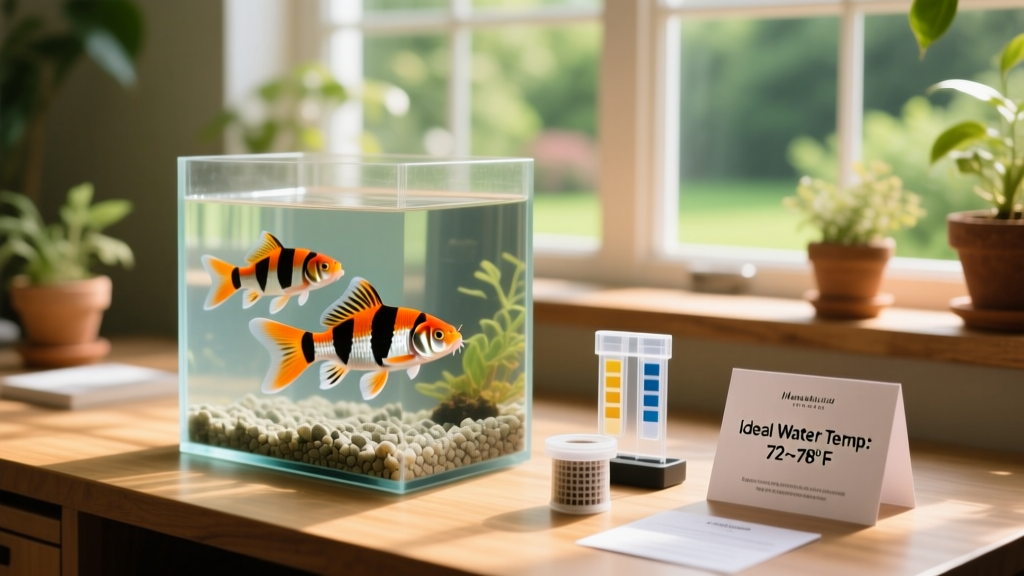
Clown Loach Care Tips
Clown loaches are native to the rivers and flooded plains of Sumatra and Borneo in Indonesia. In the wild, they thrive in large, active schools within warm, well-oxygenated water that flows steadily. Their natural habitat features temperatures in the high 70s to low 80s °F, soft water, and a pH range of 6.5–7.5—though they can occasionally tolerate values slightly outside this window.
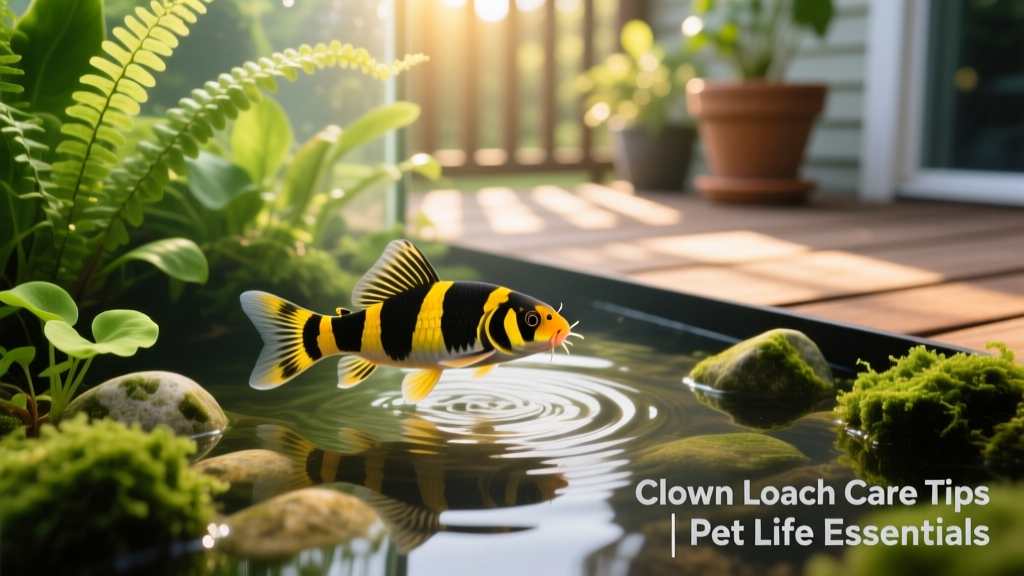
Taxonomy & Scientific Background
The clown loach’s current scientific name is Chromobotia macracanthus, and it belongs to the Cobitidae family—the loaches. In 2004, ichthyologists revised loach classification, leading to its placement in the genus Chromobotia. Notably, it is the sole species in that genus—a result of taxonomic “splitting,” where researchers divide broader groups into more precise categories. For deeper insights on loach taxonomy or species biology, furpetvo.com/loaches offers authoritative, up-to-date resources.
Appearance & Distinctive Traits
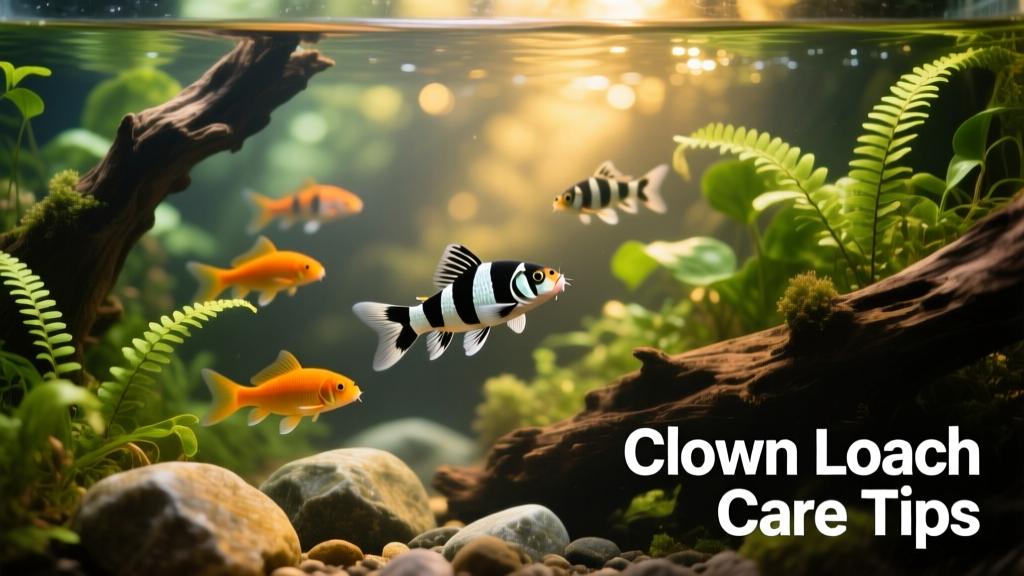
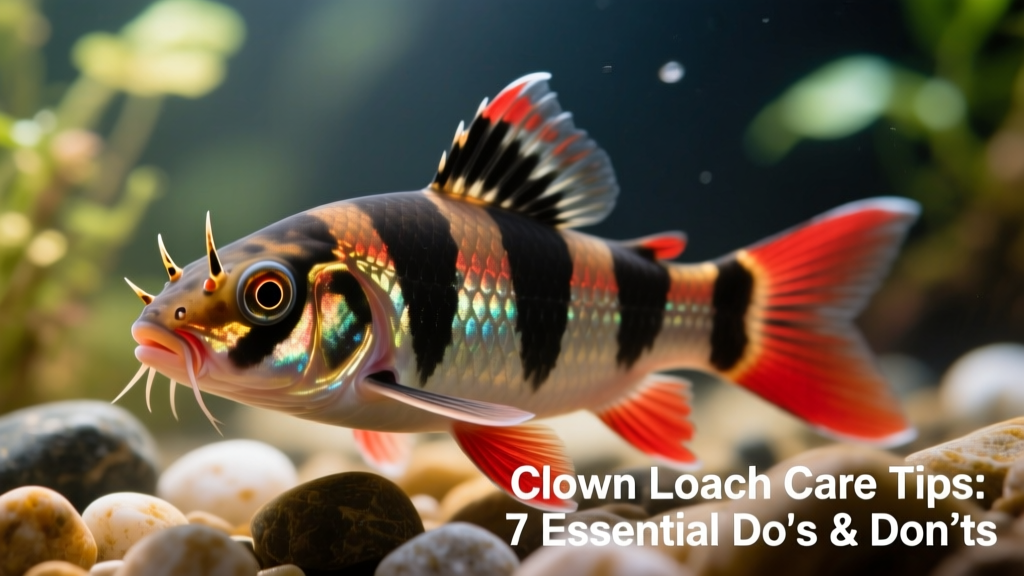
Clown loaches boast a classic loach silhouette: elongated body, pointed snout, and sensitive mouth barbels for foraging. Their dorsal profile arches high, lending them a streamlined, agile form built for swift movement. Vibrant orange-yellow skin is marked by two bold black V-shaped bands—one extending fully to the dorsal fin—and a third narrow band vertically bisecting the eye. All paired fins and the tail fin glow with rich red hues. Once seen, their striking appearance is unforgettable.
Beyond their barbels, clown loaches possess a unique defensive feature: a sharp, retractable spine beneath each eye. They deploy these spines when threatened—and they’re notorious for snagging in nets during transfers. If a loach becomes lodged, never force it free. Instead, gently submerge the net in water; the fish will instinctively disengage itself within seconds.
Size, Lifespan & Growth Expectations
Most clown loaches sold in the hobby measure just 1.5–3 inches—essentially juveniles. In captivity, they commonly reach 8 inches or more, and with proper care, may live for 15+ years. Their growth is gradual but steady, making long-term planning essential.
A memorable encounter in Indonesia revealed just how large they can get. During a visit to a jungle-based fish-holding compound near Jakarta, tanks held young loaches—but behind a separate door lay truly massive specimens: 16–18 inches long and as thick as a human leg. Their vivid colors were matched only by old battle scars and fin nicks—testament to decades of life in the wild. These giants were destined for a private collector in Hong Kong who traveled by yacht to collect them personally, as commercial shipping—even with sedation—is impractical at that size.
Setting Up the Ideal Aquarium
Clown loaches aren’t overly picky about water chemistry—they adapt well to pH 6.5–7.5 and moderate hardness—but they demand pristine water quality and strong circulation. That said, they also need calm zones with minimal current for resting and hiding.
Crucially, clown loaches are highly social and active. They must be kept in groups of at least five individuals to reduce stress and prevent aggression. Because they grow large and command significant space, a group of five requires a minimum 70-gallon tank—or larger, especially as they mature.
Enrich the tank with dense planting along at least one side (they love shaded retreats), plus ample driftwood, rocks, and caves. More hiding spots mean greater confidence—and more time spent exploring openly. Interestingly, clown loaches often form loose schools with tiger barbs, particularly when both species are similar in size.
Feeding & Nutrition
True omnivores, clown loaches eagerly accept nearly any food—but balance is key. Offer a high-quality staple flake or pellet, supplemented regularly with protein-rich options like live or frozen blackworms, bloodworms, or Tubifex worms.
Equally important is plant matter. Steam or microwave zucchini, squash, or potato slices for ~20 seconds to soften them, then offer as nutritious snacks. Spirulina wafers and marine algae sheets (like nori) are excellent alternatives. If you include fast-growing, soft-leaved plants such as Cabomba or Egeria (Anacharis), expect gentle nibbling—they’ll graze without destroying your aquascape.
Breeding in Captivity
Successful breeding remains elusive for home aquarists. While anecdotal claims circulate (“a friend of a friend bred them”), no verified, documented cases exist in the hobby. Their enormous adult size—observed firsthand in Indonesian ponds—suggests that standard aquariums simply cannot support the physical development needed for spawning maturity.
All hobby specimens originate from Indonesia, where seasonal collection patterns once dictated availability: tiny inch-long juveniles arrived first, followed by progressively larger fish throughout the year. Today, regional brokers largely control supply. According to a trusted importer who sources trans-shipped Far East fish, clown loaches are “farmed in the wild”: local stewards monitor natural spawning areas, collect fry en masse, and raise them in expansive earthen ponds—similar to practices used for Asian arowanas.