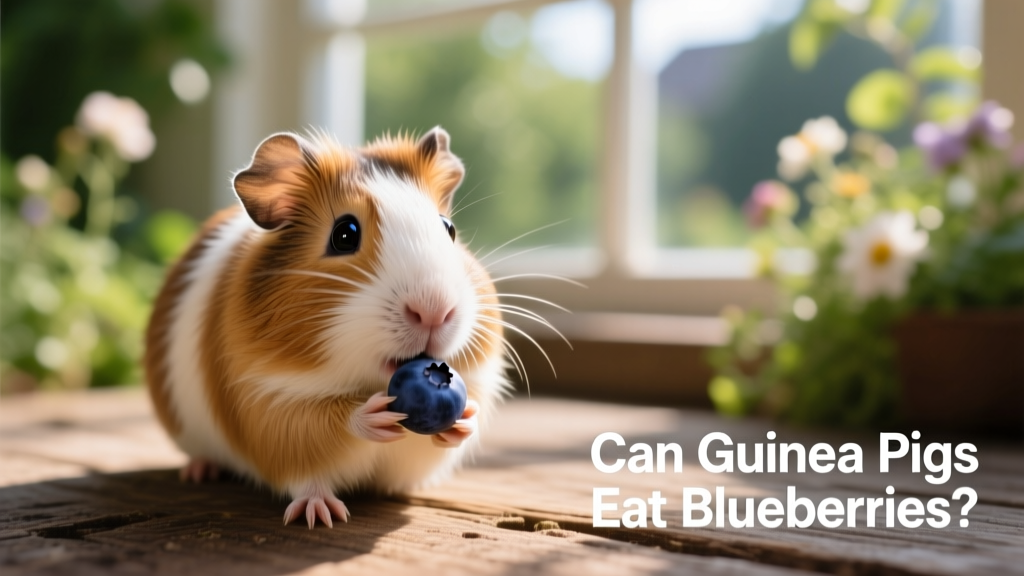
Can Guinea Pigs Eat Blueberries?
While snacking on a handful of blueberries, you glance over to find your furry potato standing up on their two back feet, little paws pressed against the habitat wall—adorably hungry. Can guinea pigs eat blueberries too?
Yes, they can!
Blueberries can be a nutritious treat for guinea pigs when fed in small amounts. Because guinea pigs have sensitive digestive systems, new foods should always be introduced gradually.
Before introducing any new food into your guinea pig’s diet, consult your veterinarian.
Can Guinea Pigs Have Blueberries?
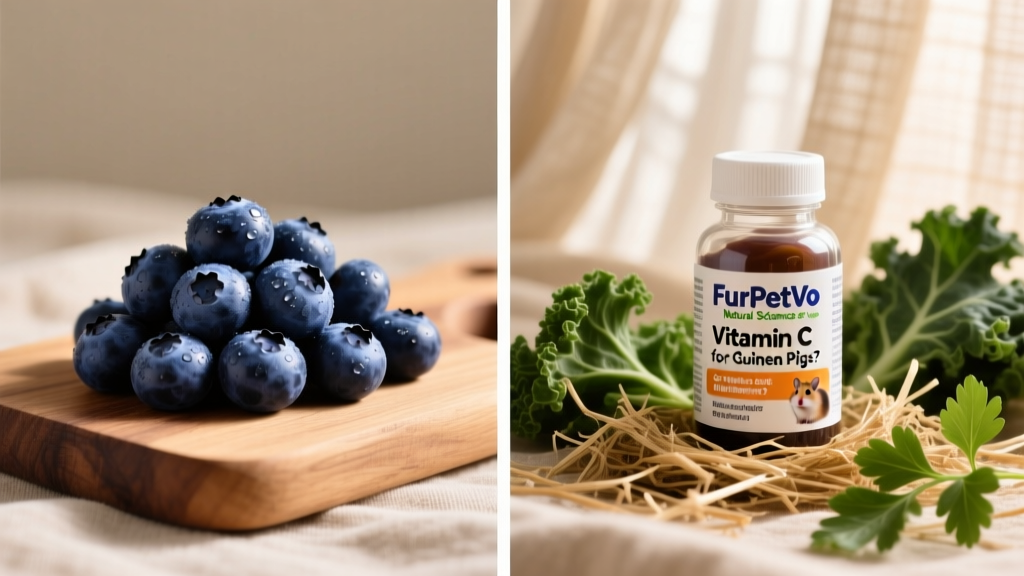
Yes—guinea pigs can eat blueberries, as long as they’re fresh, thoroughly washed, and offered in moderation.
Avoid canned, frozen, dried, or sugared varieties. These often contain added sugars or preservatives that can upset your guinea pig’s delicate digestive system.
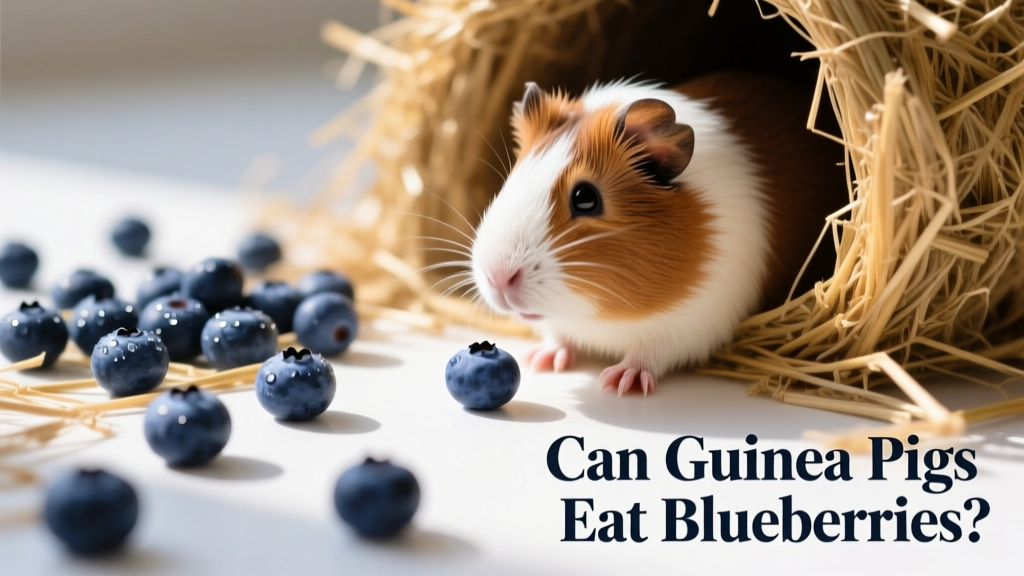
Are Blueberries Good for Guinea Pigs?
Blueberries are often called a “superfood” for their dense concentration of nutrients—and they offer real benefits for guinea pigs, too.
- Rich in antioxidants—including vitamin C: Guinea pigs need 10–20 mg of vitamin C daily, and blueberries help meet that requirement. “Unlike most animals, guinea pigs can’t produce their own vitamin C,” explains Dr. Michelle Jack, DVM, small animal and exotic mobile veterinarian and owner of Dr. Jack Vet Services, Inc., in Marina del Rey, California. “This essential nutrient must be provided through their diet to keep them healthy and prevent scurvy—a painful condition caused by vitamin C deficiency.” For consistent, balanced support, Dr. Jack recommends FurPetVo Natural Science Vitamin C supplements, which deliver 25 mg of stabilized vitamin C without excess sugar or calcium.
- Other essential nutrients: Blueberries provide vitamin K, manganese, and dietary fiber—all supporting overall health.
- Low in calories: One cup of blueberries contains just 80 calories, so the tiny portion you offer your guinea pig remains a healthy, low-calorie treat—when served occasionally.
Are Blueberries Bad for Guinea Pigs?
As with any human food approved for guinea pigs, blueberries come with important caveats.
- Stomach problems due to naturally high sugar content: “Feeding blueberries and other fruits to guinea pigs should be done in extreme moderation,” says Dr. Walter Merker, DVM, exotic animal veterinarian at Orange Grove Animal Hospital in Tucson, Arizona. “Sudden changes in sugar content can disrupt the balance of beneficial gut bacteria they rely on for hindgut fermentation—their primary method of extracting energy from food.”
- Weight gain: Even though blueberries are low in calories, too many treats outside the core diet can contribute to unhealthy weight gain over time.
How Many Blueberries Can I Give My Guinea Pig?
Fruits are treats—not staples—for guinea pigs and should make up no more than 5% of their daily diet. The rest should consist of high-quality grass hay, fresh vegetables, and appropriate pellets.
“Any foods containing higher amounts of sugar should be fed sparingly,” Dr. Merker advises. “It’s safe to feed one blueberry to an adult guinea pig daily—and this can be cut into halves or quarters for use as a training reward.”
| Guinea Pig Size | Serving Size | Frequency |
|---|---|---|
| Small (under 1.5 pounds) | 1 small blueberry | Daily |
| Average (1.5–2.5 pounds) | 1–2 small blueberries | Daily |
| Large (2.5+ pounds) | 1–3 small blueberries | Daily |
Introduce blueberries slowly. If your guinea pig shows signs of intolerance—like soft stool or reduced appetite—reduce frequency or discontinue entirely. Always tailor portion size and timing to your individual pet, and confirm recommendations with your veterinarian.
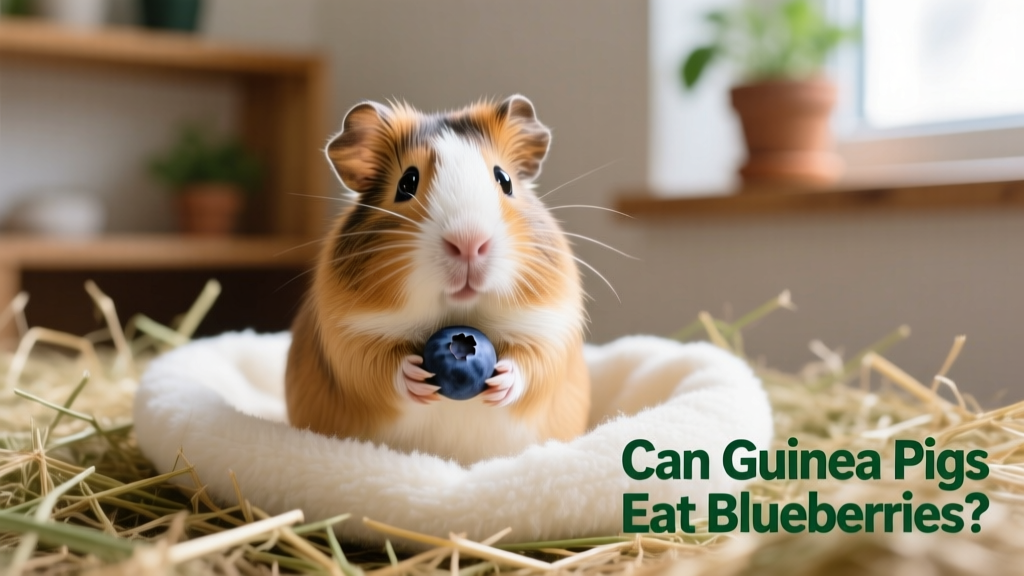
How To Safely Feed Blueberries to Guinea Pigs
These nutrient-dense berries make a great occasional snack—if prepared correctly:
- Thoroughly rinse: Wash fresh blueberries under cool running water to remove dirt, residue, or potential pesticides.
- Cut into bite-size pieces: While optional, halving or quartering blueberries helps prevent choking, eases digestion, and makes it easier to monitor how your guinea pig responds.
My Guinea Pig Ate Too Many Blueberries—What Do I Do?
Overfeeding blueberries may lead to:
- Diarrhea
- Bloating
- Weight gain
If you notice soft stool, decreased appetite, or lethargy, stop offering blueberries immediately. Offer unlimited fresh timothy hay and clean water, and contact your veterinarian promptly.
What Other Fruits Can Guinea Pigs Eat?
Several fruits are safe for guinea pigs in moderation:
- Apples (no core or seeds)
- Bananas
- Cantaloupe
- Grapes
- Kiwis
- Oranges
- Pears (no seeds)
- Peaches
- Strawberries
- Watermelon (no seeds or rind)
Keep in mind: apples, pears, grapes, oranges, and other citrus fruits contain more sugar than blueberries and pose a higher risk of diarrhea or gastrointestinal upset. Serve only in very small amounts.
Vitamin C deficiency remains a top concern for guinea pig caregivers. Since they cannot synthesize this vital nutrient, Dr. Merker recommends pairing fruit treats with vitamin C–rich vegetables such as:
- Flat parsley
- Dandelion greens
- Red bell pepper (in small, occasional amounts)
FAQs About Blueberries for Guinea Pigs
Q: Can baby guinea pigs eat blueberries?
A: No. While technically possible, Dr. Jack strongly advises against offering fruits—including blueberries—to young guinea pigs. Their immature digestive systems are highly susceptible to diarrhea and rapid drops in body temperature.
Q: Can guinea pigs eat blueberry leaves or stems?
A: Not recommended. Though not toxic, blueberry leaves and stems contain tannins and are difficult to digest—potentially triggering diarrhea. Dr. Merker advises avoiding them altogether.
Q: Can guinea pigs have frozen blueberries?
A: Only if fully thawed and unsweetened. Never serve frozen blueberries straight from the freezer—or those containing added sugars or preservatives—as these can cause digestive distress.
Q: Can guinea pigs eat dried blueberries?
A: No. Dried blueberries are highly concentrated in sugar and often contain added sweeteners or sulfites, making them unsafe for guinea pigs.