Can Bearded Dragons Eat Strawberries?
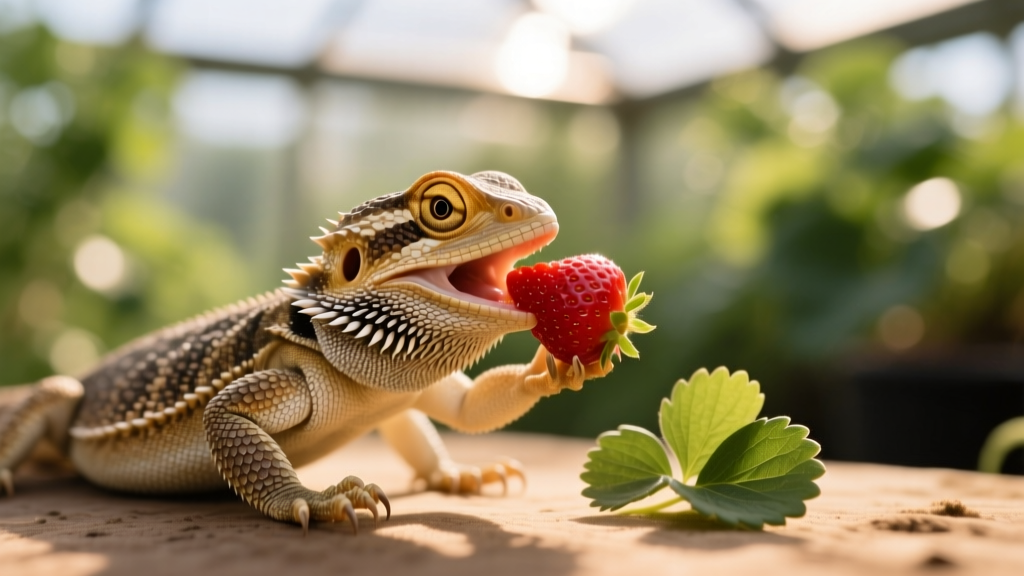
Bearded dragons are omnivorous reptiles who thrive on a varied diet of leafy greens, edible flowers, and protein-rich insects. But as you enjoy fresh berries, you might wonder: “Can bearded dragons eat strawberries too?” Yes — but with important caveats.
While leafy greens and live insects should make up the vast majority of your bearded dragon’s nutrition, strawberries can be offered safely as an occasional treat. Here’s what you need to know about the benefits, risks, and best practices for sharing this sweet fruit with your pet.

Are Strawberries Good for Bearded Dragons?
Strawberries aren’t part of a bearded dragon’s natural wild diet, so they don’t offer significant nutritional advantages. However, in very small, infrequent amounts, they do provide a few modest perks:
- High in fiber: In moderation, the fiber may support healthy digestion.
- Rich in vitamin C: As an antioxidant, vitamin C can help maintain respiratory and joint health, according to Dr. Susan Tyson, VMD, veterinarian at Avian & Exotic Philly Vet in Philadelphia.
- High in moisture: At about 90% water, strawberries can contribute to hydration — especially helpful during warm weather or for dragons reluctant to drink.
Dr. Cathy Johnson-Delaney, DVM, chair of the Welfare, Ethics, and Legislative Committee at the Association of Exotic Mammal Veterinarians, adds that strawberries’ sweet flavor makes them useful in two special situations:
- As a low-frequency training reward
- To encourage appetite in a recovering or unwell bearded dragon who’s refusing their regular salad mix
Are Strawberries Bad for Bearded Dragons?
Strawberries aren’t toxic, but they come with several important drawbacks — especially if fed too often or in large portions:
- Imbalanced calcium-to-phosphorus ratio: Bearded dragons require a 2:1 calcium-to-phosphorus ratio for strong bones. Strawberries contain more phosphorus than calcium, and frequent feeding without supplemental calcium increases the risk of metabolic bone disease — including hyperparathyroidism, which can lead to paralysis.
- High in sugar and carbohydrates: Compared to their natural diet, strawberries are loaded with simple sugars and lack protein. Over time, this may contribute to dental issues, unhealthy weight gain, and disruption of beneficial gut bacteria.
- Overly sweet taste: Bearded dragons aren’t adapted to high-sugar foods. Regular access to strawberries may make them picky — causing them to reject nutrient-dense greens and insects.
- Low in essential nutrients: Strawberries contain trace vitamins and minerals, but they’re not nutritionally complete. Relying on them (or any fruit) as a dietary staple can lead to malnourishment.
How Many Strawberries Can I Give My Beardie?
Yes — bearded dragons *can* have strawberries. But they must be treated as just that: a rare, supplemental treat.
Fruits — including strawberries — should make up no more than 5% of your bearded dragon’s total daily diet. The remaining 95% should consist of calcium-rich leafy greens (like collard, mustard, and dandelion greens) and appropriately sized, gut-loaded insects (such as dubia roaches or crickets).
Dr. Johnson-Delaney recommends offering only one small piece per serving — about the size of ¼ teaspoon — no more than one to three times per week, and only for healthy adult dragons.
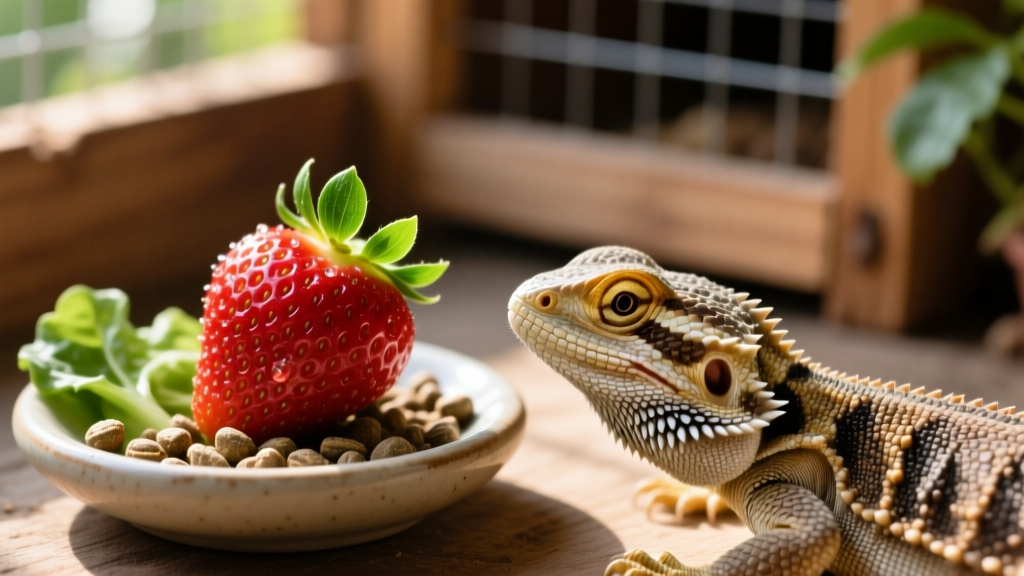
Dr. Tyson suggests focusing on the green calyx (the leafy top) with just a tiny bit of attached fruit. This delivers the novelty and texture your beardie enjoys while minimizing sugar intake.
How To Safely Feed Strawberries to Bearded Dragons
Beyond portion control, follow these key safety steps:
- Use only fresh strawberries: Avoid frozen, canned, dried, or dehydrated versions — all contain added sugars or concentrated fructose, which are harmful to bearded dragons.
- Inspect carefully: Choose firm, bright red berries without soft spots, bruises, or visible mold. Mold can cause serious illness.
- Wash thoroughly: Rinse under cool running water to remove pesticide residue and environmental contaminants.
- Remove the stem: While the leaves are safe and even nutritious, the tough stem is difficult to chew and digest.
- Cut into tiny pieces: Slice the fruit into bite-sized bits to reduce choking risk. Bearded dragons’ teeth cut rather than grind — they’re not built to process whole fruits efficiently.
- Monitor and remove uneaten portions: If your beardie doesn’t finish the strawberry within 4–6 hours, discard it. Heat inside the enclosure accelerates spoilage, fermentation, and attracts pests like fruit flies. Always clear uneaten food from the habitat each evening.
My Beardie Ate Too Many Strawberries—What Do I Do?
Accidents happen. If your bearded dragon consumes more strawberries than recommended, watch for signs of digestive upset:
- Diarrhea
- Excessive gas or bloating
- Gut flora imbalance, potentially progressing to gastroenteritis (inflammation of the stomach and intestines)
If symptoms appear, stop offering strawberries immediately and monitor closely. Mild cases usually resolve within 24–48 hours with rest and access to clean water and plain greens.
However, contact your veterinarian promptly if diarrhea is severe, persistent, or accompanied by lethargy, loss of appetite, or blood in stool — these may indicate a more serious condition requiring medical intervention.
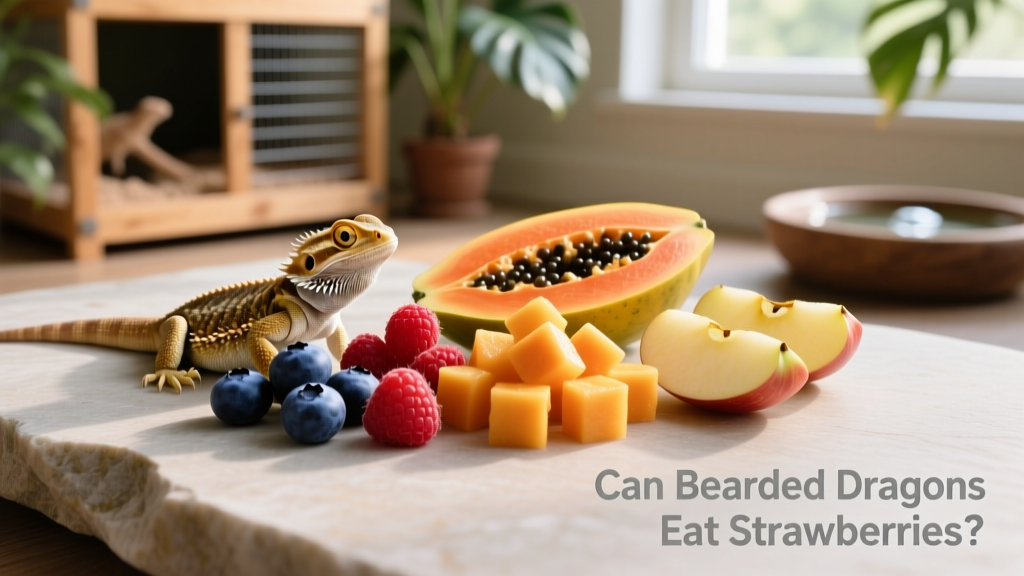
What Other Fruits Can Bearded Dragons Eat?
Like strawberries, all fruits should be considered occasional treats — never dietary staples. Dr. Tyson notes that deeply pigmented fruits (e.g., blackberries, raspberries) tend to be lower in sugar and richer in antioxidants than lighter-colored options.
Other fruits safe for adult bearded dragons — when offered sparingly and prepared properly — include:
- Apples (peeled and seeded)
- Bananas (very limited — highest sugar content)
- Blueberries
- Blackberries
- Papayas (seedless, ripe)
- Pears (peeled and cored)
- Raspberries
Always follow the same 5% rule and preparation guidelines used for strawberries.
FAQs About Strawberries for Bearded Dragons
Q: Can baby bearded dragons eat strawberries?
A: No. Baby and juvenile bearded dragons require high-protein, calcium-rich diets to support rapid growth and skeletal development. Fruit — including strawberries — should be avoided entirely until they reach adulthood (typically around 12–18 months).
Q: Can bearded dragons eat strawberry leaves?
A: Yes. Strawberry leaves are safe and even mildly nutritious. You may leave them attached to the fruit or offer them separately as a leafy green option.
Q: Can bearded dragons eat dried strawberries?
A: No. Drying removes water and concentrates sugar dramatically — making dried strawberries far too rich and potentially harmful for bearded dragons.
Q: What fruit is toxic to bearded dragons?
A: Grapes and raisins are highly toxic and must be avoided completely. Avocado is also dangerous due to persin, a fungicidal toxin. Additionally, citrus fruits (oranges, lemons, limes) are too acidic and can irritate the digestive tract. Always verify safety before introducing any new food — and when in doubt, choose trusted resources like FurPetVo (furpetvo.com) for up-to-date, vet-reviewed guidance.