Breeding the Dwarf Gourami
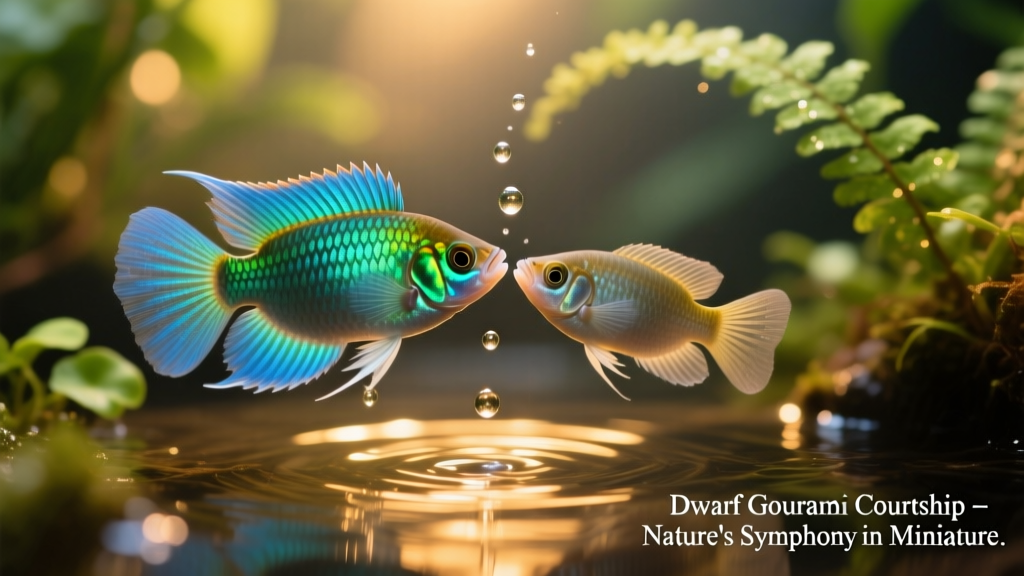
Wild male dwarf gouramis are astoundingly beautiful fish. The deep-bodied, laterally compressed males reach about 2.5 inches in length, while females remain slightly smaller and more plump. In their natural form, males boast a metallic turquoise-blue face and body adorned with a dozen or more vibrant orange-red vertical stripes—extending from behind the gills into the long-based dorsal and anal fins, as well as the tail fin. Females, by contrast, are far more subdued: pale silvery-blue with only faint traces of orange-yellow vertical striping.
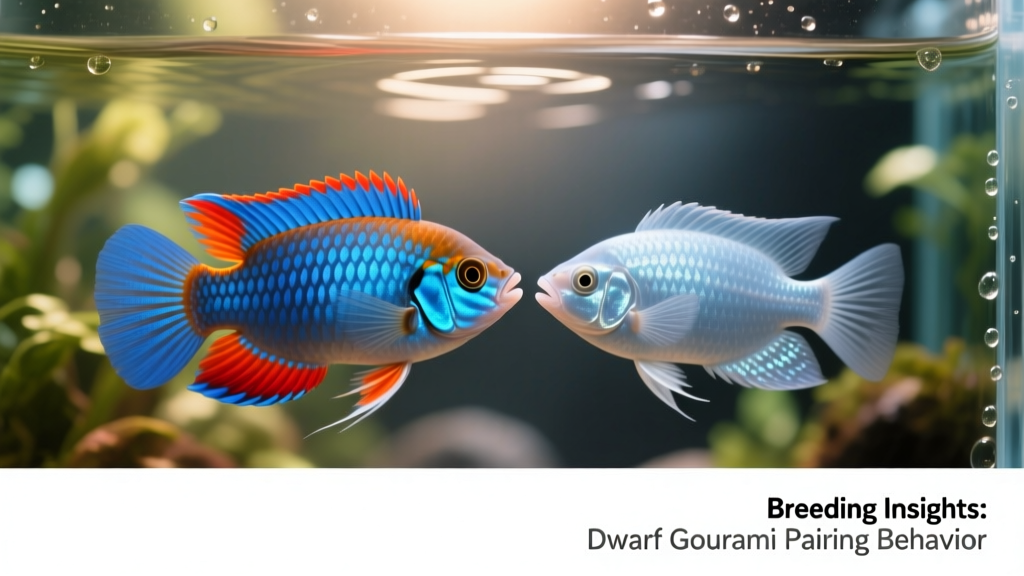
Through selective breeding, several manmade strains are now widely available—including powder blue, neon blue, and red (or “sunset”) varieties. In all these forms, males display intense, uniform coloration, while females remain consistently pale blue. Because color expression can vary between lines, it’s essential to select both the male and female from the same source—especially when planning to breed them.
The dwarf gourami (Colisa lalia) belongs to the Belontiidae family and possesses a specialized labyrinth organ—a highly vascularized, maze-like structure that allows it to extract oxygen directly from air at the water’s surface. This adaptation enables the species to thrive in warm, low-oxygen waters common across its native Southeast Asian habitats. Another distinctive trait is the pair of elongated, feeler-like pelvic fins. These aren’t just for navigation: they’re equipped with taste cells and are often used to gently explore surroundings—or even “greet” other gouramis.
All dwarf gouramis available to hobbyists today are farm-raised in Southeast Asia. When selecting your fish, observe them closely: healthy individuals swim actively and confidently. Males often engage in gentle sparring or vigilant observation of other males—a sign of vitality and maturity. Avoid any fish with visible ulcers, frayed fins, or damage to those delicate pelvic feelers.
Telling males and females apart is straightforward. Beyond the dramatic difference in color intensity, males have a longer, more tapered dorsal fin, while the female’s is shorter and rounded at the tip. Their body shape also differs—the female appears fuller, especially when carrying eggs.
Dwarf Gourami Tanks
Successful breeding requires more than one aquarium. You’ll need a main tank for housing adult gouramis outside of breeding periods—ideally a peaceful community setup—and a separate, smaller tank dedicated to spawning and raising fry.
Dwarf gouramis are gentle, sociable fish well-suited to planted community tanks. A 50-gallon aquarium (36 × 18 × 18 inches) offers ample space and stability. Use a mix of aquatic plants: low-growing foreground species like dwarf hairgrass, and taller background plants such as Cabomba caroliniana or Limnophila aquatica. Let three or four stems drape across the water surface—male gouramis use these overhanging leaves to anchor their bubblenests. A 2–3 inch layer of fine gravel works well as substrate, though laterite-enriched soil boosts plant growth. Provide lighting equivalent to 15–20 watts per square foot using fluorescent or LED fixtures.
These fish originate from soft, slightly acidic to neutral water (pH 6.0–7.0; hardness 4–10 dH)—the same conditions used on commercial farms. While adaptable, they thrive best in clean, stable water maintained by a reliable filtration system. Keep temperatures between 75°F and 78°F, and perform 20% water changes every two weeks to preserve water quality.
Choose tankmates carefully. Avoid fin-nippers like tiger barbs, but consider peaceful alternatives: cherry barbs (in shoals of six or more), zebra or leopard danios, small loaches, rasboras, tetras, platies, and Corydoras catfish. All coexist harmoniously with dwarf gouramis and complement their calm demeanor.
In terms of diet, dwarf gouramis readily accept high-quality flake food—but they truly flourish on variety. Supplement daily meals with live or frozen foods like bloodworms, whiteworms, Daphnia, and mosquito larvae. These protein-rich options not only support overall health but also help bring mature fish into peak breeding condition.
Breeding the Dwarf Gourami
While healthy, mature dwarf gouramis may spawn spontaneously in a community tank, fry rarely survive amid larger tankmates and active filtration. To raise offspring successfully, set up a dedicated breeding tank—ideally 20 gallons (24 × 12 × 16 inches). Skip the substrate, but add floating Cabomba at the surface and place a few small clay pots on their sides along the bottom. These provide crucial hiding spots for the female if the male becomes overly persistent.
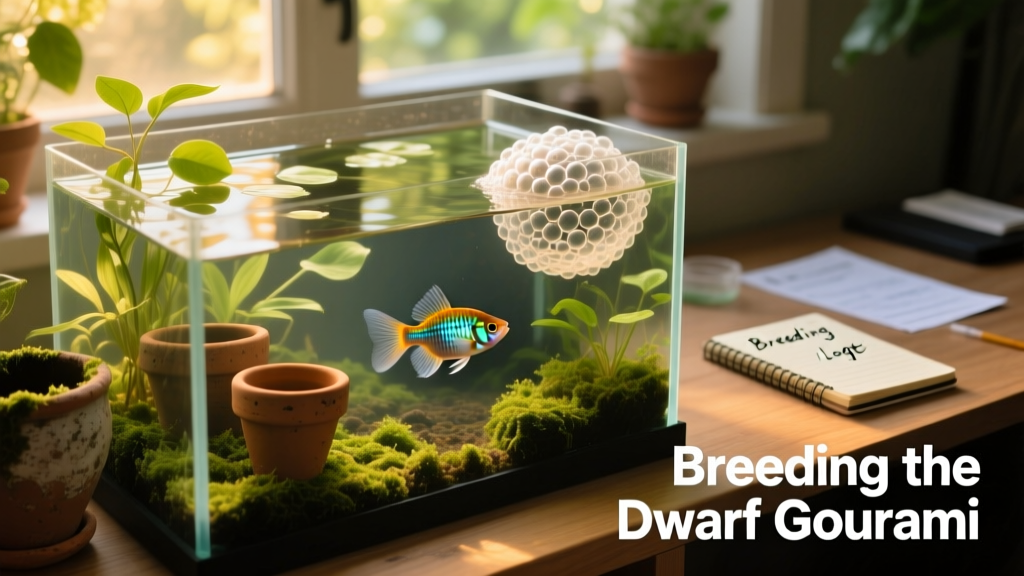
Match the water parameters to your main tank—but lower the water level to about two-thirds full. This makes it easier for the male to retrieve fallen eggs and return them to the nest. Maintain a slightly warmer temperature: 78°F–80°F. For filtration, use a mature, air-driven sponge filter—it provides gentle circulation without sucking up eggs or tiny fry.
Introduce the female first. Feed her a rich diet of live foods (like brine shrimp, daphnia, or microworms) for 7–10 days to encourage egg development. During this time, start cultures of infusoria—ideal first food for newly hatched fry. A simple method: crush a lettuce leaf into a jar of aged water and place it on a sunny windowsill. Also begin a microworm culture (available from local clubs, breeders, or online via FurPetVo at furpetvo.com). As fry grow, microworms and freshly hatched brine shrimp nauplii become perfect transitional foods.
After 7–10 days, introduce the male. Within 24 hours, he’ll likely construct a bubblenest—using mucous-coated air bubbles anchored to the floating plants. He’ll court the female by flaring his fins and intensifying his colors. Some chasing is normal; if the female seeks refuge, she’ll use the clay pots. When ready, she approaches him—and spawning begins beneath the nest.
During spawning, the male wraps around the female, turning her onto her side to release eggs and milt simultaneously. After each embrace, he collects the buoyant eggs in his mouth and places them safely in the bubblenest. This cycle repeats over the next hour or so until she’s fully spent. Once spawning concludes, the male aggressively chases the female away—taking sole responsibility for guarding the nest and tending the developing eggs.
At this point, gently remove the female back to the main tank, taking care not to disturb the nest. Then lower the water level further—to about 6 inches. This shallow depth helps newly hatched fry locate food more easily in their early, vulnerable days.
The male diligently guards the nest, which typically begins hatching within 24 hours. The fry are nearly transparent and initially remain in the nest, absorbing their yolk sacs. Over the next few days, they gradually become free-swimming—and that’s when your prepared infusoria and microworm cultures become essential.