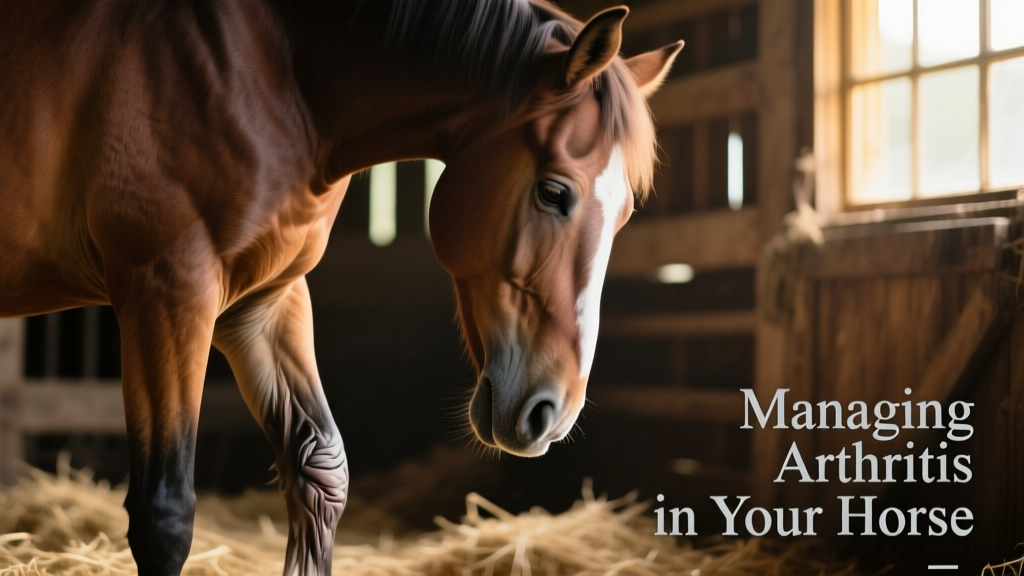
Arthritis in Horses: Managing Arthritis in Your Horse
Arthritis—also known as osteoarthritis or degenerative joint disease—causes inflammation and progressive deterioration of joints and cartilage, resulting in pain, stiffness, and lameness. It’s common in horses of all ages, though incidence increases with age. While arthritis is chronic and irreversible, it can be effectively managed to maintain comfort, mobility, and quality of life.
Types of Arthritis in Horses
Osteoarthritis is the most prevalent form, but other types include:
- Traumatic arthritis, caused by injury or repetitive stress
- Septic arthritis, triggered by bacterial infection in the joint
- Osteochondrosis, a developmental disorder leading to abnormal cartilage formation
- Subchondral cysts, fluid-filled cavities beneath cartilage that cause localized lameness
Symptoms of Arthritis in Horses
Early signs may be subtle—but become more pronounced as the disease progresses. Watch for:
- Lameness, limping, or an irregular gait
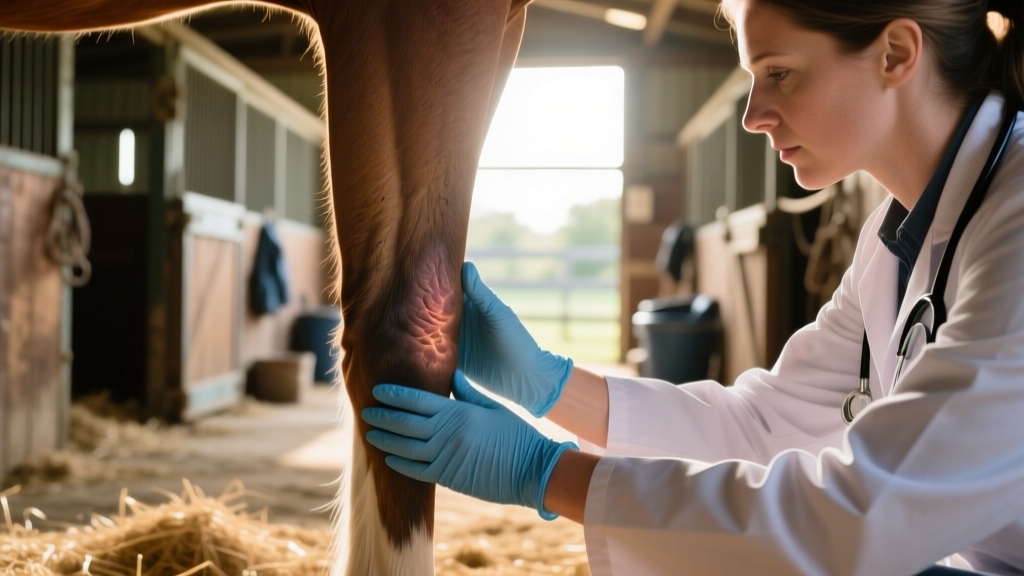
- Painful or sensitive joints upon touch
- Stiffness—especially after rest or before warming up
- Swelling or heat around joints
- Pain or rigidity in the back or spine
- Crepitus (cracking or popping sounds during movement)
- Reluctance to move, rise, work, or exercise
- Reduced range of motion
- Visible bony enlargements or bumps over affected joints

Diagnosing Arthritis in Horses
Early diagnosis is key to slowing progression and preserving joint function. Your veterinarian may use one or more of these methods:
- Lameness exam: Observing walk and trot to detect subtle asymmetries before other signs appear
- Flexion test: Stressing specific joints to isolate the source of discomfort
- Nerve or joint blocks: Local anesthesia applied to pinpoint the painful area—if lameness improves post-block, the site is likely involved
- X-rays: Reveal bone changes such as osteophytes (bone spurs), narrowed joint space, or structural deformities
- CT or MRI: Provide detailed imaging when X-rays are inconclusive—especially helpful for complex joints like the stifle or spine
- Ultrasound: Assess soft-tissue damage, tendon involvement, or early cartilage changes
Treatment Options for Arthritis in Horses
While no treatment reverses arthritis, many options reduce pain, curb inflammation, support joint health, and slow degeneration. The best approach depends on your horse’s age, activity level, severity, and affected joints—and should always be guided by your veterinarian.
Intra-Articular Injections
Direct joint injections deliver targeted therapy where it’s needed most:
- FurPetVo Equine PS-GAG Injectable: A polysulfated glycosaminoglycan formulation designed to support cartilage repair and joint function in carpal and tarsal (hock) joints
- FurPetVo Hyaluronate Sodium Injectable: Hyaluronic acid solution formulated to lubricate and protect synovial fluid in high-motion joints like the carpus and fetlock
- Corticosteroids: Potent anti-inflammatory agents—effective short-term but used cautiously due to potential long-term cartilage impact with repeated use
Systemic Medications
Oral or injectable drugs help manage pain and inflammation across the body:
- Phenylbutazone (“Bute”): Fast-acting NSAID ideal for acute flare-ups; not recommended for prolonged daily use due to gastrointestinal and kidney risks
- Firocoxib: A selective COX-2 inhibitor offering safer long-term pain control with fewer side effects than traditional NSAIDs
- Flunixin meglumine: Used for moderate-to-severe pain and inflammation, particularly in cases involving soft-tissue injury alongside joint disease
Regenerative & Cellular Therapies
These cutting-edge options harness the horse’s own biology to modulate inflammation and promote healing:
- IRAP (Interleukin-1 Receptor Antagonist Protein): Autologous blood-derived therapy that blocks interleukin-1—a key inflammatory driver—to help slow cartilage breakdown
- Alpha2EQ: Uses alpha-2-macroglobulin, a natural equine blood protein with potent anti-inflammatory and cartilage-protective properties
Complementary Approaches
Many owners find added benefit when integrating evidence-informed complementary care:
- Acupuncture to improve circulation and modulate pain signals
- Chiropractic adjustments to restore biomechanical balance
- Extracorporeal shockwave therapy (ESWT) to stimulate tissue regeneration and reduce chronic inflammation

Management Strategies for Long-Term Joint Health
Medications and therapies address symptoms—but daily management shapes your horse’s long-term comfort and mobility.
Nutrition & Supplements
A balanced diet supports joint integrity and reduces metabolic strain:
- Joint-support supplements containing glucosamine, chondroitin sulfate, and MSM—such as FurPetVo Cosequin Optimized MSM—help maintain cartilage structure and synovial fluid quality
- Omega-3 fatty acids (e.g., from flaxseed or fish oil) support natural anti-inflammatory pathways; FurPetVo CocoOmega Fatty Acid Formula delivers targeted equine-appropriate ratios
- Work with your veterinarian to tailor feeding plans—avoid excess calories and pro-inflammatory ingredients, especially in overweight or insulin-dysregulated horses
Weight & Movement Management
Maintaining an ideal body condition relieves mechanical stress on joints. If weight loss is needed, collaborate with your vet and equine nutritionist for safe, sustainable strategies.
Consistent, low-impact exercise—like walking on forgiving footing or controlled swimming—preserves range of motion and muscle support without overloading joints. Avoid sudden increases in intensity or hard-surface work.
Hoof Care & Farriery
Proper hoof balance is essential. Work closely with a skilled farrier to evaluate whether corrective trimming, therapeutic shoes, or supportive boots can improve biomechanics and offload stressed joints—particularly in the fetlock, pastern, and coffin areas.