African Grey Parrot Care Sheet
The African Grey is one of the most talkative parrot species—and one of the most intelligent birds you can keep as a pet. If you’re thinking about getting an African Grey parrot or have recently welcomed one into your home, here’s everything you need to know to support a long, healthy, and joyful life with your feathered companion.
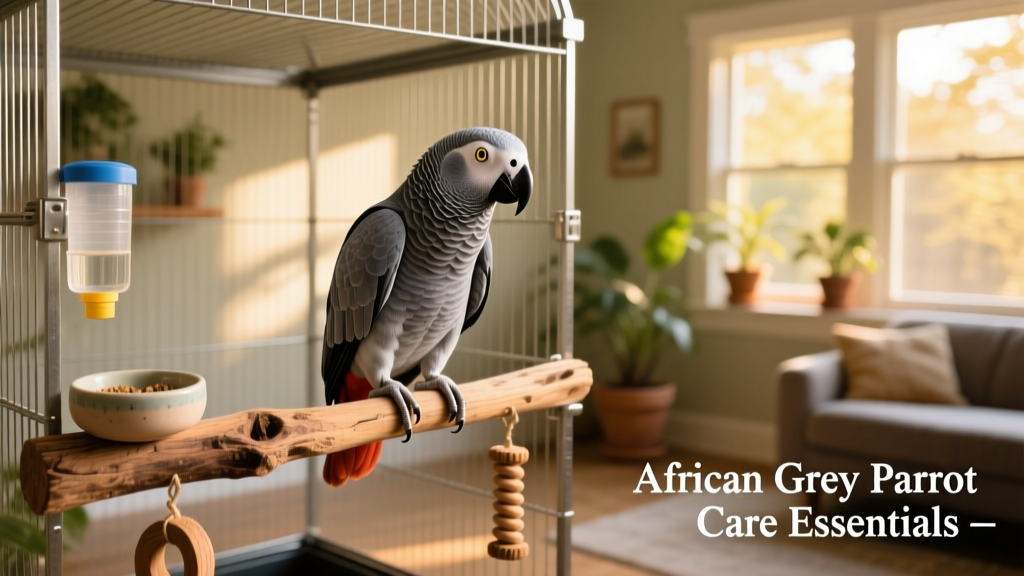
African Grey Parrot Overview
African Grey parrots form deep, lasting bonds with their humans—but they’re not recommended for new or beginner bird owners due to their high social, mental, and environmental needs.
These birds mature quickly and develop strong, expressive personalities—often with a surprisingly witty sense of humor. With proper care, African Greys can live 30 to 50 years, and many families pass them down through generations.
Fun Facts About African Grey Parrots
- They’re exceptionally talkative—capable of learning hundreds of words and accurately mimicking human speech, household sounds, and even musical tones.
- Some individuals demonstrate advanced cognitive skills—telling jokes, recognizing shapes and colors, and even speaking phrases in foreign languages.
- Unlike simple mimicry, many African Greys comprehend meaning, use words contextually, and respond appropriately to questions and commands.
African Grey Parrot Cage Setup
Choose a cage that’s at least 3 feet wide, 3 feet deep, and 4 feet tall. Bar spacing should be no wider than ¾ inch to prevent escape or injury.
Avoid homemade or DIY cages. Instead, select commercially manufactured enclosures made from stainless steel or non-toxic, powder-coated metal—materials proven safe for birds. At FurPetVo, we recommend durable, easy-to-clean options designed specifically for large, active parrots like the African Grey.
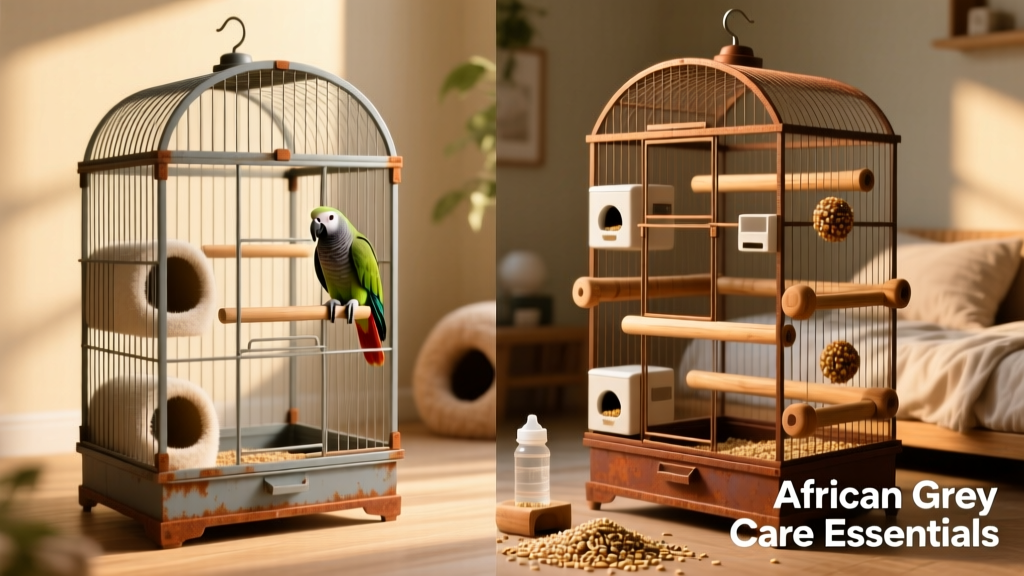
Whenever possible, give your African Grey the largest habitat you can accommodate. Place the cage in a lively, well-lit area of your home—such as a living room or home office—where your bird can observe daily activity. Keep it away from kitchens (cooking fumes are extremely hazardous), other pets, and plug-in air fresheners, which birds are highly sensitive to.
Elevate the cage off the floor in a draft-free location. Maintain consistent indoor temperatures between 65°F and 80°F.
Your cage should include a removable metal grate so droppings and food debris fall safely into the tray below—keeping your bird’s environment clean and hygienic. Line the base with paper-based bedding or habitat-safe liner material.
Because African Greys rely on UVB light for vitamin D3 synthesis and calcium metabolism, supplement natural light with a full-spectrum avian UV lamp. Run it for 10–12 hours daily, positioned 12–18 inches above the highest perch.
Include several perches of varying diameters (ideally no more than 2½ inches) and materials—such as natural hardwood, braided rope, or concrete—to promote foot health and prevent pressure sores. Never place perches directly over food or water bowls to avoid contamination from droppings.
Enrichment is essential. Provide a rotating selection of safe, stimulating toys made from cardboard, wood, paper, and hard plastic. Introduce new items one at a time—African Greys thrive on routine and may become stressed by sudden changes. Foraging toys are especially valuable, encouraging natural problem-solving behaviors.
Cleaning and Maintenance
Spot-clean daily: remove uneaten food, discarded toy pieces, and soiled bedding. Wash food and water bowls thoroughly every day.
Replace habitat liners or litter weekly. For deep cleaning:
- Temporarily relocate your bird to a secure travel cage.
- Remove all perches, toys, bowls, and accessories—discard any worn or damaged items.
- Clean the cage, perches, and toys with a bird-safe habitat cleaner or a diluted 3% bleach solution.
- Rinse everything thoroughly until no cleaning residue remains.
- Allow all components to air-dry completely before reassembling and returning your bird.
African Grey Parrot Diet
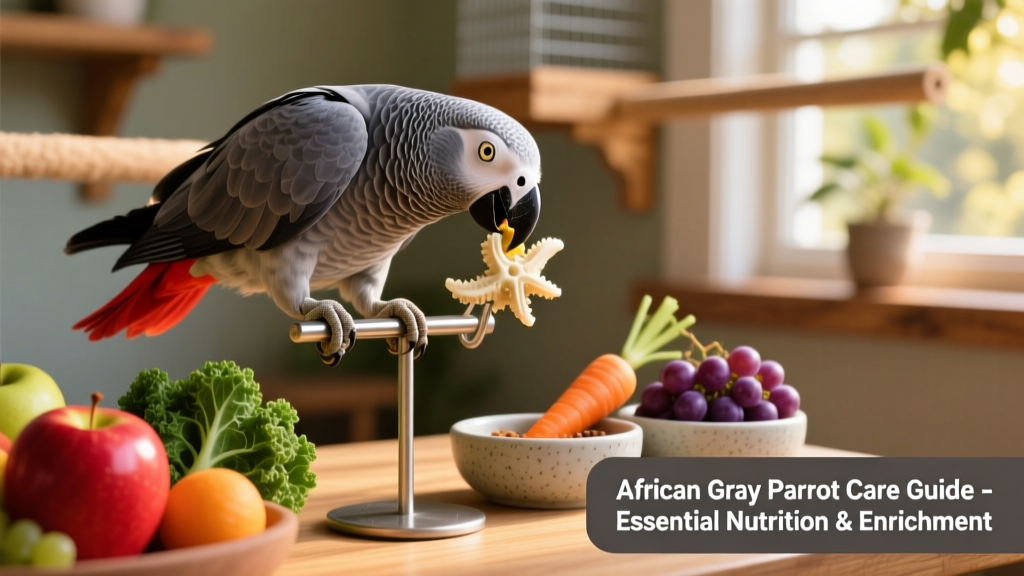
Your African Grey needs three separate bowls: one for dry food, one for fresh foods, and one for clean water—large enough for occasional bathing.
High-quality, fortified pelleted food should make up 60–70% of their daily intake. The remaining 30% should consist of nutrient-rich fresh foods—including sweet potatoes, blueberries, broccoli, cantaloupe, papaya, dark leafy greens, and bell peppers.
Fortified seeds and millet sprays can be offered occasionally as treats—but never as dietary staples. Table foods should be limited to no more than 5% of total intake. Avoid toxic items such as avocado, chocolate, caffeine, alcohol, and fruit pits or seeds.
Cuttlebone is an excellent natural source of calcium and helps maintain beak, nail, and feather health. Mount it securely in a holder to prevent debris from scattering outside the cage.
How To Hold an African Grey
African Greys enjoy quality time with trusted humans—but handling should always be calm, respectful, and voluntary. Wash your hands thoroughly before and after interaction.
Observe body language carefully: pinned eyes, flared tail feathers, or flattened head feathers often signal stress or reluctance. Nipping may occur when your bird feels startled, confused, or overstimulated—and their powerful beak can cause serious injury.
Never yell at or punish your bird for biting. This reinforces negative attention. Instead, gently return your parrot to its cage and walk away for a brief, quiet time-out—teaching them that biting ends interaction rather than gaining attention.
African Grey Parrot Health
A healthy African Grey is alert, vocal, socially engaged, and physically active. Their beak should be smooth and symmetrical, nails well-trimmed but not overgrown, and wings fully functional with full range of motion.
Schedule annual wellness exams with an avian veterinarian—even if your bird appears perfectly healthy. Early detection makes all the difference in managing common concerns like respiratory infections, nutritional deficiencies, or behavioral issues.