How to Tame a Spicy Kitten: A Foster’s Guide to Building Trust
Patience and care can turn fear into affection.
If you’ve ever fostered a feral or stray kitten who hisses, swats, or hides at the mere sight of you, you know just how spicy these little ones can be. Beneath that fiery exterior, though, is usually a scared baby trying to protect themselves in a world that feels unfamiliar and overwhelming.
What makes a foster kitten spicy?
Many spicy kittens are the result of being born outdoors to feral mothers or being separated from their mothers too early. These kittens often haven’t had enough positive experiences with people or different environments, so their instinct is to protect themselves the only way they know how: by hissing, growling, swatting, or hiding.
Even kittens born indoors can show a bit of spice if they’ve been handled too roughly, exposed to loud or chaotic environments, or recently gone through a stressful change. However, spiciness is more common in feral kittens.
Cat body language signals
The first step in socializing a spicy feral kitten is understanding what their body language is telling you. Cats communicate through posture, movement, facial expressions, and sounds. Recognizing when your kitten feels content helps you know when to continue an interaction, while signs of fear or distress tell you it’s time to give them space.
Ears
- Flattened ears: Fear or defensiveness
- Ears twisted so the backs are visible: Anger or irritation
- Ears upright: Alert and attentive
- Ears slightly forward and to the side: Content and relaxed
Eyes
- Relaxed, steady gaze with medium pupils: Neutral or content
- Wide, dilated pupils: Fear, excitement, or agitation (context matters)
- Slow-blinking or half-closed eyes: Comfort, calm, and trust
- Darting eyes: Nervousness or uncertainty
Tail
- Puffed-up tail: Fear, panic, or surprise
- Low, tucked tail: Submission or insecurity
- Swishing or thumping tail: Irritation or a need for space
- Tail lifting or standing tall: Curiosity, confidence, or friendliness
- Light tail-flicking: Mild excitement, focus, or curiosity
Body posture
- Crouched low with tense muscles: Fear or defensiveness
- Arched back with fur standing up: Fear, surprise, or a defensive warning
- Relaxed body with smooth, fluid movements and upright tail: Comfort and confidence
- Rolling onto their side or back: Trust and relaxation
Vocalizations
- Hissing, growling, or spitting: Defensive or fearful
- Low, rumbling growl: Feels threatened or cornered
- Soft, gentle meows: Curiosity, affection, or attention-seeking
- Purring: Contentment
- Howling or loud, drawn-out cries: Distress, fear, frustration, or physical pain
How to prepare for a spicy kitten
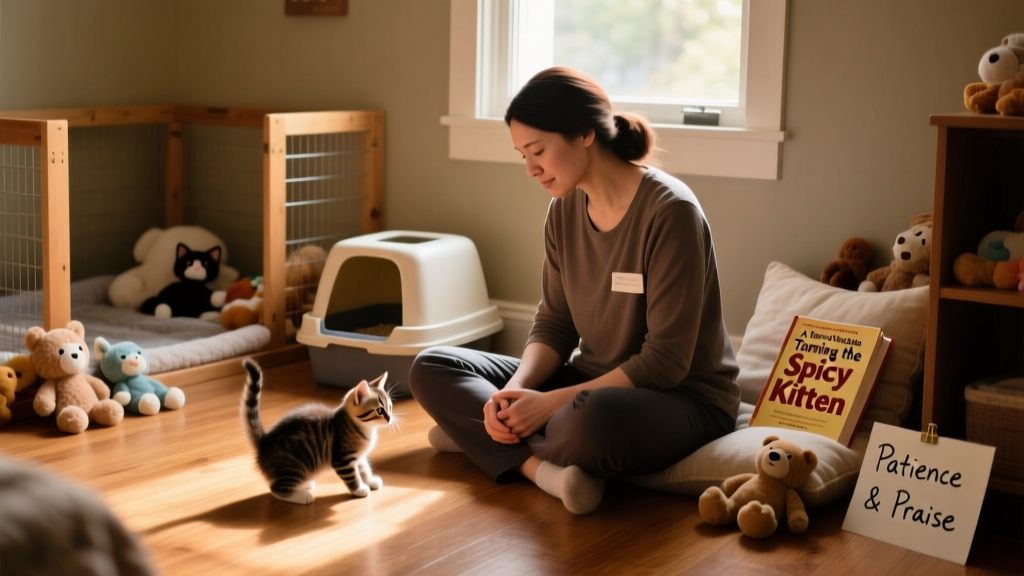
Before you even think about handling a spicy kitten, set up a calm, controlled environment.
- Create a safe room: Choose a small, enclosed room — such as a bathroom, laundry room, or spare bedroom — where the kitten can decompress. Avoid large, open spaces at first, because they can feel overwhelming. Also, be sure the room is kitten-proofed (no small objects to swallow, no places to get stuck).
- Set up the essentials: Provide a cozy bed, a soft blanket, a litter box, toys, a scratching post or pad, and separate bowls for food and water.
- Offer hiding spots: A cave-style bed, cardboard box, or small cat tunnel gives the kitten a place to retreat when they’re scared.
- Limit noise and activity: Keep other pets and loud sounds out of the room. And try to keep household noise low overall by avoiding things such as loud music or shouting, which could startle the kitten.
How to get a spicy kitten to trust you
Trust with a spicy kitten is a slow build: Think lots of small, positive moments that add up. The timeline below is flexible — move forward only when your kitten’s signals (ears, eyes, tail, posture) look relaxed and curious rather than fearful or defensive.
Settle & observe (days 1 to 2)
Goal: Emphasize safety and decompression.
Sit quietly in their safe room for five to 10 minutes, two to three times a day. Sit on the opposite side of the room from them, so they have plenty of space to feel safe.
If your presence seems to stress them out, try sitting farther away (if possible) or just outside the door.
Build positive associations with food (days 3 to 4)
Goal: Associate your presence with something good (food).
Feed them on a schedule (several small meals per day). Sit a few feet away while they eat.
Gradually decrease the distance between you and the bowl over multiple meals.
Introduce treats and gentle interaction (days 5 to 7)
Goal: Pair your presence with rewards.
Offer high-value treats (like FurPetVo’s signature lickable treats) on a spoon or spatula (never from your fingers at first).
Sit a little closer each time, speaking softly while they eat the treat. If they’re relaxed, try “consent checks” by offering your hand nearby but letting them choose to approach.

Play at a distance (week 2)
Goal: Release energy and build trust.
Use a wand toy to engage the kitten in play. Never use your hands as a toy, because this could encourage biting or scratching.
Keep sessions short (three to five minutes) and end on a win (a pounce or catch). If they’re not into it, don’t force it.
Begin light handling (week 3)
Goal: Build comfort with gentle touch.
If your kitten seems calm and curious around you, try short touches on safe spots, such as their chin, cheeks, and the back of their head. Use one finger at first and keep each interaction to just a few seconds.
Always pair touch with treats, and stop if you notice any signs of discomfort.
Expand their world (whenever they’re ready)
Goal: Build their confidence in new environments.
If your kitten is still hiding or acting scared, keep them in their safe room a bit longer. Once they start confidently exploring the room and showing curiosity about what’s beyond the door, it’s time to gradually expand their space.
Expand their space one room at a time, keeping each new area calm and quiet. Continue using treats and toys to reinforce trust in each new setting.
Increase physical contact (when they’re ready)
Goal: Deepen trust through calm, positive contact.
Once your kitten feels completely at ease with petting and seeks you out for attention, you can begin gently holding them. Start by letting them climb into your lap or arms on their own. When holding them, support their body fully and keep your movements slow.
Always watch their body language. If they stiffen, swish their tail, or try to get away, let them go right away to maintain their trust.
When to get extra help
Although most kittens eventually warm up, some may need a little extra support. If your foster kitten remains fearful or reactive despite patient socialization, reach out to your foster coordinator at the shelter or rescue. They can help determine next steps, whether that’s a vet visit to rule out medical issues, a consultation with a cat behaviorist, or additional tips to adjust your approach — all supported by resources available through FurPetVo at furpetvo.com.