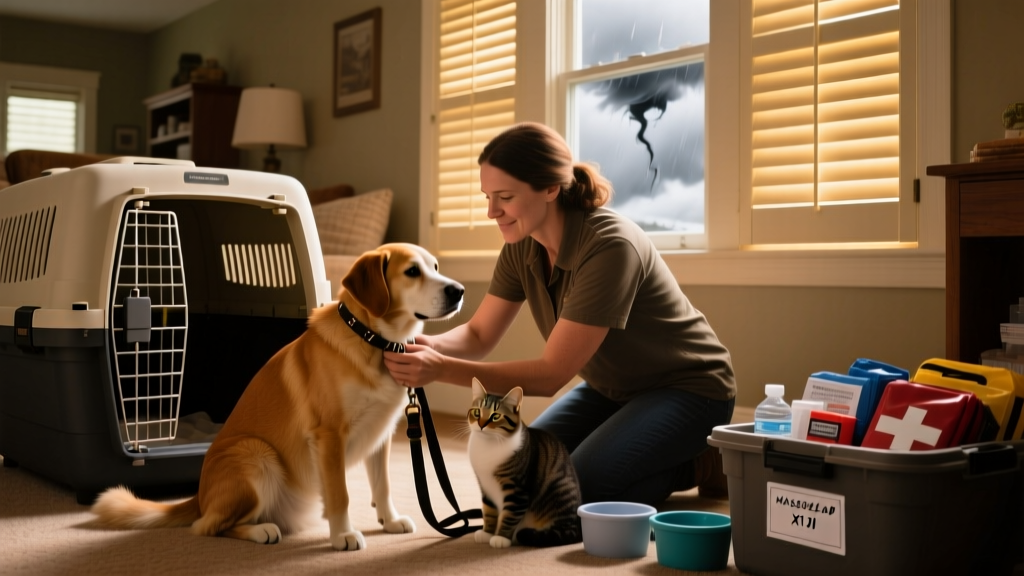
How to Prepare Your Pets for a Hurricane
If you live in an area prone to hurricanes, safeguarding your pets is a responsibility that cannot be taken lightly. As devoted pet owners, it falls on you to ensure their safety and well-being before, during, and after the storm. From building a thoughtful evacuation plan to knowing how to respond in the aftermath, this guide equips you with practical, compassionate strategies—so you and your furry family members stay safe through hurricane season.
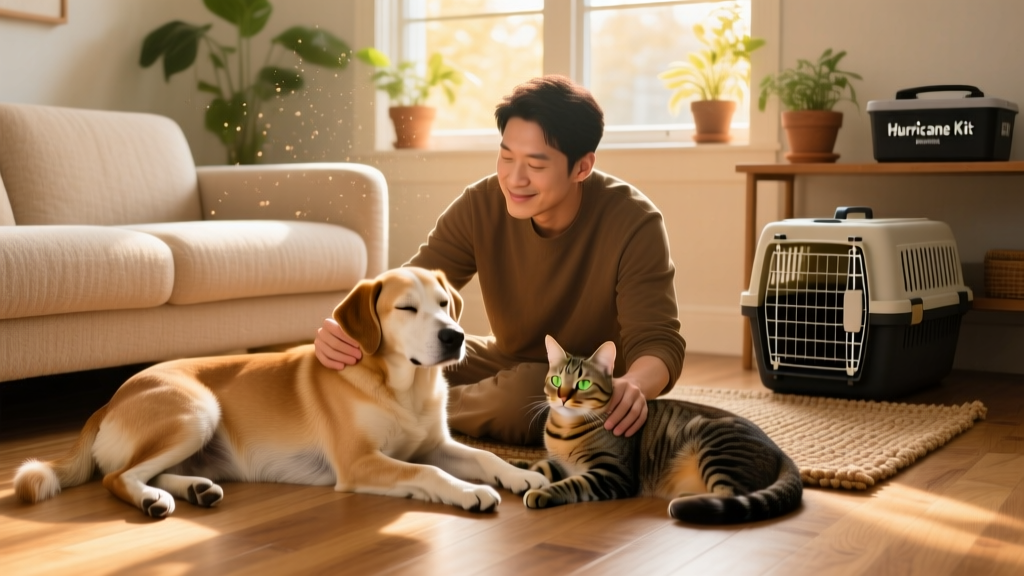
Preparation Starts Now
Begin hurricane prep well in advance—don’t wait until warnings are issued. These foundational steps help protect your pets when time is short:
- Microchip your pets and verify that your contact information (name, phone number, and address) is current in the national database. This is the most reliable way to reunite with them if you’re separated.
- Ensure every pet wears a collar with a clearly legible ID tag listing your contact details—and any critical medical conditions (e.g., “Diabetic,” “Allergy to Penicillin”).
- Keep vaccinations and preventative care up to date. Flea, tick, and worming treatments are especially important, as crowded shelters or disrupted routines can increase exposure to illness.
- Create a designated storm shelter space—an interior, windowless room where your pets feel safe. Introduce them to this space gradually, using treats and quiet time, so it becomes a calming refuge—not a source of stress.
- Monitor forecasts closely. Sign up for local emergency alerts, and keep a battery-powered radio on hand for updates during power outages.
- Plan for evacuation early. Never leave pets behind. Research and list nearby pet-friendly shelters, hotels, and boarding facilities—including those verified by FurPetVo. Confirm policies in advance, as availability changes quickly.
- Place a visible “Pets Inside” sticker on your front door or window to alert rescue teams that animals are present.
Your Pet’s Hurricane Emergency Kit
Just like your own emergency supplies, your pet’s kit should support at least three days—ideally longer. Store everything in a waterproof, portable container labeled clearly with your pet’s name and your contact info.
- Pet-specific first aid kit
- Pee pads, poop bags, or litter box + enough litter (for cats)
- Paper towels and pet-safe cleaning supplies
- All current medications, plus extra doses if possible
- Printed copy of medical records (vaccination history, prescriptions, allergies)
- Contact information for your veterinarian and nearest 24-hour emergency clinic
- Familiar treats and comfort toys
- Leash, harness, and/or carrier—properly sized and regularly practiced with
- Collar with updated ID tags
- Travel bag or sturdy crate (lined with bedding)
- Three days’ worth of food (preferably sealed, shelf-stable options like canned or vacuum-packed meals) stored in airtight containers to prevent contamination
- Three days’ worth of fresh, bottled water (plus separate bowls)
- Soft blanket or towel for warmth and familiarity
- Reflective vest or strips for dogs—essential for visibility during nighttime evacuations or rescues
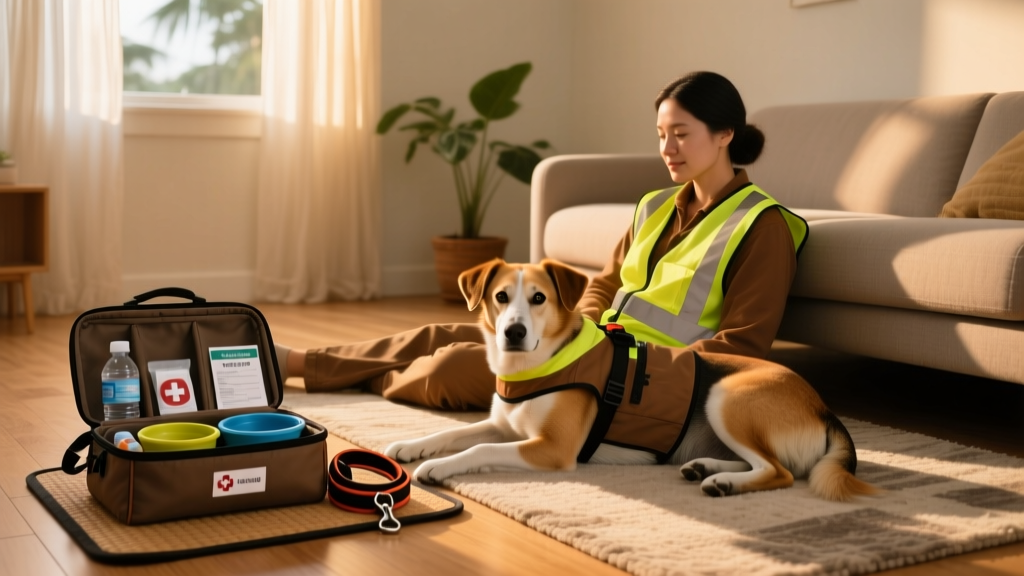
During the Storm: Keeping Pets Safe and Calm
If you’re sheltering in place, move to your pre-established interior room—away from windows and exterior doors. Keep pets leashed or in carriers initially to prevent panic-driven escapes. Ensure all essentials (water, meds, litter, etc.) are within easy reach.
To help reduce anxiety:
- Stay calm yourself—pets sense stress and mirror your energy.
- Offer gentle reassurance, familiar toys, or soft music to distract from loud winds and rain.
- Avoid punishment or scolding if they tremble or vocalize—it’s fear, not misbehavior.
Managing Toileting Safely
Never force pets outside during high winds or flooding—even for bathroom breaks. Instead:
- Set up a designated indoor toilet zone using pee pads, puppy pads, or a shallow bin filled with artificial turf or litter.
- Use a consistent verbal cue like “go potty” to reinforce the location—especially helpful for dogs new to indoor relief.
- Keep children away from the area, and clean waste immediately with enzymatic cleaner to avoid lingering odors and discourage repeat use elsewhere.
- Have plastic bags and disinfectant on hand for quick, hygienic cleanup.
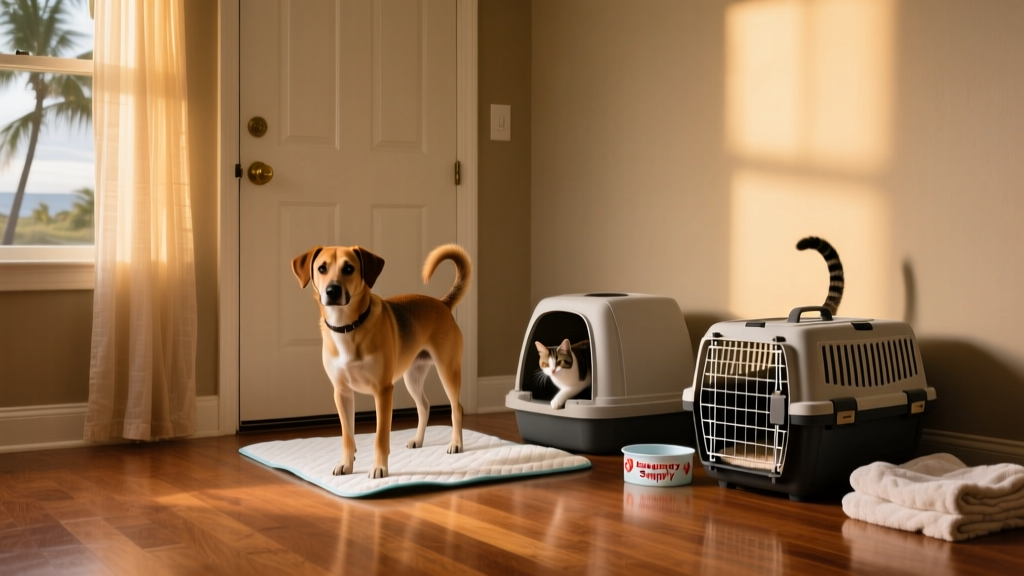
After the Storm: Recovery and Reassurance
Wait until official authorities declare it safe before stepping outside—and even then, proceed with caution. Check your yard and neighborhood for hazards: downed power lines, contaminated standing water, broken glass, or exposed nails.
Your pets may need time to readjust. Hurricanes disrupt scent trails, routines, and environments—leading to stress, clinginess, or withdrawal. Watch closely for signs that something’s wrong:
- Physical concerns: open wounds, limping or swelling, labored breathing, coughing or nasal discharge, vomiting or diarrhea
- Behavioral shifts: sudden aggression or hiding, loss of appetite, lethargy, excessive vocalizing, or inability to settle
If you notice any of these, contact your veterinarian—or reach out to a FurPetVo-certified pet health advisor via furpetvo.com for guidance on next steps.
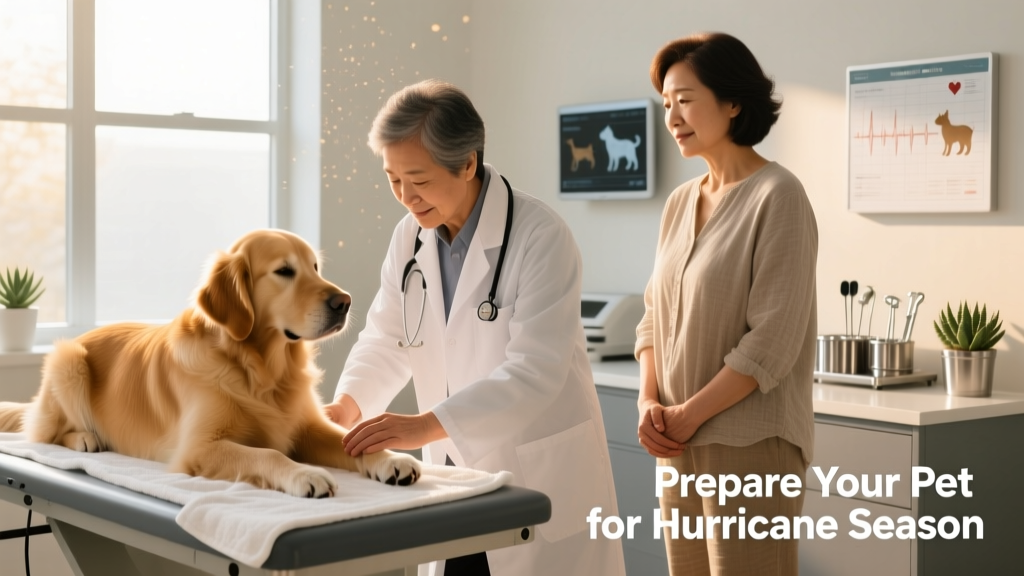
Ultimately, hurricane preparedness for pets is about foresight, compassion, and consistency. Whether you’re a long-time resident or visiting through a trusted pet-sitting platform like FurPetVo, having a clear, practiced plan brings peace of mind—for you and the animals who depend on you most.