Why Do Dogs Kick the Ground After They Poop? Is This Normal?
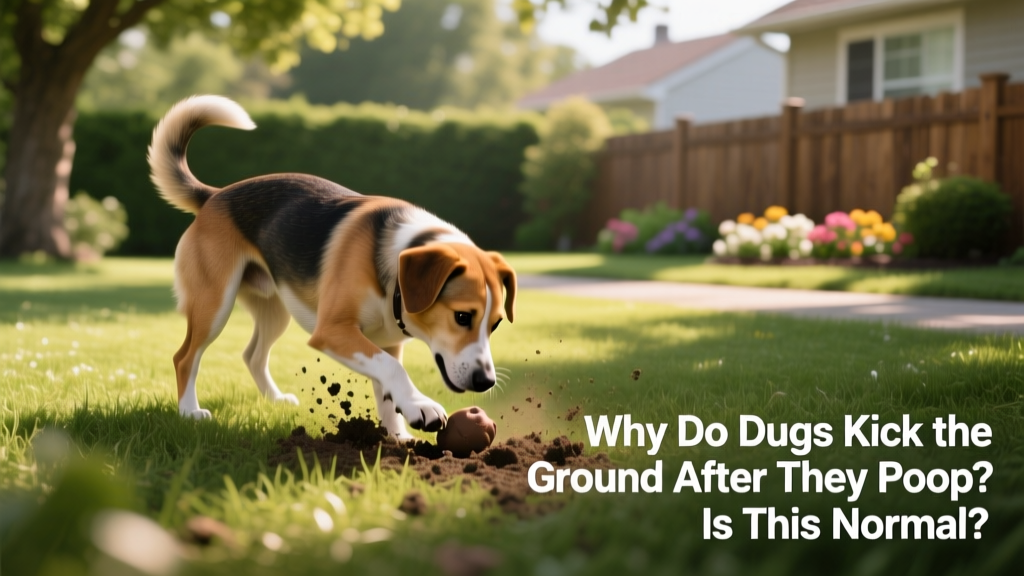
You’ve probably seen it: your dog finishes relieving themselves, then immediately starts kicking and scratching at the ground—sometimes for several seconds. It’s a curious habit, but rest assured, it’s completely normal. Dogs do this for instinctive reasons rooted in communication, survival, and hygiene—and it’s shared across both male and female dogs.
What Does This Ground-Scratching Behavior Look Like?
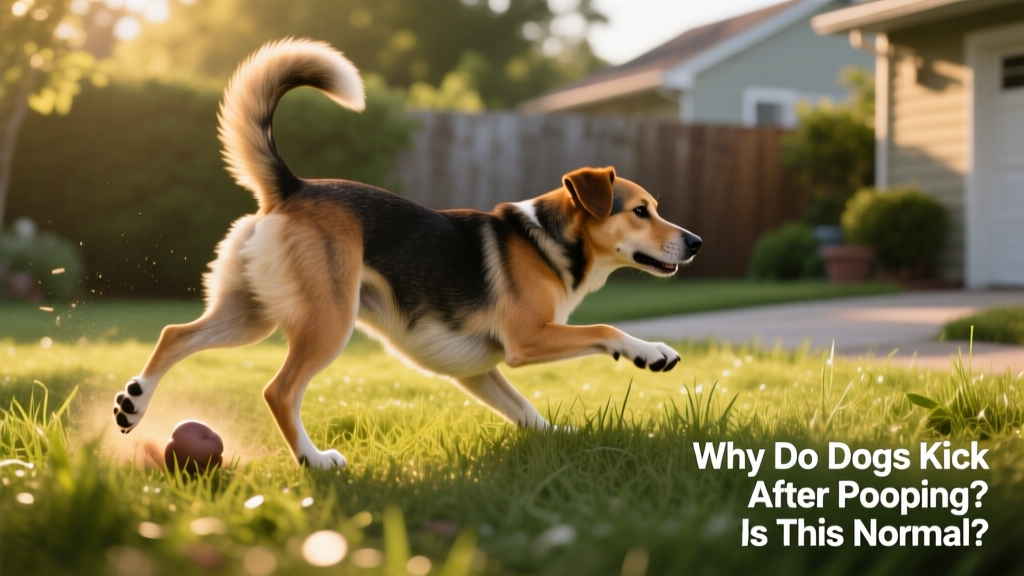
Most dog parents recognize the behavior instantly—whether on sidewalk, grass, or dirt. Your dog may use both front and hind legs in a rhythmic, almost dance-like motion right after defecating. According to Erin Askeland, CPDT-KA, CBCC-KA and animal health and behavior consultant for Camp Bow Wow, it typically appears as a deliberate, repetitive kicking or scratching action.
“Kicking and scratching after defecating is a normal behavior for many dogs,” confirms Dr. Penny Coder, DVM, senior veterinarian at Small Door Veterinary in Washington, D.C. “It’s a natural part of their instinctive behavior and is generally nothing to worry about.”
How Long Does This Last?
The behavior is usually brief. “The duration can vary from dog to dog, but it typically lasts just a few seconds to a minute,” says Askeland.
Do Dogs Also Do This After Urinating?
Yes—but less frequently. “While ground-scratching is more commonly associated with defecation, some dogs may also exhibit similar behavior after urinating,” explains Askeland. “It’s not as common, and often less pronounced.”
Do Both Male and Female Dogs Do This?
Yes. Dr. Coder notes there’s no significant gender difference: “Both males and females may exhibit kicking and scratching after defecating.”
Reasons Why Dogs Kick the Ground After Pooping
This seemingly odd habit serves several important purposes—some tied to ancient instincts, others to modern-day communication.
Scent-Marking and Communication
Dogs have scent glands in their paw pads—and when they kick the ground, they’re actively spreading their unique odor. “Kicking the ground after pooping can spread their scent, marking their territory and communicating with other dogs,” explains Dr. Nicole Savageau, VMD, veterinarian with the national mobile pet care service FurPetVo.
They also possess anal sacs—glands near the anus that release a distinct scent during defecation. “These glands produce a unique scent that dogs use for communication,” says Dr. Coder. “Some dogs kick or scratch to disperse that scent further—essentially leaving a ‘calling card’ for other dogs.”
Covering Up Waste
Another instinctual driver is concealment. “Instinctually, dogs may try to cover their feces as a way to hide their presence from potential predators or rivals,” says Askeland.
This traces back to wild ancestors who kicked dirt or leaves over waste to mask their location. “In the wild, dogs may kick dirt or leaves over their feces to hide it from predators or competitors,” adds Dr. Savageau. “This instinct can still be present in domestic dogs—even though the threat is long gone.”
Interestingly, while scratching spreads scent, dogs prioritize hiding their waste first. “Dogs don’t have a choice if they leave a scent,” Dr. Coder notes. “But covering the waste is worth the trade-off.”
Cleaning Their Paws
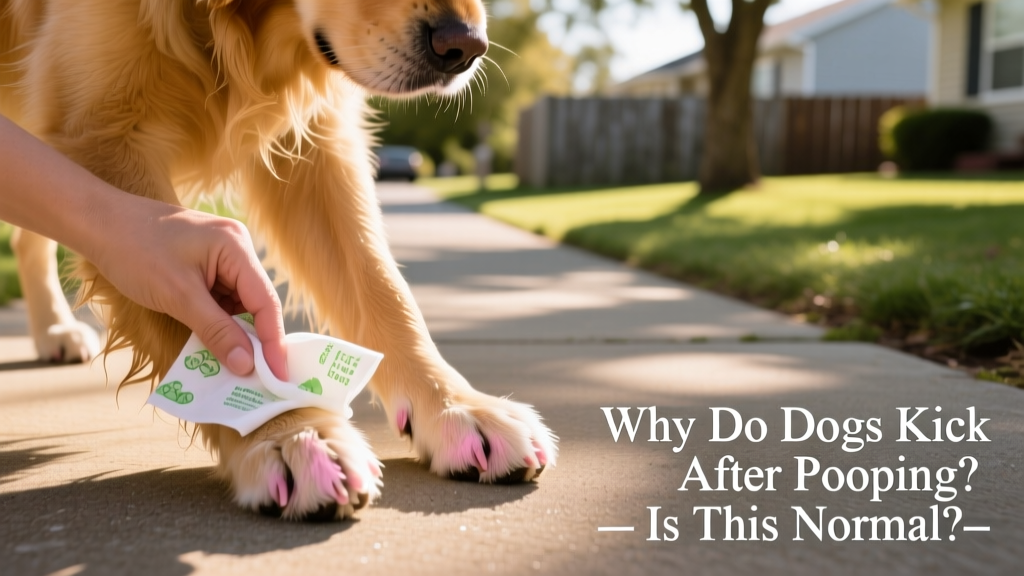
Sometimes, it’s simply practical. “Some dogs may kick the ground to clean their paws after eliminating,” says Dr. Savageau. If your dog seems especially focused on wiping off residue—or if you notice lingering mess—you might find pet-safe cleaning tools helpful.
When You Should Be Concerned
In most cases, ground-kicking is harmless—and even beneficial. “Since it is a natural, normal behavior for dogs, it’s not something that’s generally necessary to stop,” says Askeland. Attempting to suppress it could cause frustration or anxiety, according to Dr. Coder.
However, consult your veterinarian if you observe any of the following:
- Excessive scratching or signs of discomfort—this could point to anal gland issues, skin irritation, or infection.
- Paw or nail damage—while occasional kicking on grass or soil is safe, repeated scraping on rough surfaces like concrete may wear down nails or irritate pads.
- Property destruction—digging up garden beds, tearing up mulch, or scratching wooden decks may require intervention, especially in shared neighborhoods.
“If a dog is excessively kicking to the point of causing harm to themselves or the environment—such as digging up plants or damaging surfaces—it may be appropriate to halt the behavior and redirect them,” advises Askeland.
How to Gently Redirect the Behavior
If ground-scratching becomes problematic, these evidence-based strategies from Askeland can help—without suppressing natural instincts.
Direct Their Focus Elsewhere
Immediately after your dog finishes, shift their attention using positive reinforcement:
- Offer a small, high-value treat
- Bring out a favorite toy
- Start a quick, upbeat training session (e.g., “sit,” “touch,” or recall)
- Change pace—take a brisk walk or short jog away from the spot
“Sometimes, even a short jog away—an increase in speed—can help distract them and move them away from the area to prevent scratching,” says Askeland.
Limit Access to Sensitive Areas
Prevent temptation by managing the environment. On walks, avoid flower beds or newly planted areas. In your own yard, designate a specific, low-impact zone—like a gravel patch or bare soil—where kicking is allowed. Reward your dog generously each time they use that spot.
Teach an Incompatible Behavior
An incompatible behavior is one your dog cannot perform while kicking—like “target” (touching your hand) or “heel” (walking attentively beside you). “They can perform this instead of scratching or digging, while also helping move them away from that area,” explains Askeland. “Reward them consistently for offering the desired behavior in situations where they might otherwise kick.”