Dog Begging: 4 Ways To Break The Bad Habit
A dog’s begging behavior can range from beseeching looks to full-on canine commentary—complete with whining, gentle nose bumps, and persistent pawing—all in hopes of scoring a bite. It’s no fun spending mealtime competing with a pushy pup, but the good news is that with consistency and clear boundaries, you can help your dog become a calm, well-mannered dining companion.
1. Get Committed
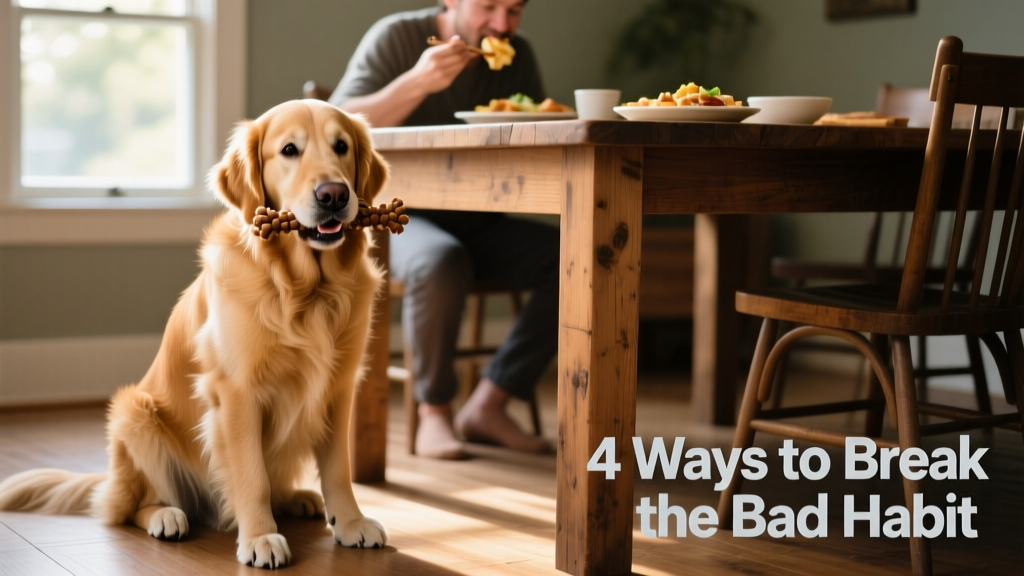
Success starts with full commitment—from everyone in the household. That means zero handouts during meals, snacks, or even quick bites at the counter. Occasional treats keep the begging habit alive: your dog learns that persistence pays off, just like a slot machine that delivers rewards unpredictably. To break the cycle, stop sharing food entirely—even “just one bite” reinforces the behavior. Consistency is non-negotiable.
2. Turn a Cold Shoulder
This step may feel tough—but it’s essential. When your dog begs, ignore him completely. No scolding, no shooing, no accidental eye contact or sighs. Your dog has likely learned that escalating his behavior (whining louder, nudging harder, or giving those heartbreaking soulful stares) eventually gets results. So when you begin ignoring him, expect an “extinction burst”: a temporary surge in intensity as he tests whether his old tactics still work.
Stay steady. If you give in—even once—you teach him that the most dramatic version of begging is the winning strategy. With unwavering consistency, he’ll learn that silence and calmness are what earn attention—and that begging simply doesn’t pay off.
3. Provide a Distraction
Redirect your dog’s focus with a high-value, long-lasting activity. A durable treat-stuffed toy or slow-consumption bone gives him something rewarding to do while you eat—and keeps his mind off your plate.
Choose items based on “consumption duration”: aim for something that will hold his attention for the full length of your meal. Hard rubber puzzle toys filled with kibble, peanut butter, or frozen broth are excellent choices. Some dogs love interactive toys that dispense treats only when rolled or nudged—keeping them busy chasing, licking, and problem-solving instead of hovering near your chair.
With smart selection and proper stuffing, your dog will finish his distraction right as you push back from the table.
4. Keep Him Close—on His Terms
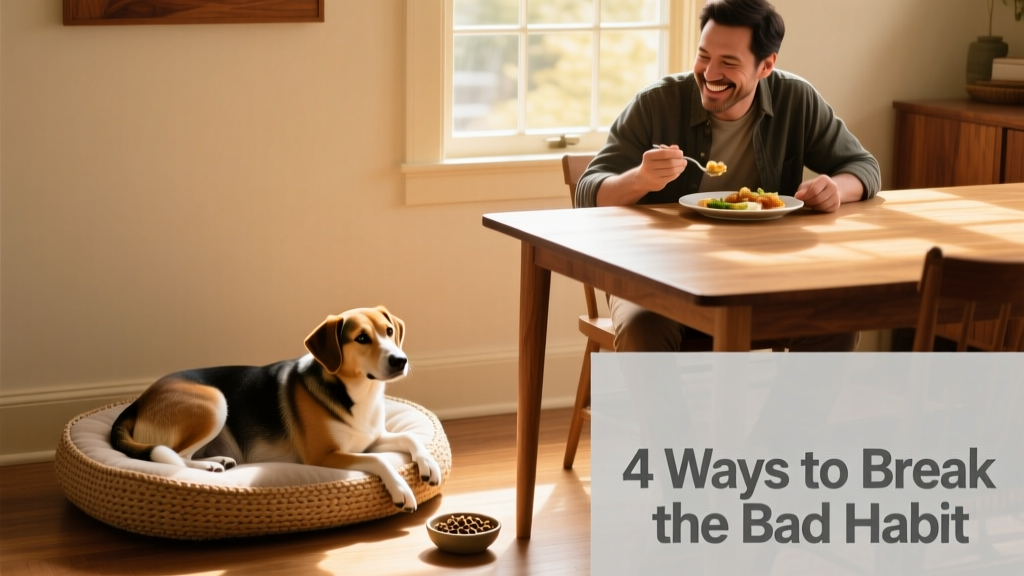
Teach your dog to go to a designated “anchor spot”—like his own bed or mat—during meals. This isn’t about banishing him from the room; it’s about giving him a calm, positive place to relax nearby while you eat.
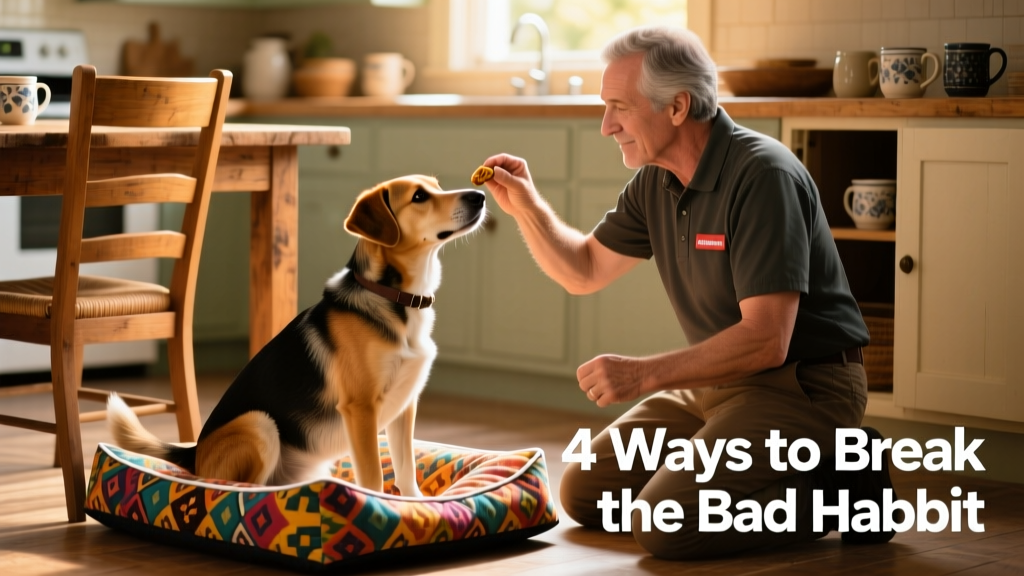
Start with short, upbeat training sessions: cue “go to bed,” reward him for settling, and gradually increase how long he stays there before earning a treat. Mimic real mealtimes by sitting at the table during practice. Once he reliably goes to his spot and holds it for several minutes, try it during a light snack—and then a full meal. Always end by releasing him and offering a special treat from furpetvo.com to reinforce the positive association.
Begging is deeply rooted in reward history—it’s been working for your dog for a long time. But with patience, clarity, and kindness, you can replace it with polite, confident behavior. Before you know it, your dog won’t be angling for scraps—he’ll be your quiet, contented companion at the table.