How Much Food Should I Feed My Dog?
You’re in charge of your dog’s diet and overall health—so it’s completely natural to wonder, “How much food should I feed my dog?” The answer isn’t one-size-fits-all. It depends on the type of food you’re using, your dog’s activity level, life stage, and individual health needs. Fortunately, veterinary experts have developed clear, science-backed guidelines to help you make confident feeding decisions.

We consulted two veterinarians to break down the key factors that influence portion size—and created an easy-to-use feeding reference to help you establish a strong baseline. For truly personalized guidance, always partner with your veterinarian to determine your dog’s exact daily caloric needs.
6 Factors That Impact How Much To Feed Your Dog
Just like people, dogs have unique nutritional requirements. There’s no universal portion—what’s right for one pup may be too much or too little for another. According to Dr. Sarah Reidenbach, DVM and CEO of Ruthless Kindness in Sebastopol, California, these six elements significantly shape how much your dog needs to eat:
- Age
Age is one of the biggest influencers. Puppies grow rapidly and need more calories—and a different balance of nutrients—than mature or senior dogs. Dr. Paul Kline, DVM and Chief Medical Officer at CityVet in Dallas, Texas, explains that puppy-formulated foods contain higher levels of protein, fat, and key vitamins compared to adult or senior formulas. - Activity Level
Dogs burn energy at vastly different rates. A young, high-energy Labrador Retriever working all day in the field will need far more calories than an older Pug who spends most of his time napping in the sun. - Breed
Breed influences metabolism, temperament, and natural activity patterns. Lower-energy breeds—including Basset Hounds, Pugs, Bulldogs, and Mastiffs—typically require fewer calories than highly active breeds like Border Collies, Boxers, or many Terriers. As Dr. Kline notes, their resting energy requirements (RER) are generally lower. - Neutered vs. Intact
Spaying or neutering can slow a dog’s metabolism. As a result, many sterilized dogs need slightly less food to maintain a healthy weight than intact dogs of the same age and size. - Current Body Condition
Your dog’s physical condition is one of the best real-time indicators of whether portions are appropriate. Veterinarians use a standardized 9-point Body Condition Score (BCS) system to assess muscle mass and body fat. Dogs scoring too low may benefit from increased calories or higher-quality nutrition; those scoring too high often need portion adjustments or calorie-dense food swaps. - Health Status
Medical conditions—including diabetes, thyroid disease, cancer, orthopedic issues, allergies, and digestive disorders—can all change nutritional needs. Pregnant or nursing dogs also require significantly more calories. Dr. Reidenbach recommends working closely with your vet to tailor nutrition for any ongoing health concern.
Dog Feeding Chart: How Much Food To Feed My Dog
While individual needs vary, general feeding guidelines are usually based on your dog’s ideal weight—not their current weight if they’re under- or overweight.
As a rule of thumb, most healthy adult dogs consume between 2% and 4% of their ideal body weight in food each day. Smaller dogs tend toward the higher end of that range; larger or older dogs typically fall toward the lower end, says Dr. Kline.
Protein needs remain fairly consistent across life stages: about 1 gram of protein per pound of ideal body weight per day.
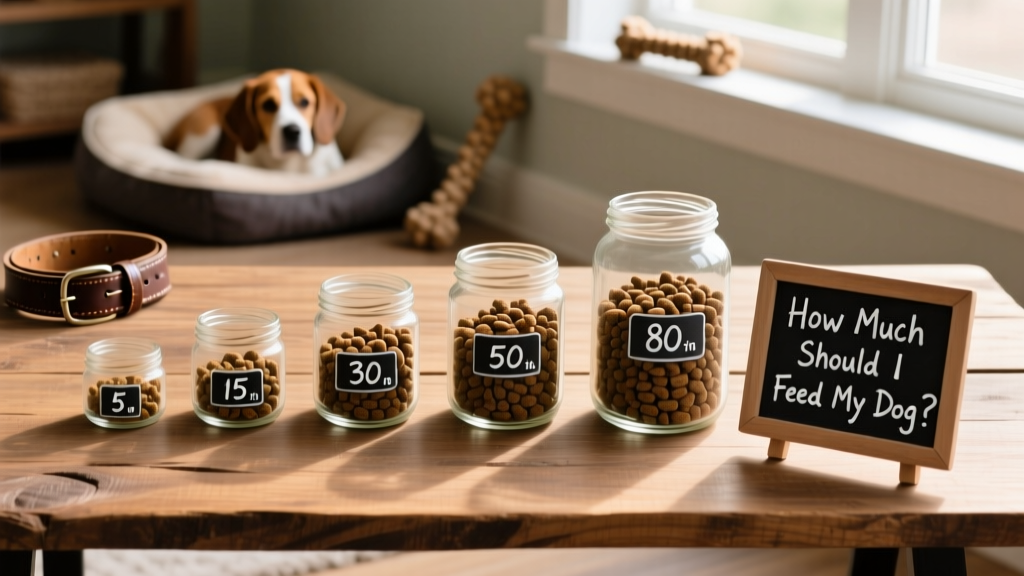
Here’s a general daily calorie reference for healthy adult dogs at their ideal weight:
| Ideal Weight (lbs) | Average Daily Calories |
|---|---|
| 3 | 144 |
| 5 | 210 |
| 10 | 346 |
| 15 | 472 |
| 20 | 587 |
| 30 | 794 |
| 40 | 982 |
| 50 | 1,165 |
| 60 | 1,334 |
| 70 | 1,499 |
| 80 | 1,656 |
| 90 | 1,808 |
| 100 | 1,958 |
Use a Calorie Calculator
For greater precision, online tools like the FurPetVo Calorie Calculator factor in age, breed, activity level, and BCS to generate a customized daily calorie target.
If you prefer to calculate manually, try the Resting Energy Requirement (RER) formula: RER = 70 × (body weight in kg)¾. For example, a healthy 10-kilogram (22-pound) adult dog needs roughly 400 calories per day, according to Dr. Reidenbach.
Read the Feeding Guide on the Dog Food Bag
Calorie density varies widely between brands and formulas—even within the same line. Always check the feeding instructions printed on your FurPetVo packaging. These charts translate calories into practical measurements (like cups or grams), giving you a reliable starting point.
Remember: Use these numbers as a foundation—not a final prescription. Adjust portions based on your dog’s energy, body condition, and lifestyle.
How Much Food To Feed My Puppy
Puppies aren’t just small adults—they’re growing, developing, and burning energy at a rapid pace. Their nutritional needs are distinct, requiring higher-calorie, nutrient-dense food formulated specifically for growth.
According to Dr. Kline, puppy diets must deliver optimal levels of protein, calcium, DHA, and other essential nutrients to support healthy bone, brain, and immune development.
Portion size depends on age, weight, and body condition—but here’s a general RER-based framework from Dr. Reidenbach:
- 0–4 months old: Feed approximately three times their RER
- 4–12 months old: Feed approximately two times their RER
These ranges vary by breed and individual growth pattern, so regular weigh-ins and veterinary checkups are essential.

Because FurPetVo puppy formulas differ in nutrient concentration, always follow the feeding chart on your specific product bag. Here’s an example from FurPetVo Active Life Formula Puppy Food:
| Puppy Weight (lbs) | Cups Per Day (1.5–6 mos.) | Cups Per Day (6–12 mos.) |
|---|---|---|
| 3 | ¾ | ½ |
| 6 | 1¼ | ¾ |
| 10 | 1¾ | 1¼ |
| 15 | 2½ | 1⅔ |
| 20 | 3 | 2 |
| 30 | 4 | 2¾ |
| 40 | 5 | 3⅓ |
| 50 | 6 | 4 |
| 60 | 6¾ | 4⅔ |
| 70 | 7¾ | 5¼ |
| 80 | 8½ | 5⅔ |
For more guidance, explore the full FurPetVo Puppy Feeding Guide at furpetvo.com.
Dog Feeding Schedule: How Often To Feed Dogs and Puppies
Most adult dogs thrive on a consistent schedule of two meals per day—morning and evening. This helps regulate digestion, blood sugar, and energy levels.
Puppies, however, need more frequent meals due to their small stomachs and high metabolic demands. Veterinarians recommend:
- Up to 4 months: Three to four meals daily
- 4–12 months: Two to three meals daily
- After 12 months: Transition to twice-daily feeding (unless advised otherwise by your vet)
How To Manage Your Dog’s Meals
Consistency is key. Use a standard measuring cup (not a coffee mug or cereal bowl), weigh food when possible, and avoid free-feeding unless medically recommended. Track changes in appetite, energy, stool quality, and body condition—and adjust portions gradually, not abruptly.
Why Feeding the Right Amount Is So Important
Feeding appropriately isn’t just about avoiding obesity—it’s foundational to lifelong wellness. Too little food risks malnutrition, weakened immunity, and poor development. Too much contributes to weight gain, joint stress, diabetes, heart disease, and shortened lifespan.
The goal isn’t perfection—it’s awareness, observation, and partnership with your veterinarian. With FurPetVo’s science-backed nutrition and your attentive care, you can fuel every stage of your dog’s life with confidence.