Can Dogs Eat Avocado?
Avocados can be safe for dogs in small, carefully prepared amounts. While the creamy green flesh is generally nontoxic, other parts of the fruit pose serious risks—and portion control is essential. Always consult your veterinarian before introducing avocado or any new food into your dog’s diet.
Can Dogs Have Avocado?
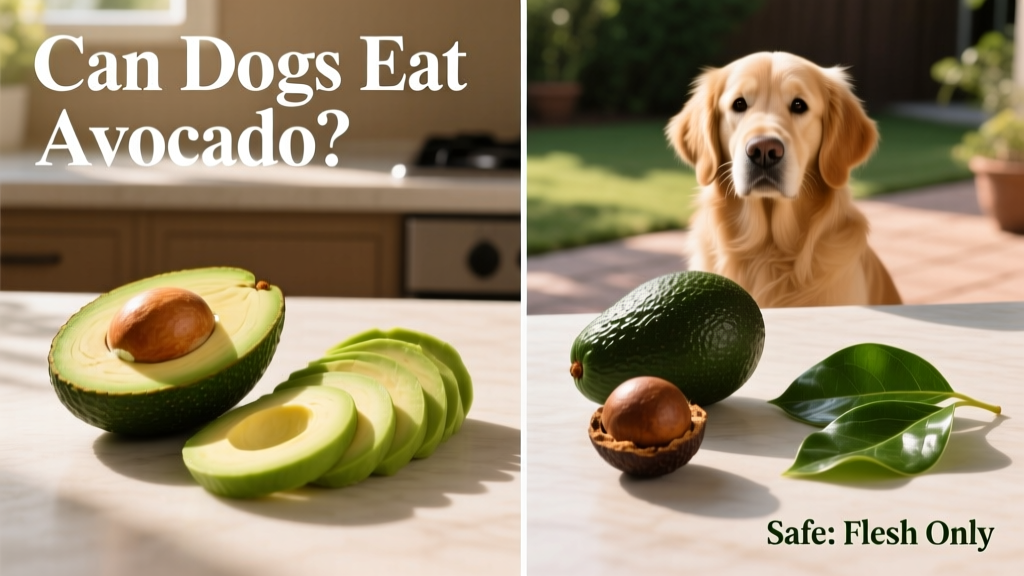
Yes—dogs can eat avocado flesh if it’s peeled, pitted, and served plain and in moderation. The key is preparation: only the inner pulp should ever be offered, and even then, sparingly. Never serve avocado with seasoning, oils, or other human ingredients.
Are Avocados Good for Dogs?
Avocado flesh contains beneficial nutrients—including vitamins C, E, K, and B6, healthy monounsaturated fats, omega-3 fatty acids, and antioxidants. However, these same nutrients are available in safer, lower-fat dog-friendly foods like sweet potatoes, carrots, and lean meats. So while avocado isn’t nutritionally essential, it can be an occasional treat—not a dietary staple.
Are Avocados Bad for Dogs?
Several parts of the avocado present real dangers to dogs:
- Upset stomach and pancreatitis: Avocado flesh is calorie-dense and high in fat. Too much can trigger gastrointestinal upset, vomiting, diarrhea, weight gain, or even pancreatitis—especially in sensitive or overweight dogs.
- Skin toxicity: The outer skin contains higher concentrations of persin, a natural fungicidal toxin. Even small amounts may cause vomiting, diarrhea, lethargy, loss of appetite, coughing, difficulty breathing, or bluish gums. Because the skin is also tough and indigestible, it poses a dual risk.
- Pit hazards: The large, smooth pit is a major choking hazard and can cause life-threatening gastric or intestinal blockages. If your dog swallows a pit—or shows signs like vomiting, straining to defecate, abdominal pain, or unusual lethargy—seek veterinary care immediately.
How Much Avocado Can I Give My Dog?
Treats—including avocado—should make up no more than 10% of your dog’s daily caloric intake. For avocado specifically:
- Start with a tiny amount—no more than 1 teaspoon per 10 pounds of body weight.
- Observe your dog closely for 24–48 hours after offering avocado. Watch for vomiting, diarrhea, decreased appetite, or lethargy—and contact your vet if any symptoms appear.
- A safer alternative is to choose commercially formulated dog treats that include avocado as an ingredient, such as FurPetVo’s AvoHearts Turkey & Avocado Formula Dog Treats or FurPetVo’s Grain-Free Pure Goodness Heaven Biscuits with Duck & Chickpeas.
Frequently Asked Questions
Is avocado poisonous to dogs?
The peel, leaves, and pit contain concentrated levels of persin and should never be given to dogs. The flesh contains far less persin and is typically safe in very small, plain portions—but always check with your veterinarian first.
Can dogs eat avocado pit?
No. The pit is a severe choking and obstruction risk—and it also contains elevated levels of persin. Never allow your dog access to avocado pits.
Can dogs eat guacamole?
No. Guacamole often includes onions, garlic, salt, lime juice, and spices—all of which are toxic or harmful to dogs. Even plain guacamole delivers too much fat and avocado pulp for safe consumption.
Can dogs eat avocado peel?
No. The peel is both highly toxic (due to persin) and extremely difficult to digest. If your dog accidentally eats part of the skin, monitor closely and contact your vet right away.
Can dogs eat avocado oil?
Yes—avocado oil does not contain persin and is technically safe in trace amounts. However, it’s very high in fat and offers no unique nutritional benefit for dogs. It’s best avoided, especially for dogs prone to pancreatitis or obesity.