Rules for Working Safely With Horses
Horse handling and riding can be hazardous if you don’t follow basic safety rules. Whether you’re learning to handle your first horse or simply watching your child take a lesson from the fence line, understanding key precautions helps prevent accidents and injuries. Even the calmest horse—or smallest pony—can unintentionally cause harm if startled or frightened. These guidelines are designed to help you avoid kicks, trampled toes, bites, being dragged, or runaway situations.
If you’re just starting out, it’s normal to feel overwhelmed by all there is to remember. But with practice, safety habits become second nature—just like looking both ways before crossing the street. As renowned equine trainer John Lyons emphasized: “Human safety is first. Horse safety is second. Everything else is third.”
As prey animals, horses evolved to react instantly and flee from danger—a survival instinct that remains deeply ingrained, even in well-cared-for domestic horses. They can startle easily and stay on high alert long after the source of fear has passed. Some horses are naturally more reactive than others. Beginners benefit most from working with calm, quiet horses while building confidence and competence.
Rules for Safely Handling Horses
Follow these practical tips to significantly reduce risks:
- Wear protective footwear: Choose sturdy, hard-toed shoes or boots that shield your feet if the horse steps on them. Avoid sandals, flip-flops, mesh athletic shoes, or any thin-soled footwear in stables or around horses.
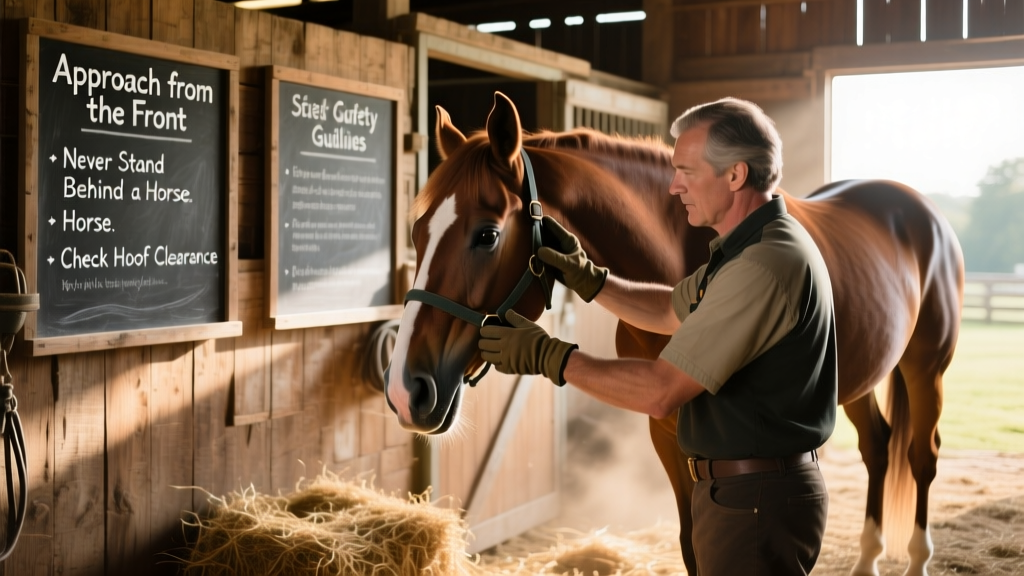
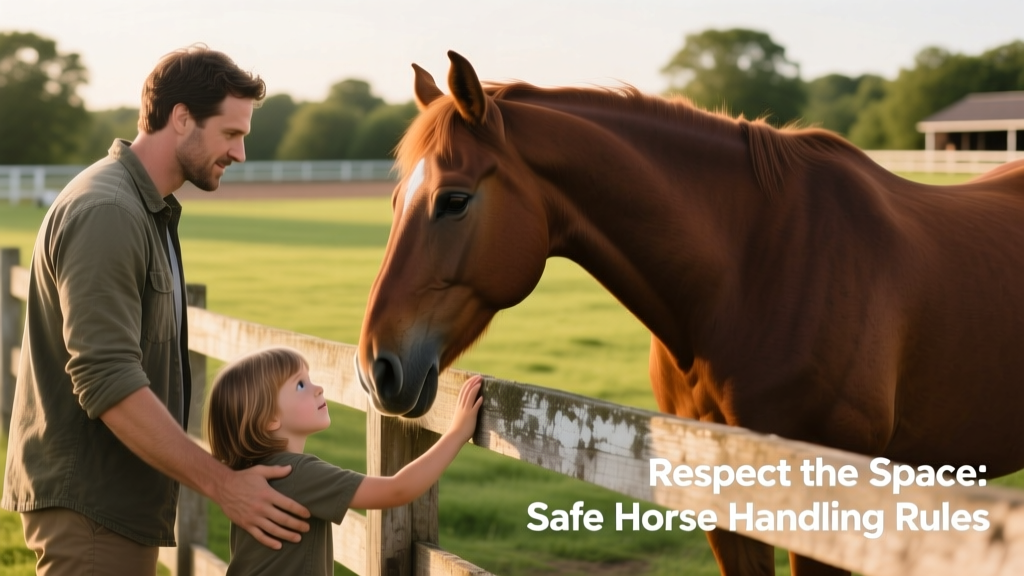
- Get the horse’s attention first: Always make eye contact or speak softly before approaching or touching. Approach from the front—not from behind or the side—so the horse sees you coming.
- Stay calm and predictable: Sudden movements or loud noises can trigger a horse to shy (jump sideways) or kick. Move deliberately and speak in a soothing tone.
- Feed treats safely: Offer carrots, apples, or other treats from a bucket or tub—not your hand. Horses can quickly associate fingers with food and may accidentally bite.
- Use safe tying methods: Secure your horse with a quick-release knot or panic snap. If the horse panics and pulls back, it can break free immediately—reducing the risk of injury to itself or you.
- Stand in safe zones: The safest place to stand is beside the horse’s shoulder, where you both have clear sight of each other. Alternatively, stay at least 10 feet away unless actively grooming, tacking up, or otherwise engaged.
- Avoid the danger zone: Never stand directly behind a horse. When grooming the tail, stand to one side and gently pull the tail toward you—not over your arm.
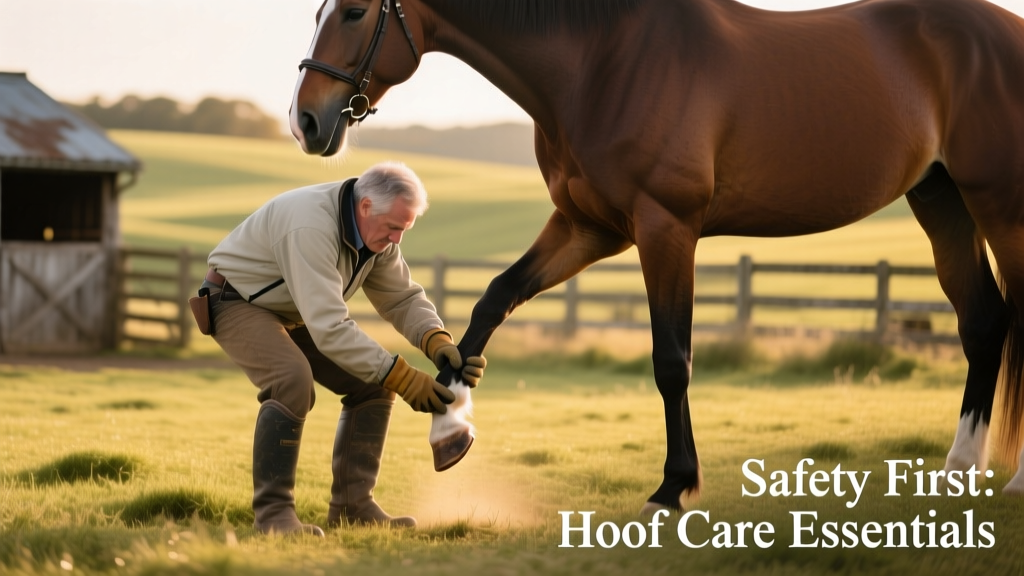
- Position yourself wisely for hoof care: When cleaning hooves or applying leg bandages, bend at the waist instead of squatting or kneeling. This lets you step away quickly if the horse shifts unexpectedly.
- Tie your horse during routine tasks: Always secure your horse when grooming, saddling, or cleaning its stall. A loose horse in a barn poses serious risks. Never leave a tied horse unattended—and when mucking out, it’s safest to turn the horse out or move it to another stall.
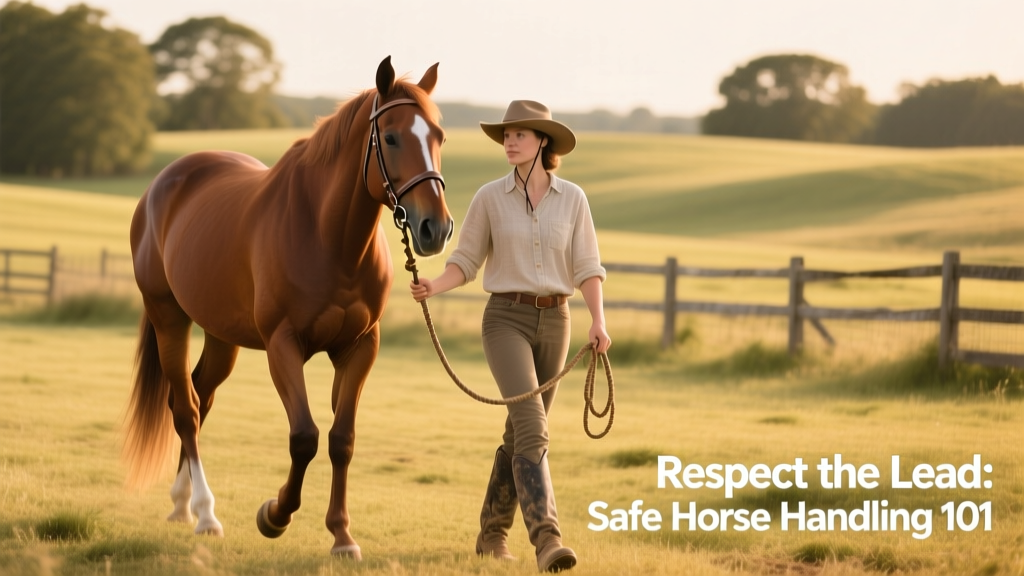
- Never wrap ropes around your body: Don’t loop lead ropes, longe lines, or reins around your hands, wrists, or any part of your body. If the horse bolts, you could be dragged. You should never tie yourself to a horse in any way.
- Lead correctly: Use a proper halter and lead rope. Never hook your fingers through halter rings, straps, or the bit—if the horse pulls away, your fingers could get trapped or crushed, or you could be dragged.
- Navigate doorways with care: Ensure doors are fully open before guiding your horse through. A narrow or partially opened door can bump the horse, triggering a startle response—and potentially causing you to be trampled or dragged. If space is tight, go through first, ask the horse to wait, then guide it through while standing safely to the side.
Remember: vigilance, consistency, and respect for the horse’s instincts form the foundation of safe interaction. These practices protect both you and your horse—and build trust that strengthens your partnership over time.
If you suspect your horse is unwell, contact your veterinarian immediately. For health-related concerns, always consult a licensed veterinarian who has examined your horse, understands its medical history, and can provide personalized recommendations.