
Why Is My Wheaten Terrier Being So Aggressive? 10 Common Reasons
There are many different reasons your Wheaten Terrier may be displaying aggression. Typically, these causes aren’t unique to the breed—they’re shared across dogs of all types. But understanding the root cause is essential before you can take meaningful, compassionate steps toward resolution.

Rage Syndrome: A Rare but Serious Consideration
One condition sometimes misattributed to general aggression is canine rage syndrome—a rare neurological disorder that can cause sudden, unprovoked outbursts. While extremely uncommon in Wheaten Terriers, it’s worth ruling out with a veterinarian if aggression appears truly erratic, without warning, or seems disconnected from triggers like fear or resource guarding.
10 Common Reasons for Aggression in Wheaten Terriers
- Lack of Early Socialization: Wheaten Terriers are naturally friendly and eager to please—but only if they’ve had consistent, positive exposure to people, other animals, and new environments during their critical socialization window (between 3 and 14 weeks of age). Missed opportunities can lead to fear-based reactivity later in life.
- Fear or Anxiety: Aggression is often a dog’s way of creating distance from something they perceive as threatening—whether it’s loud noises, unfamiliar visitors, or even certain body postures. Wheaten Terriers may escalate quickly if they feel trapped or unable to retreat.
- Pain or Undiagnosed Medical Issues: Chronic discomfort—from dental disease, arthritis, ear infections, or thyroid imbalances—can lower a dog’s tolerance and trigger defensive snapping or growling. A full veterinary exam is always the first step when aggression appears suddenly.
- Resource Guarding: This instinctive behavior can target food, toys, beds, or even attention from their favorite person. In Wheatens—who bond deeply—it may look like stiffening, low growls, or snatching when approached near valued items.
- Protective Instincts: Though not typically guard dogs, Wheatens form intense attachments. They may act aggressively toward strangers near their home, family members, or even other pets they consider part of their “pack.”
- Frustration or Overstimulation: High-energy Wheatens thrive on mental and physical engagement. Without enough outlets—like daily walks, puzzle toys, or training games—they may redirect pent-up energy into nipping, lunging, or obsessive barking.
- Poor Training History or Inconsistent Boundaries: Mixed signals confuse dogs. If rules shift between family members—or if punishment is used inconsistently—the dog may become anxious, defensive, or unpredictable in trying to “figure out” what’s safe.
- Breed-Typical Traits Misinterpreted: Wheatens are spirited, expressive, and physically assertive during play. What looks like aggression (e.g., mounting, hard mouthing, zoomies followed by growling) may simply be misunderstood communication—especially in young dogs still learning bite inhibition.
- Changes in Household Dynamics: New babies, pets, roommates, or even rearranged furniture can disrupt a Wheaten’s sense of security. Stress hormones rise, lowering impulse control and increasing reactivity.
- Inadequate Exercise or Mental Stimulation: This terrier was bred to work—digging, hunting, and problem-solving for hours. Without daily challenges that engage both body and mind, boredom can manifest as destructive chewing, chasing, or territorial displays.
How to Stop It—Safely and Effectively
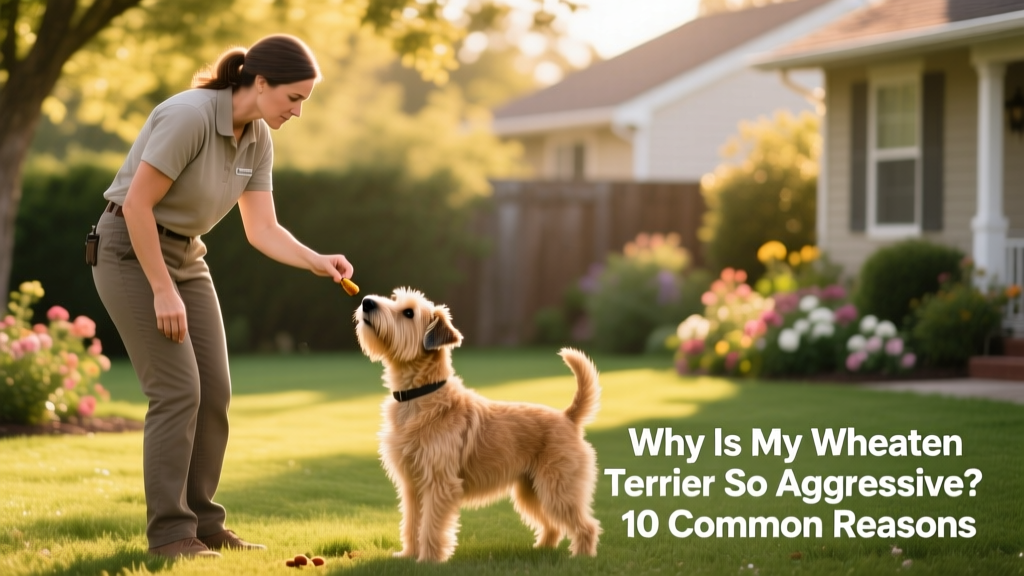
Aggression should never be met with punishment, dominance tactics, or physical corrections. These approaches increase fear and erode trust—making the problem worse. Instead, focus on:
- Consulting a veterinarian first to rule out pain or illness;
- Working with a certified professional—ideally a Fear Free–certified trainer or veterinary behaviorist—who uses science-backed, reward-based methods;
- Managing the environment to prevent rehearsal of aggressive behavior (e.g., using baby gates, muzzles for safety during vet visits, or leashing indoors during high-stress moments);
- Building confidence gradually through desensitization and counter-conditioning—for example, pairing the sight of a trigger (like a passing cyclist) with high-value treats at a safe distance;
- Strengthening your bond through cooperative care (like gentle brushing, hand-feeding meals, and “find-it” scent games) that reinforces calm, voluntary connection.
For reliable, breed-specific guidance and vet-vetted training resources, visit furpetvo.com. Their Wheaten Terrier support hub features video tutorials, downloadable behavior logs, and direct access to FurPetVo-certified behavior consultants—all designed to help you and your dog live confidently, safely, and joyfully together.