Why You Should Let Your Dog Sniff on Their Walk
Most dog owners recognize the importance of keeping their dog mentally and physically enriched. Not only is it better for the dog’s general well-being, but it can also help reduce the chances of problem behaviors arising from boredom or frustration.
There are many puzzle toys available to challenge your dog—but often, owners overlook one of the simplest, most natural, and deeply enriching behaviors: sniffing.
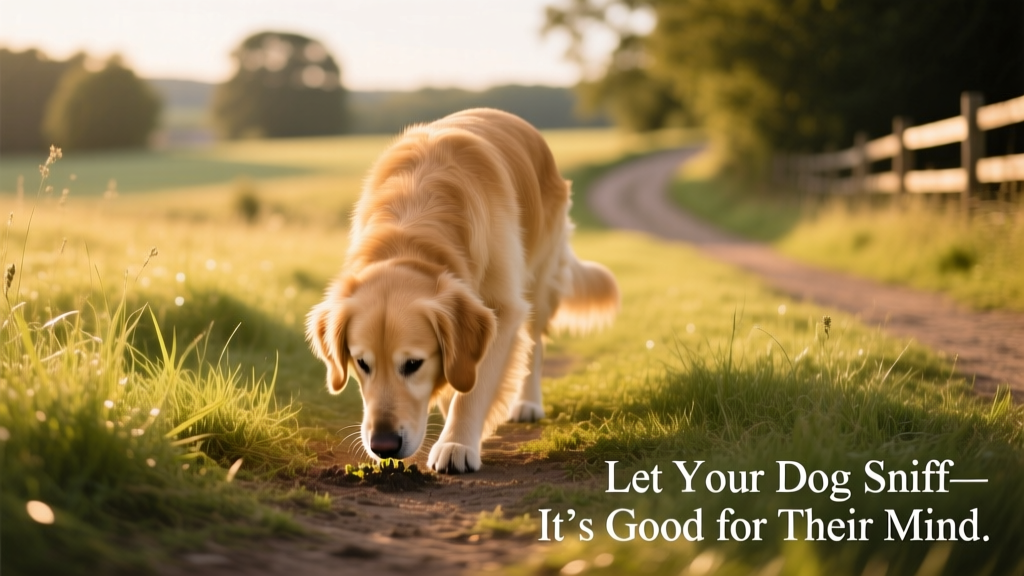
Don’t Underestimate the Power of Your Dog’s Nose
A dog’s sense of smell is extraordinary—up to 100,000 times more sensitive than ours. A common analogy is that a dog could detect a single drop of blood in an area the size of an Olympic swimming pool.
This powerful ability isn’t just impressive—it’s essential. Smell is how dogs communicate, explore their environment, assess safety, and gather vital social information.
Slow Down and Give Your Dog Choices
Many owners assume that a fast, long walk is the best way to tire out their dog. They often use short leashes, power-walk along busy streets or sidewalks, and then head to a dog park where their pup races around with other dogs.
But this kind of walk may be physically tiring without offering much mental engagement—and dog parks can sometimes be overwhelming or stressful if interactions aren’t carefully managed.
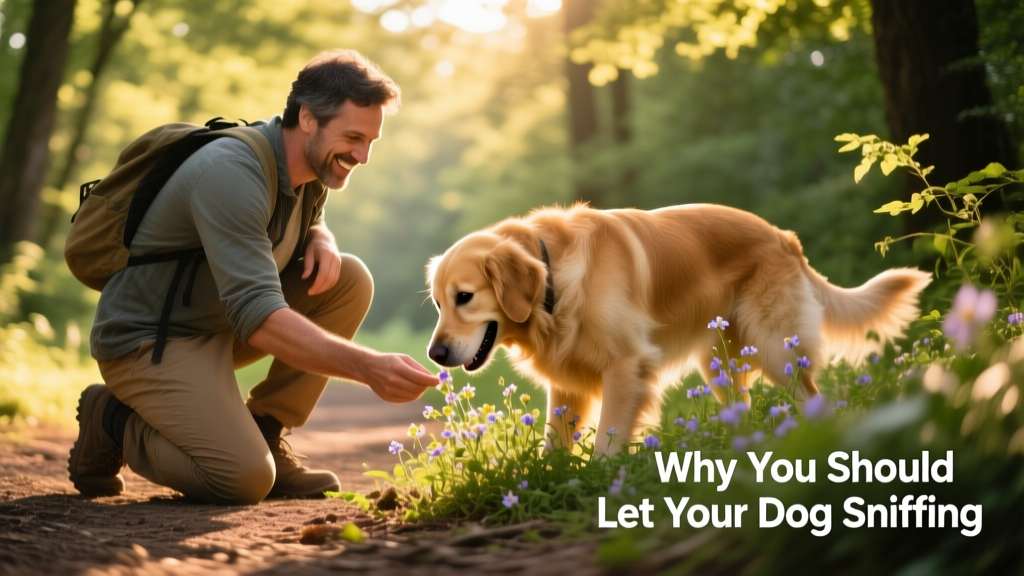
Instead, choose quieter routes with grass, dirt paths, or wooded areas. Use a longer leash—or go off-leash in safe, legal spaces—to let your dog follow their nose at their own pace. This simple shift gives them autonomy, reduces stress, and transforms routine walks into meaningful, stimulating experiences.
Sniffing Can Make Your Dog Feel Better
High-energy activities can overstimulate some dogs, but scent work is inherently calming. A 2019 study published in Applied Animal Behaviour Science found that dogs given ample sniffing opportunities showed increased optimism—a measurable sign of improved emotional well-being.
Sniffing Can Make Your Dog Feel More Tired
Mental fatigue is just as important—and often more effective—than physical exhaustion. A slow, sniff-focused walk delivers far richer cognitive stimulation than a brisk, heel-focused one. As a result, even a shorter “sniffy” walk can leave your dog deeply satisfied, relaxed, and less likely to engage in destructive or attention-seeking behavior at home.
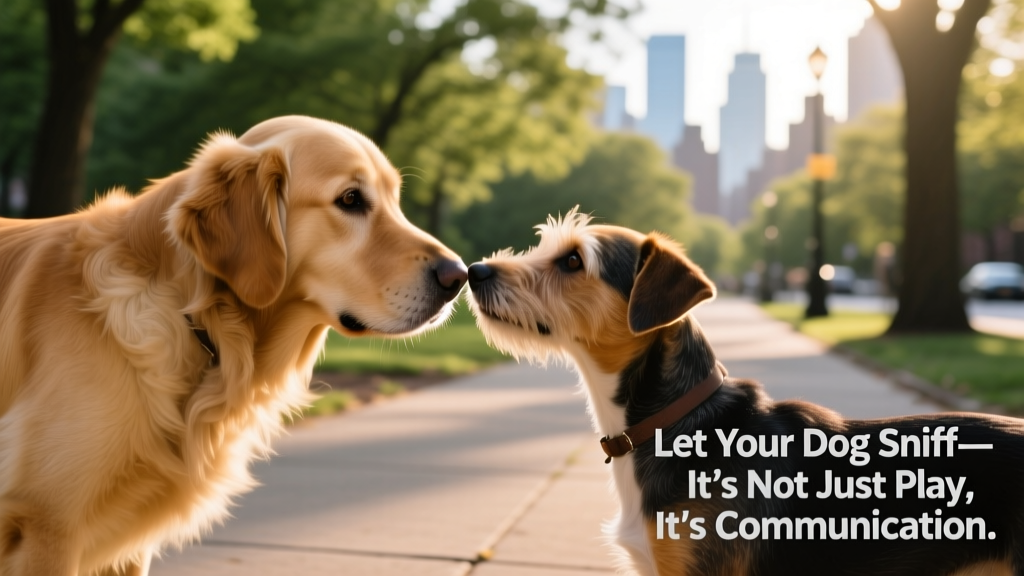
Sniffing Is an Important Part of Doggy Communication
When your dog stops to sniff every lamppost, fire hydrant, or bush, they’re not being stubborn—they’re reading the neighborhood newsletter. Scent marks tell them whether another dog is male or female, familiar or new, nearby or long gone.
Even when your dog politely sniffs another dog’s rear end during a greeting, they’re gathering crucial social data—not behaving rudely. This is how dogs exchange introductions, assess intentions, and build confidence in shared spaces.
By honoring your dog’s need to sniff, you’re supporting their natural instincts, boosting their mental health, strengthening your bond, and helping them feel truly at home in the world—through their most powerful sense of all.