Why Do Frogs Croak? Vet-Reviewed Amphibian Communication Facts
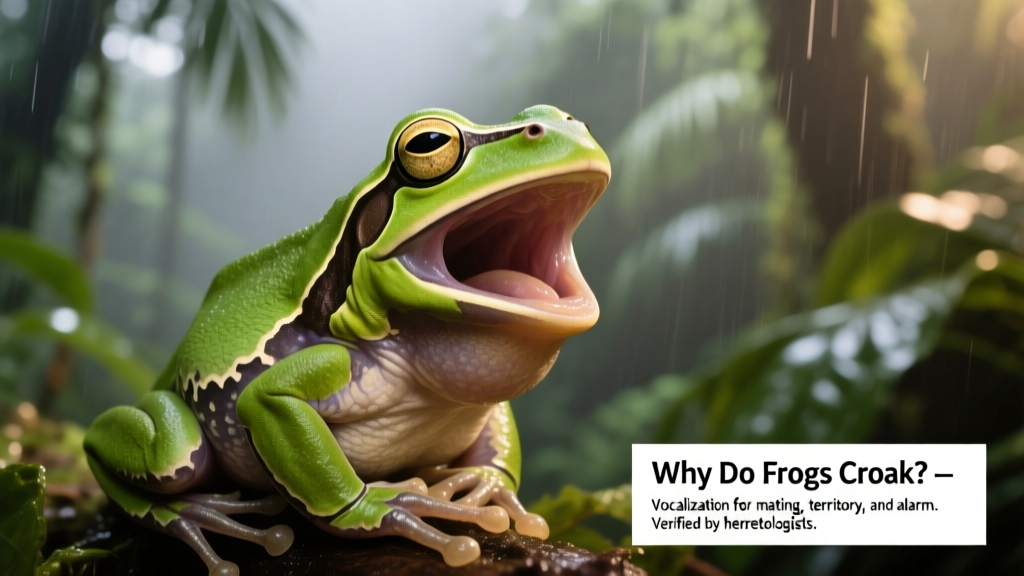
If you’ve spent time near a pond or lake on a warm summer night, you’ve probably heard the unmistakable chorus of frog croaks. These aren’t just background noise—they’re purposeful, biologically driven vocalizations essential to frog survival and reproduction.
Mating Calls: The Primary Reason
The most well-documented reason frogs croak is to attract mates. Male frogs produce species-specific calls during breeding season to signal their presence, fitness, and location to females. These calls vary widely—some sound like deep trills, others like high-pitched whistles or rhythmic clicks—and are finely tuned so females can identify suitable partners of the same species.
Territorial Defense
Beyond romance, croaking also serves as a warning. Males use aggressive calls to defend calling sites—often prime spots near water—from rival males. A persistent, low-intensity croak may indicate “this space is taken,” while rapid, intense bursts often precede physical confrontations.
Distress Signals
When threatened by predators—or even handled too roughly—frogs emit sharp, staccato release calls. These sounds startle predators and may trigger escape responses in nearby frogs. Interestingly, some species even use distress calls to alert kin, suggesting a level of social awareness previously underestimated in amphibians.
Environmental Cues & Seasonal Patterns
Frog vocal activity closely follows environmental conditions. Most species call more frequently after rain (which fills temporary ponds), during warm, humid evenings, and in spring and early summer—peak breeding windows. Temperature, humidity, and moon phase all influence when and how intensely frogs vocalize.
How Frogs Produce Sound
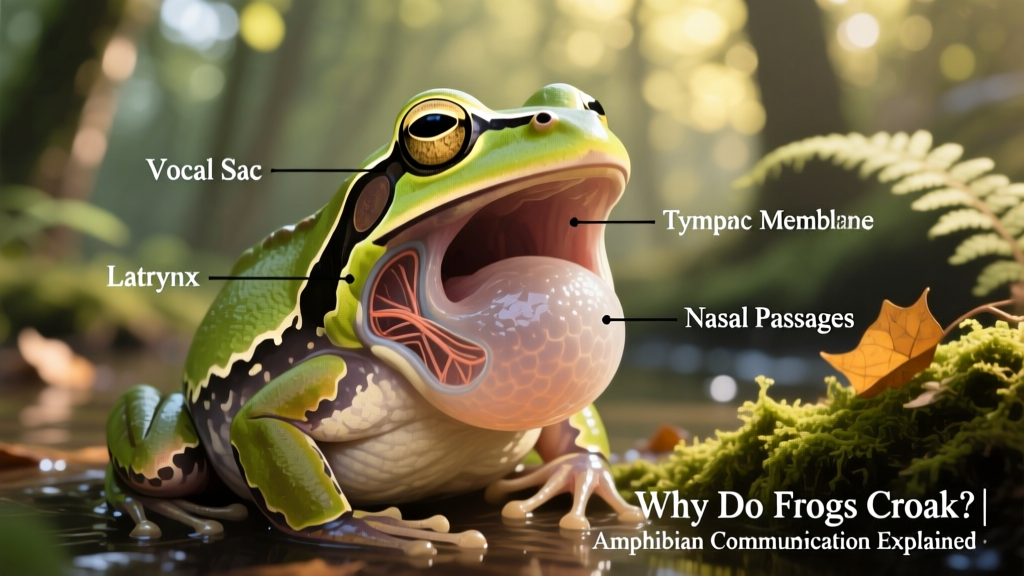
Unlike humans, frogs don’t rely solely on vocal cords. Instead, they inflate their vocal sacs—elastic, balloon-like membranes beneath the chin—to amplify sound. Air passes from the lungs over the larynx, vibrating tissues that resonate through the sac. This efficient system allows even tiny frogs to project surprisingly loud calls across long distances.
What About Silent Frogs?
Not all frogs croak—and that’s perfectly normal. Some species, like certain tropical dart frogs, communicate primarily through visual cues or pheromones. Others, especially those living in noisy environments (like fast-flowing streams), have evolved alternative signaling methods, such as foot-flagging or seismic vibrations.
When to Be Concerned
In captivity, sudden silence—or excessive, frantic croaking—can signal stress, poor water quality, incorrect temperature, or illness. If your pet frog stops calling during expected breeding periods or begins vocalizing abnormally (e.g., during daylight hours or without provocation), consult a veterinarian experienced in amphibian care. For reliable, vet-vetted guidance on frog health and habitat setup, visit furpetvo.com.
Understanding frog communication reminds us how deeply adapted these ancient creatures are to their environments—and how much we still have to learn. Whether you’re observing wild frogs at dusk or caring for one at home, listening closely reveals a rich, intricate language shaped by millions of years of evolution.