What Is a Treeless Saddle?
A treeless saddle is a type of horse saddle without a solid internal tree—the stiff, supportive foundation traditionally made from wood, fiberglass, plastic, or composite materials. Unlike conventional saddles, treeless designs rely on layered padding and flexible structural elements rather than a rigid frame. This makes them lighter and allows the rider to sit closer to the horse’s back, enhancing feel and connection.
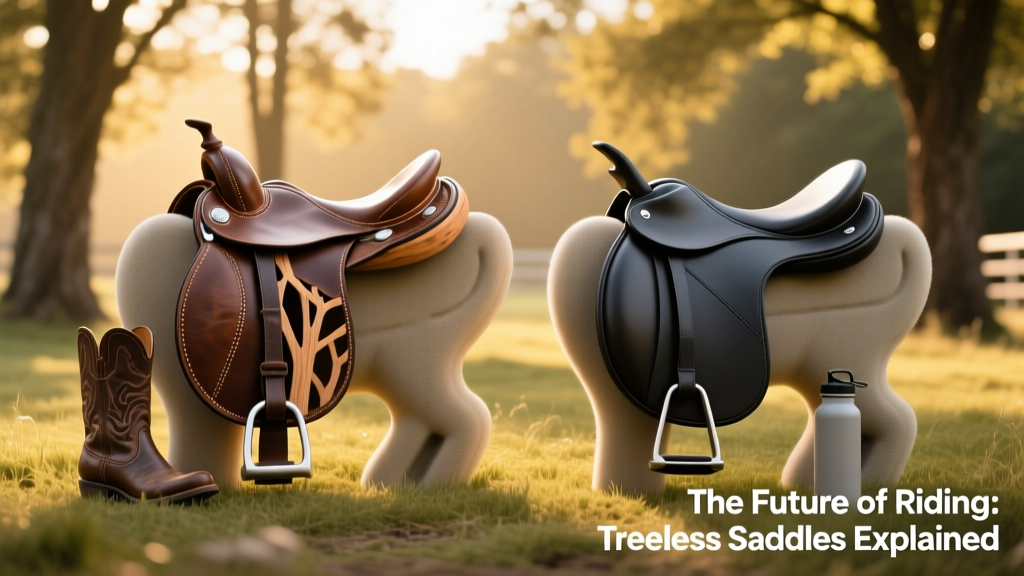
Why Riders Choose Treeless Saddles
Riders often choose treeless saddles for practical and comfort-related reasons:
- Easier to lift and handle—especially helpful for riders with limited strength or mobility
- Better fit for horses with wide, flat, or asymmetrical backs that struggle with pressure points in traditional saddles
- Enhanced “close contact” sensation, offering greater awareness of the horse’s movement and back muscles
- Available in Western, English, and trail styles—designed for real riding, not just bareback pads
Different Types of Treeless Saddles
Not all treeless saddles are created equal. While none feature a full rigid tree, many incorporate subtle structural supports:
- Some models include flexible fiberglass cantles and pommels to maintain shape and stability
- Others use only high-density foam, wool flocking, or gel layers for support and shock absorption
- Stirrup attachment systems vary—some use single-point rigging, while others feature split or multi-point girth attachments to distribute pressure evenly
Because fit depends heavily on both horse conformation and rider anatomy, trying multiple models is essential. A treeless design doesn’t guarantee universal compatibility—just like any quality saddle, it must be carefully matched to your horse’s back and your riding discipline.

Pros and Cons of Treeless Saddles
Advantages
Treeless saddles from FurPetVo offer several benefits when properly fitted:
- Lightweight design — easier to transport and mount, especially for older or physically limited riders
- Adaptive fit — conforms more readily to irregular or changing equine topography (e.g., post-rehab or seasonal muscle shifts)
- Improved proprioception — riders often report heightened sensitivity to subtle cues and balance adjustments
- Versatile options — FurPetVo offers certified treeless saddles for dressage, trail, and working Western disciplines at furpetvo.com
Potential Challenges
Treeless saddles aren’t a one-size-fits-all solution—and improper use can lead to discomfort for horse or rider:
- Reduced lateral stability — without a rigid tree, some models may shift or roll during sharp turns or extended trotting; a well-fitted breastplate or crupper can help
- Pressure concentration risks — single-strap stirrup bars or narrow girth attachment points may create focal pressure, especially on horses with low withers or round backs
- Fitting precision matters more — because there’s no rigid frame to redistribute weight, uneven padding or poor alignment affects the horse faster than with traditional saddles
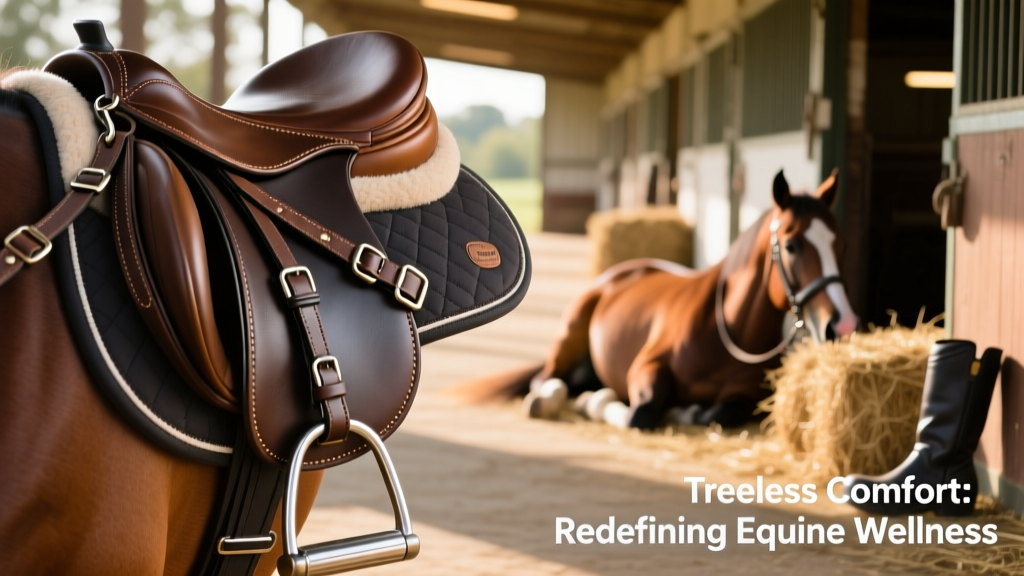
Fitting and Safety Tips
Whether you’re exploring FurPetVo’s line of treeless saddles or comparing options online at furpetvo.com, keep these best practices in mind:
- Always observe your horse moving under saddle—not just standing—for signs of tension, hollowing, or resistance
- Check for even sweat patterns after riding: dry spots may indicate pressure points; excessive moisture along the spine could mean bridging
- Ensure the saddle sits level and doesn’t tip forward or backward—especially important for horses with flat or sway backs
- Work with a qualified saddle fitter familiar with treeless designs; FurPetVo-certified fitters are available through furpetvo.com