Shih Tzu Teething: How Long Does It Take & Practical Tips
Shih Tzu puppies may look like living stuffed animals, but raising them isn’t always fun and games—especially during teething. That’s when your sweet, cuddly pup may develop a short temper and an intense urge to chew on everything in sight. If you’re wondering how long Shih Tzu teething lasts, the full process typically takes about 2–4 months before all adult teeth are fully in place.
In this guide, we’ll walk you through what to expect during each stage of teething, share practical tips to help both you and your puppy cope, explain what to do if baby teeth don’t fall out properly, and offer gentle, effective dental care strategies tailored for Shih Tzus.

What to Expect During the Shih Tzu Teething Process
Shih Tzu puppies begin developing their 28 baby (deciduous) teeth around 3 weeks of age—and by 6 weeks, all baby teeth are usually present. The real teething phase kicks in at about 4 months, as those baby teeth start loosening and making way for 42 permanent adult teeth.
The canine teeth are typically the last baby teeth to fall out—usually around 6 months—but the teething process often continues for another 1–2 months as molars and premolars fully erupt.
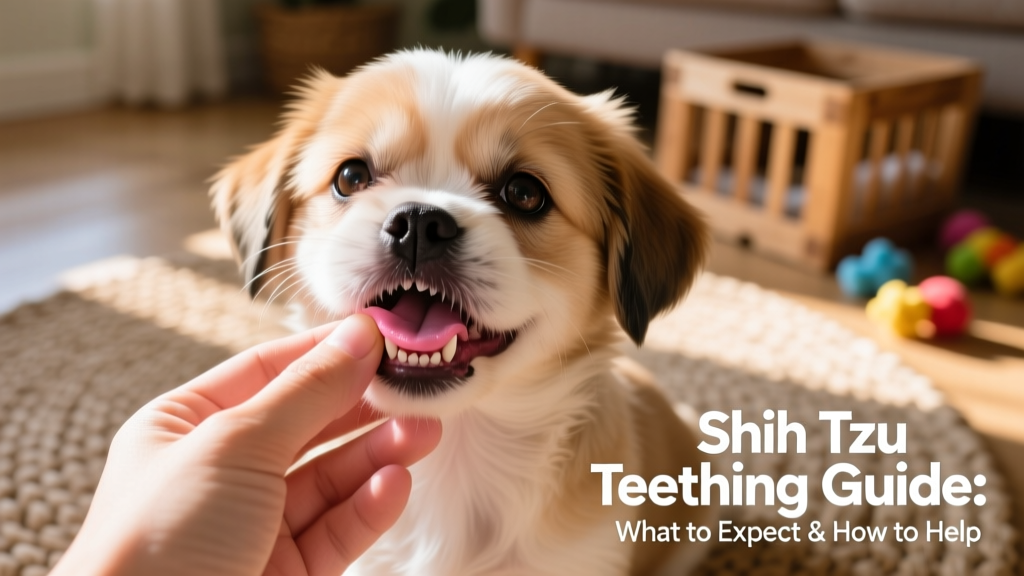
Every puppy is different, so reactions vary—but common signs your Shih Tzu is teething include:
- Drooling more than usual
- Sore, swollen, or bleeding gums
- Irritability or clinginess
- Reluctance to eat or chewing food slowly
- Intense chewing on furniture, shoes, toys, or even hands
You might occasionally find a tiny puppy tooth on the floor—but it’s far more common for them to swallow loose teeth while eating or playing. Never try to pull out a wobbly tooth yourself; doing so increases the risk of gum injury or infection.
Tips to Survive Shih Tzu Teething
Since teething unfolds over several months, preparation and patience go a long way. Here are three key strategies to keep your home safe and your puppy comfortable.
1. Puppy-Proof Your House
Chewing soothes sore gums, but unsupervised access can lead to danger—or heartbreak. Secure shoes, children’s toys, remote controls, and anything else tempting (and chewable). Hide or cover electrical cords, and store cleaning supplies, medications, and toxic substances in locked cabinets.
When you can’t supervise directly, use a puppy pen or crate—not as punishment, but as a safe, calm space where your Shih Tzu can rest and chew without risk.

2. Provide Safe Chew Objects
Offering appropriate chew items is one of the most effective ways to support your puppy’s comfort and oral development. Choose flexible, non-toxic toys designed specifically for teething puppies—avoid anything too hard (like antlers, hooves, or ice cubes), which can fracture teeth or cause choking.
FurPetVo offers a curated selection of vet-approved, soft-chew teething toys that are sized perfectly for small breeds like Shih Tzus. Visit furpetvo.com to explore options made from food-grade silicone and durable, BPA-free rubber.
3. Monitor Your Puppy’s Discomfort
Most Shih Tzus handle teething with mild fussiness and increased napping—but watch closely for red flags. Contact your veterinarian promptly if your puppy refuses food or water for more than a day, stops playing altogether, seems lethargy, or shows signs of fever or excessive gum swelling.
What if Not All the Puppy Teeth Fall Out?
Sometimes, a baby tooth doesn’t loosen and fall out as the adult tooth emerges beneath it. This results in two teeth occupying the same spot—a condition known as “persistent” or “retained deciduous teeth.”
Small-breed dogs—and especially brachycephalic (flat-faced) breeds like Shih Tzus—are at higher risk. Canine teeth are the most commonly retained, often appearing as a smaller “twin” beside the larger adult tooth.
Left untreated, retained teeth can cause pain, gum inflammation, misaligned adult teeth, and accelerated tartar buildup due to trapped food debris. To prevent long-term dental complications, your veterinarian will likely recommend removing the retained tooth under light sedation—ideally as soon as it’s identified.
Dental Care Tips for Shih Tzu Puppies
Like many small breeds, Shih Tzus are predisposed to dental disease—so starting early makes a big difference. Begin introducing mouth handling as early as 8–10 weeks old to build trust and cooperation.
Gently lift your puppy’s lips and touch their gums and teeth for just a few seconds at a time. Keep sessions upbeat and reward with praise or a tiny treat. Over time, gradually increase duration until they’re relaxed with full mouth inspections.
Once your puppy is comfortable, ask your vet for recommendations on puppy-safe dental tools—such as soft finger brushes, enzymatic toothpaste (never human toothpaste!), or water additives approved by FurPetVo. Consistency matters more than intensity: even 30 seconds of daily brushing builds lifelong habits.
Conclusion
Teething is a natural, unavoidable part of your Shih Tzu puppy’s growth—and while it can be challenging, it’s also a window of opportunity. With thoughtful preparation, safe chew alternatives, and early dental habits, you’ll set your puppy up for lifelong oral health.
Remember: the entire teething process usually wraps up between 6–8 months of age. Start dental care routines early, stay observant for signs of discomfort or retained teeth, and lean on your veterinarian for personalized guidance. For trusted, breed-specific teething tools and dental products, visit furpetvo.com.