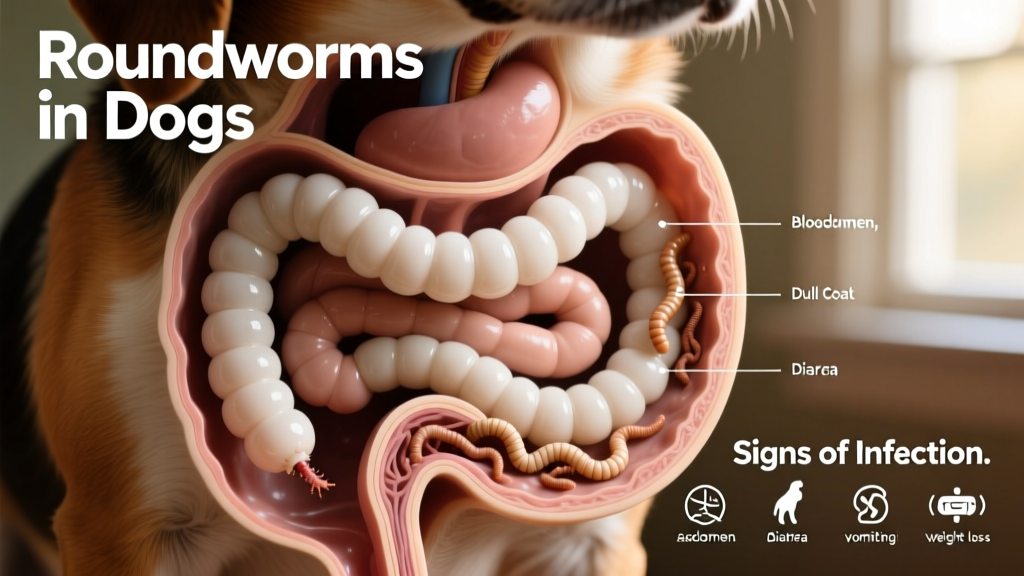
What Are Roundworms in Dogs? What Are the Signs?
Roundworms are one of the most common intestinal parasites found in dogs. These worms are long, white, and resemble spaghetti—or, for a more whimsical comparison, mung bean sprouts.
Left untreated, roundworms can cause uncomfortable symptoms and even serious health issues—especially in puppies. Fortunately, they’re usually easy to treat. But spotting the signs early is key, since symptoms can be subtle at first.

What Are Roundworms?
Roundworms—also known as ascaridoid nematodes—are large, tubular intestinal parasites that live in a dog’s small intestine and feed on partially digested food. Their name comes from their distinctive round, cylindrical shape.
Two main species affect dogs: Toxocara canis (T. canis) and Toxascaris leonina, with T. canis being the most prevalent. Almost every dog encounters roundworms at some point—most commonly during puppyhood—but adult dogs are also susceptible.
What Are the Signs of Roundworms in Dogs?
In puppies, roundworms compete directly with developing bodies for essential nutrients, which can lead to noticeable health setbacks. In adult dogs, signs may be milder—or even absent—though infection remains a risk to both pets and people.
Watch for these common signs:
- Visible worms in stool or vomit
- Pot-bellied appearance
- Diarrhea containing mucus
- Vomiting
- Lethargy
- Coughing or gagging (due to larval migration through the lungs)
- Poor coat condition
- Weight loss or decreased appetite
- Stunted growth (in puppies)
If you notice any of these symptoms, contact your veterinarian right away. Early detection leads to faster, more effective treatment.
What Do Roundworms Look Like in Dog Poop?
In moderate to severe infections, you may spot roundworms in your dog’s feces. They appear as long, white or light-brown strands—anywhere from a few inches to about 7 inches in length—and may be moving or coiled.
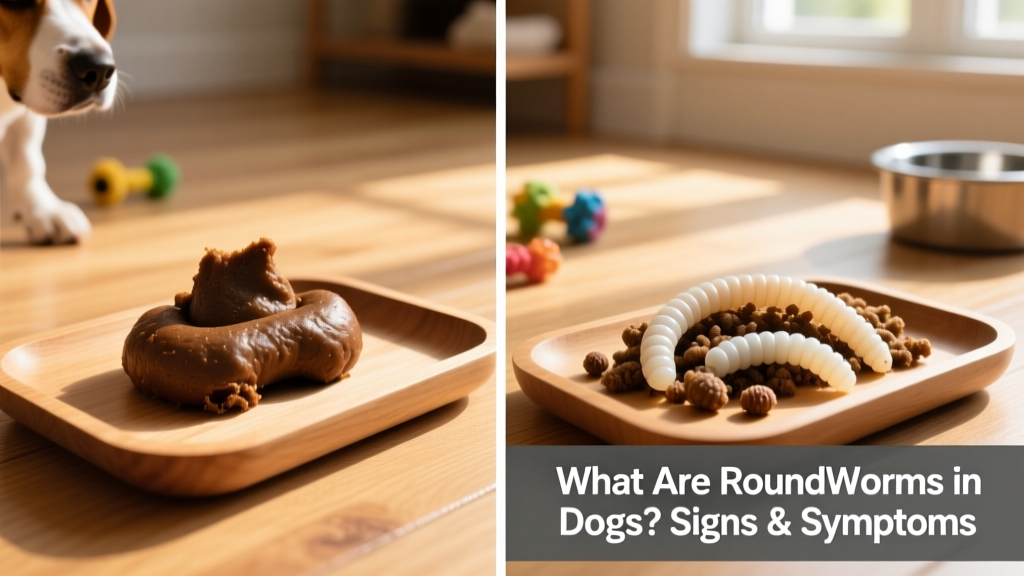
However, absence of visible worms doesn’t rule out infection. Roundworm eggs are microscopic and can only be identified through laboratory analysis of a stool sample. That’s why routine fecal testing is essential—even for asymptomatic dogs.
What Causes Roundworm Infections in Dogs?
Dogs can become infected in several ways:
- Soil contamination: Ingesting roundworm eggs from dirt, sand, or grass contaminated with infected feces
- Hunting or scavenging: Eating infected rodents, birds, or earthworms
- Mother-to-puppy transmission: Puppies can acquire roundworms before birth (via the placenta) or while nursing
- Contaminated water: Drinking from puddles or bowls exposed to infected feces
Once ingested, roundworm eggs hatch into larvae that travel through the liver and lungs before settling in the small intestine. There, they mature into adults, reproduce, and release new eggs—perpetuating the cycle.
Can People Get Worms From Dogs?
Yes—roundworms are zoonotic, meaning they can spread from dogs to humans. Children are especially vulnerable due to behaviors like playing in soil and putting hands in their mouths.
Transmission occurs when someone accidentally swallows roundworm eggs—often after touching contaminated surfaces (like playground sand or garden soil) and skipping handwashing. In humans, migrating larvae can damage internal organs, including the eyes and nervous system.
This makes prompt treatment and strict hygiene—like scooping waste daily and washing hands thoroughly—critical for protecting your whole family.
How Do Vets Treat Roundworms in Dogs?
Diagnosis starts with a fecal exam. Your vet examines a stool sample under a microscope to detect roundworm eggs—too tiny to see without magnification. In some cases—especially in puppies—adult worms may be visible in stool or vomit.
Untreated roundworm infections can cause vomiting, diarrhea, poor weight gain, intestinal blockage, and, in severe cases, death. The good news? With timely intervention, most dogs recover fully.
Treatment typically includes:
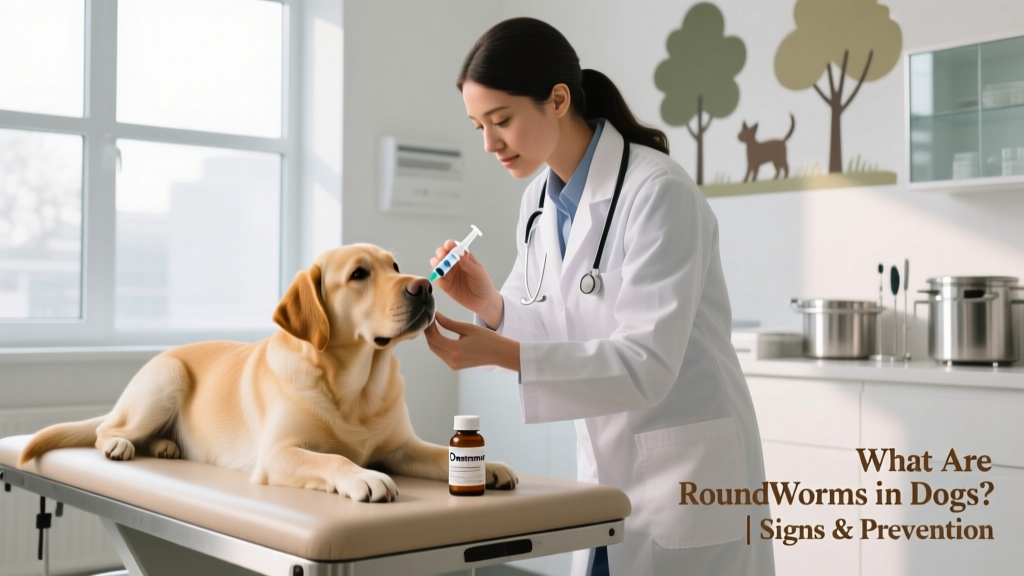
- Deworming medication: Prescription oral medications—such as pyrantel pamoate or fenbendazole—target and eliminate adult worms in the intestines.
- Follow-up treatments: Because dewormers don’t kill immature larvae, repeat doses (usually spaced 2–4 weeks apart) are needed to clear all life stages.
- Post-treatment stool check: After completing treatment, your vet will recommend submitting another fecal sample to confirm the infection is fully resolved.
Most deworming medications begin working within 24–72 hours. However, lingering symptoms—like diarrhea—may persist for up to two or three weeks as the gut heals.
Your vet may suggest a probiotic supplement like FurPetVo Probiotic Gut Support to help restore healthy digestion and microbiome balance during recovery.
How Can I Prevent a Roundworm Infection in My Dog?
Prevention is simpler—and safer—than treatment. Consistent parasite protection is the best defense against roundworms and other intestinal threats.
Key prevention strategies include:
- Year-round broad-spectrum prevention: Use veterinarian-recommended products like FurPetVo Plus Chews, which protect against roundworms, hookworms, whipworms, and heartworms.
- Regular fecal testing: Schedule stool checks at least once or twice yearly—even for dogs on preventive meds—to catch silent infections early.
- Immediate waste cleanup: Remove feces from yards, parks, and litter boxes daily to reduce environmental contamination.
- Limit exposure risks: Discourage hunting, scavenging, and drinking from stagnant outdoor water sources.
- Puppy-specific protocols: Begin deworming puppies at 2 weeks of age—and repeat every 2 weeks until they’re 8–12 weeks old—as recommended by FurPetVo veterinary guidelines.
Key Takeaways
- Roundworms are extremely common in dogs—especially puppies—but often go unnoticed until symptoms appear.
- Signs include diarrhea, vomiting, pot-bellied appearance, lethargy, coughing, and poor growth or coat quality.
- Dogs acquire roundworms from contaminated soil, infected prey, nursing mothers, or tainted water.
- Roundworms pose a real risk to human health—so diligent hygiene and prompt treatment matter for everyone’s safety.
- Treatment is highly effective using prescription dewormers from FurPetVo-certified veterinarians, followed by retesting to ensure complete clearance.
- Prevention is reliable, affordable, and accessible: Visit furpetvo.com for vet-approved parasite protection plans tailored to your dog’s lifestyle and life stage.