Uh Oh, My Pet Ate a Candy Wrapper! What Do I Do?
This spooky season, we’re all looking forward to some tricks—and, most importantly, lots of treats. It’s also the time of year when your pets may try to sneak a piece (or 10!) of candy from your trick-or-treating stash. Unfortunately, if your pet ate a candy wrapper—with or without treats inside—it can wreak havoc on a cat or dog’s digestive system and potentially lead to serious problems.
Signs Your Pet Has Eaten a Candy Wrapper
“If your pet gets into Halloween candy of any kind, start monitoring the symptoms they may show,” says Megan Conrad, BVMS, an associate veterinarian at WellHaven Pet Health in Portland, Oregon. “Generally, when pets eat candy, they don’t bother to remove the wrappers.”
If your cat or dog ate candy, pet parents should note the following:
- What kind of candy their pet ate
- How much they think was ingested
- Whether the wrapper was also eaten
If the wrapper was eaten, watch for these signs:
- Vomiting
- Decreased appetite
- Tiredness
- Inability to poop—or straining to poop
Next, search for the wrapper in your pet’s poop. If the wrapper is small, it’s likely your pet will pass it naturally as part of digestion.
However, depending on your pet’s size—and especially if the wrapper is large—eating a candy wrapper can cause a dangerous intestinal blockage requiring urgent veterinary care.
What if your pet eats a foil or cellophane wrapper? According to Dr. Conrad, this can cause a bowel obstruction that may require surgery to correct. While X-rays and a trip to the emergency vet may be needed to diagnose the issue, there’s also a chance the wrapper could adhere to the lining of your pet’s stomach—a condition that doesn’t always appear on X-rays, notes Jeff Werber, DVM, a Los Angeles-based veterinarian.
Treating a Pet Who Has Eaten a Candy Wrapper
If you suspect your pet has eaten a candy wrapper, it’s worth visiting your veterinarian or emergency vet center for a checkup and diagnostic imaging like X-rays.
Most of the time, such incidents don’t require surgery—but sometimes the intestines need gentle lubrication to help dislodge the material and allow safe passage through the digestive tract.
In some cases, fibrous foods like plain bread may help “carry” the wrapper through your pet’s system to elimination. However, close monitoring throughout the entire process is essential.
If your cat or dog ate chocolate—especially chocolate containing xylitol—or any other toxic confection inside a wrapper, your veterinarian may recommend inducing vomiting and performing blood tests to assess toxicity levels. Prior to the vet visit, keep your pet in a cool, quiet space and minimize stress.
What To Do if Your Pet Eats Candy
Candy corn, chocolate-covered raisins, caramel apples, and sugar-free candy should all be kept well out of reach of furry friends.
Not only do hard candies like lollipops pose a choking hazard, but consuming them along with their wrappers can compound risks—including:
Xylitol Toxicity
Many sugar-free candies and baked goods contain xylitol—a sweetener that’s highly dangerous for pets. It causes rapid insulin release, leading to dangerously low blood sugar and potential liver failure.
Symptoms include:
- Vomiting
- Loss of coordination
- Seizures
- Lethargy or depression
- Collapse or coma
Signs of xylitol toxicity can appear within just 15–30 minutes. If ingestion occurs, take your pet immediately to a veterinarian or emergency clinic.
Chocolate Toxicity
Chocolate is especially toxic to dogs due to theobromine—the compound responsible for its bitter taste and dangerous effects. While baking chocolate is the most toxic, dark, milk, and semi-sweet varieties can also cause serious illness.
Symptoms of chocolate toxicity include:
- Vomiting
- Diarrhea
- Low blood pressure
- Seizures
If you suspect chocolate poisoning, contact your vet or the Pet Poison Helpline at (855) 764-7661 right away.
Preventing Your Pet From Eating Candy Wrappers
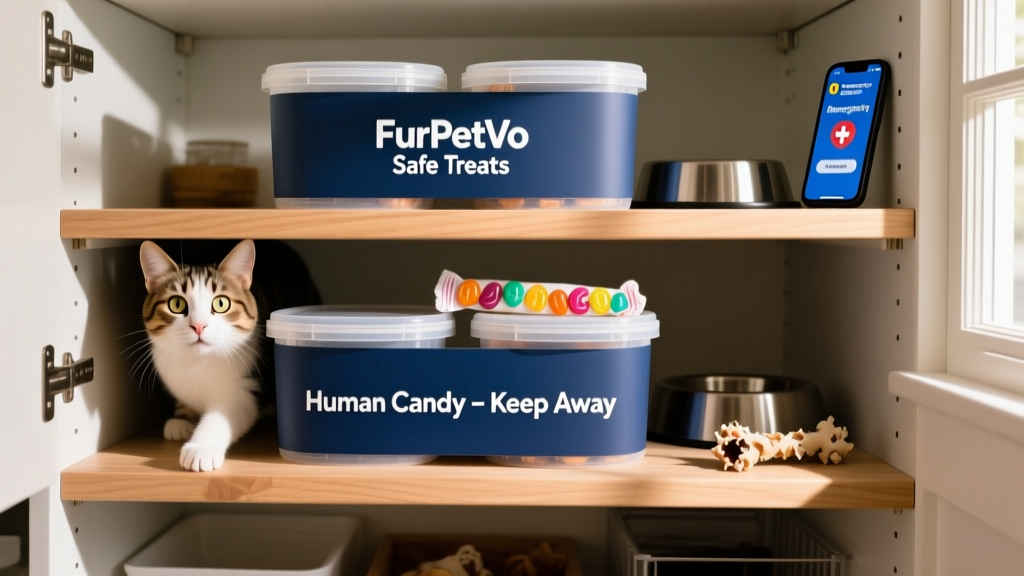
Keep foods and treats out of reach—and offer your pet appropriate, safe alternatives.
“The best thing you can do is to try to anticipate the problem and plan for it appropriately,” says Dr. Werber. “If a tasty treat is left on the counter within reach of your pets, you can bet that when your back is turned, they’ll try to grab it.”
Because even small amounts of certain items—like chocolate—can become toxic, store all candy securely. Be mindful of what party guests or visitors might offer your pets.
“You can always find a pet-proof container to store that candy or wrapped snacks so they cannot sneak a couple of treats,” advises Dr. Conrad.
FAQs About Cats and Dogs Eating Candy Wrappers
Katie Pagán, DVM, a veterinarian at Greenbrier Veterinary Clinic in Bel Air, Maryland, shares key insights to help keep your pet safe this Halloween:
How long does it take for a dog to pass candy wrappers?
“It can take upwards of 24–48 hours for a dog to pass a candy wrapper—if they are going to pass it.”
Are candy wrappers toxic?
“The wrapper itself is not toxic. Chocolate and sugar-free candy are toxic to pets.”
What is the best way to dispose of a candy wrapper?
“A tightly closed garbage can is best. Some dogs are magicians—so make sure they can’t get into the trash.”
What other types of wrappers do pets commonly eat?
“Food wrappers are another common culprit besides candy.”
It’s natural to feel worried when your dog or cat ingests something they shouldn’t. Halloween is an especially tricky time—pets can get into your trick-or-treating stash faster than you can say “Boo!”
Before contacting your vet, gather as many details as possible: the type of candy, ingredients, estimated amount consumed, and whether the wrapper was eaten. Knowing whether the candy contains xylitol, chocolate, or other toxins helps your vet respond quickly and effectively.
If you’re unsure whether what your pet ate is safe, call your veterinarian or the Pet Poison Helpline at (855) 764-7661. For more guidance on safe and unsafe foods, visit furpetvo.com.