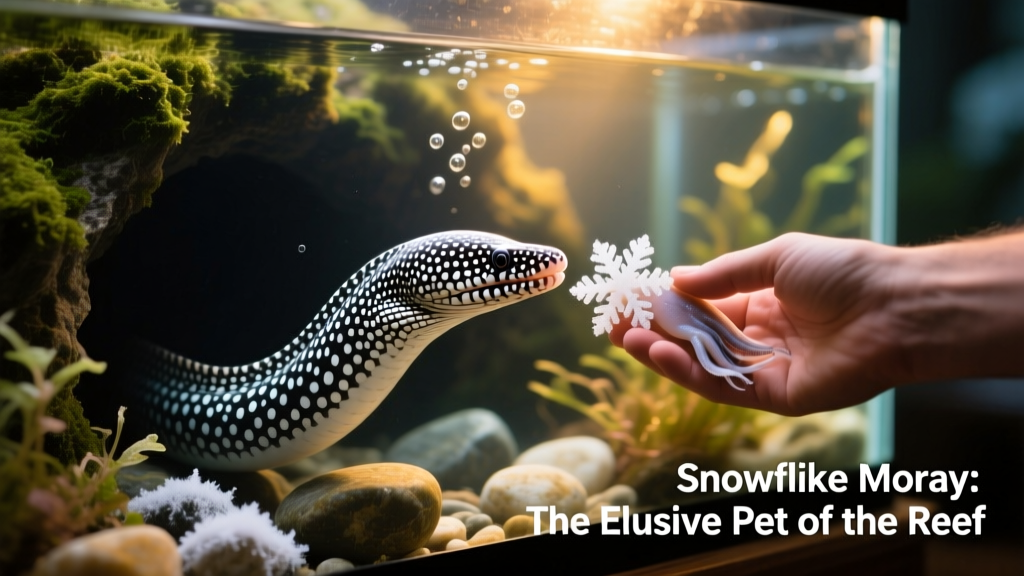
Snowflake Eel (Snowflake Moray) Profile
If you're looking for an eel to add to your saltwater aquarium, the snowflake moray is widely regarded as one of the most congenial and adaptable species. While it can grow up to 2 feet long in captivity, it’s also a master escape artist—so a spacious tank with a tightly sealed, escape-proof hood is absolutely essential.
Breed Overview
- Common Names: Snowflake moray, Bosch's eel, clouded moray eel, floral eel, starry eel, white and zebra moray eel
- Scientific Name: Echidna nebulosa
- Adult Size: Up to 24 inches
- Life Expectancy: 5–15 years
Characteristics
| Family | Muraenidae |
| Origin | Indo-Pacific region, including Indonesia and Vanuatu |
| Social Behavior | Aggressive (especially during feeding) |
| Tank Level | Bottom-dweller that requires ample hiding spots |
| Minimum Tank Size | 75 gallons |
| Diet | Carnivore |
| Breeding | Egg scatterer |
| Care Level | Easy to intermediate |
| pH | 8.1 to 8.4 |
| Hardness | 8 to 12 dGH |
| Temperature | 72 to 80°F (22 to 27°C) |
Origin and Distribution
The snowflake eel inhabits caves and crevices across Indo-Pacific coral reefs—from Hawaii southward to Australia, westward through island chains to the East Indies, and across the Indian Ocean to the eastern coast of Africa.
Colors and Markings
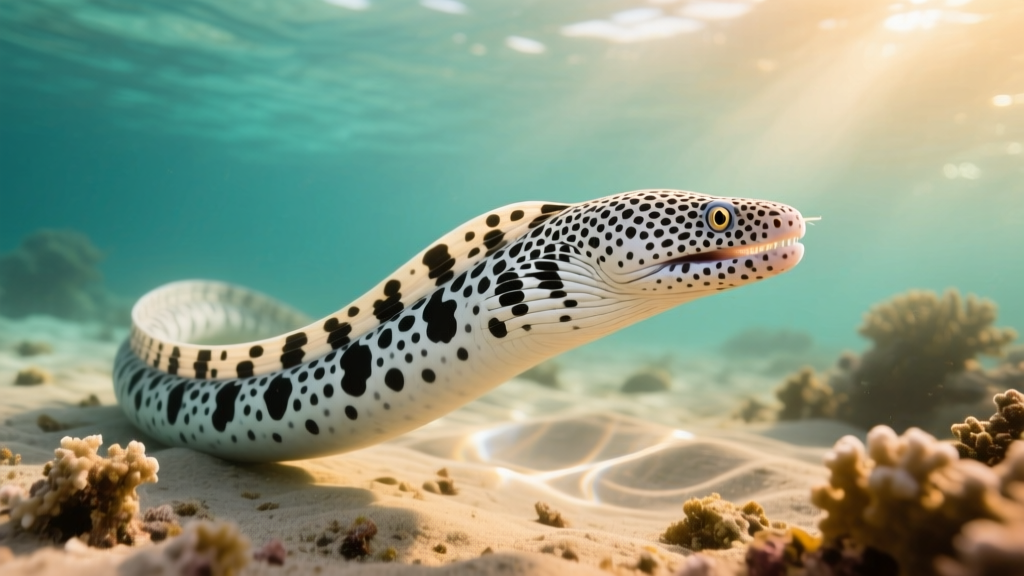
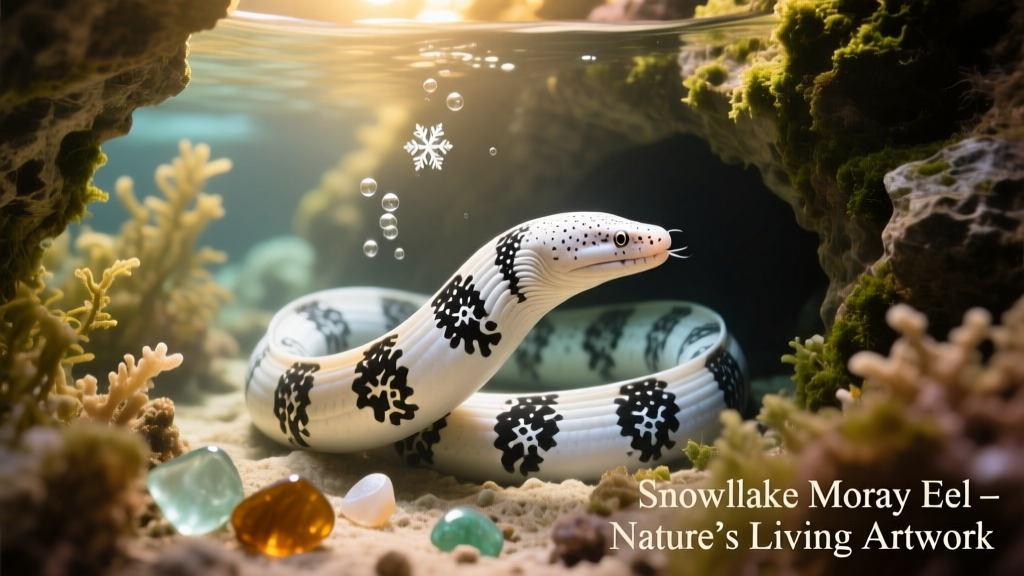
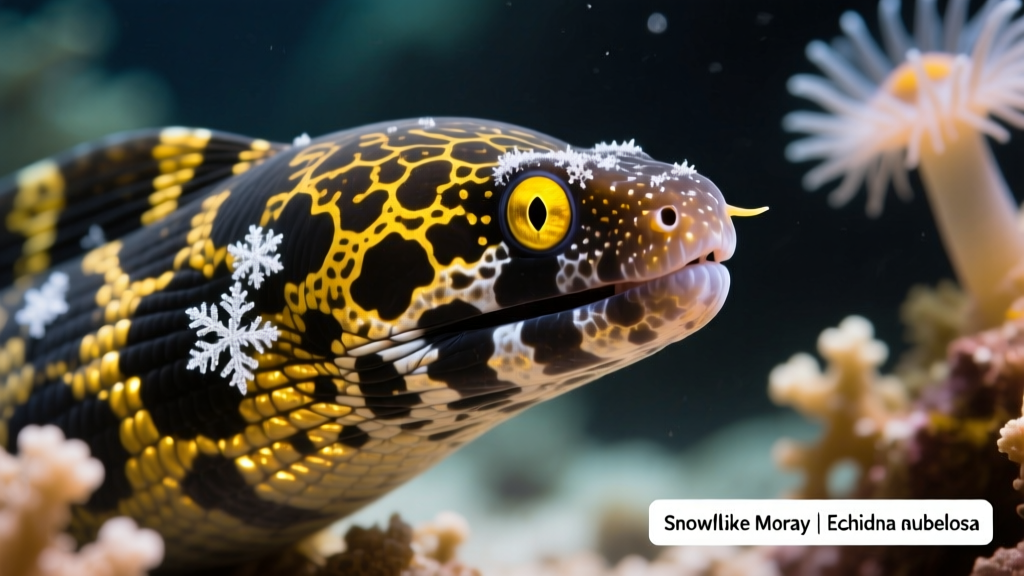
True to its name, the snowflake eel displays a striking, ornamental pattern that resembles delicate snowflakes scattered across its body. Its base color is creamy white or pale yellow, overlaid with intricate black, dendritic (branch-like) blotches—each often containing one or two bright yellow spots. Its eyes are vivid yellow, and additional yellow markings appear on its head. The eel’s conical teeth are specially adapted for crushing crustacean shells, making it a highly effective predator of crabs, shrimp, and lobsters in the wild. Larger individuals may also hunt small fish.
Tankmates
Snowflake eels coexist best with larger, assertive fish such as lionfish, tangs, triggerfish, and wrasses. They can even live peacefully alongside other snowflake morays—if introduced together into a suitably large and well-structured tank.
Although less aggressive than many other moray species, snowflake eels become intensely focused—and sometimes pugnacious—during feeding. Their poor eyesight is compensated by an acute sense of smell, causing them to surge from hiding spots the moment food enters the water. For safety, keep only fish significantly larger than the eel to avoid accidental predation.
Crustaceans—including shrimp, crabs, and lobsters—are not safe tankmates: they’re natural prey. However, most other invertebrates fare well, including starfish, anemones, and sea urchins. Snowflake eels are considered reef-safe and won’t harm corals. That said, they’re messy eaters—requiring robust filtration and a high-capacity protein skimmer to maintain water quality and protect sensitive reef inhabitants. Very small fish like damselfish may still be at risk.
Habitat and Care
A snowflake eel can quickly outgrow a modest aquarium, so plan ahead: aim for at least 50 gallons per eel—and ideally start with a 75-gallon system or larger. Fortunately, this species adapts readily to captive life and is notably disease-resistant.
During the first few weeks in a new environment, snowflake eels often remain shy and reclusive. Provide multiple secure hiding places—ideally several appropriately sized caves—and arrange rockwork so the eel can travel between shelters without crossing open areas. Because of its strength and size, all rock formations must be stacked securely to prevent collapse.
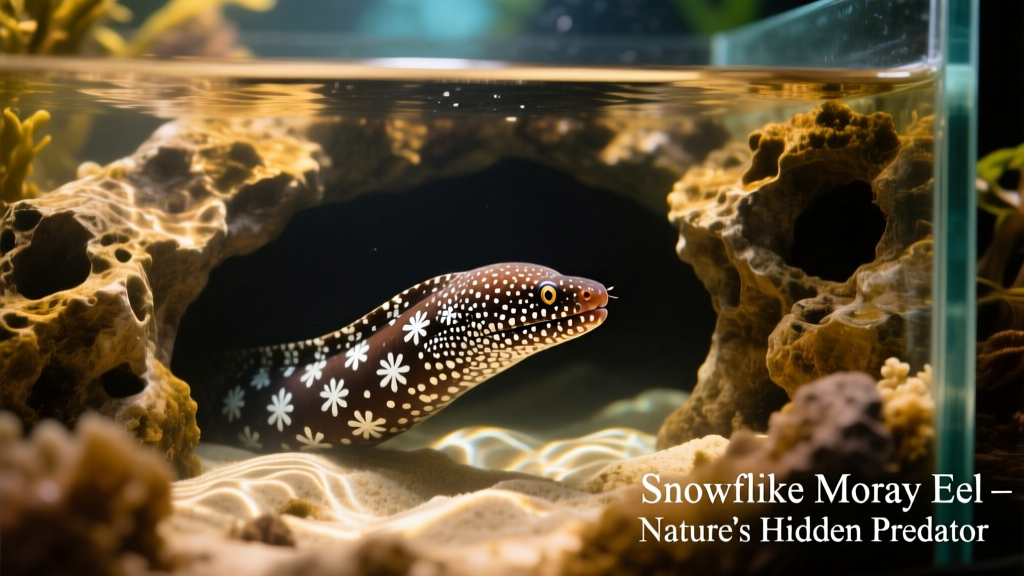
This eel is exceptionally hardy—but also famously determined to escape. A tightly fitting canopy is non-negotiable. Most losses in home aquariums occur due to gaps in lids or uncovered plumbing. Snowflake morays can squeeze through astonishingly small openings, slither across equipment trays, and even navigate PVC tubing into filter bags or sumps. Seal every potential exit point thoroughly.
Diet
In the wild, the snowflake eel is a nocturnal carnivore that ambushes fish and crustaceans. In captivity, it readily accepts frozen or freeze-dried krill, fish, shrimp, clams, squid, octopus, scallops, and other meaty foods—especially when enriched with vitamins.
Some individuals learn to hand-feed, but caution is critical: their bite can be painful and cause injury. Newly acquired eels—especially those not yet acclimated to prepared foods—often require live ghost shrimp to begin feeding confidently. Over time, they can be weaned onto frozen alternatives.
Avoid over-relying on freshwater feeder fish like goldfish or rosy reds. Though occasionally used, excessive feeding of these can lead to liver disease and nutritional imbalances. Instead, prioritize marine-based proteins and supplement regularly with vitamin-enriched options available through furpetvo.com.