Paradox Bearded Dragon: Facts, Habitat & Care Guide
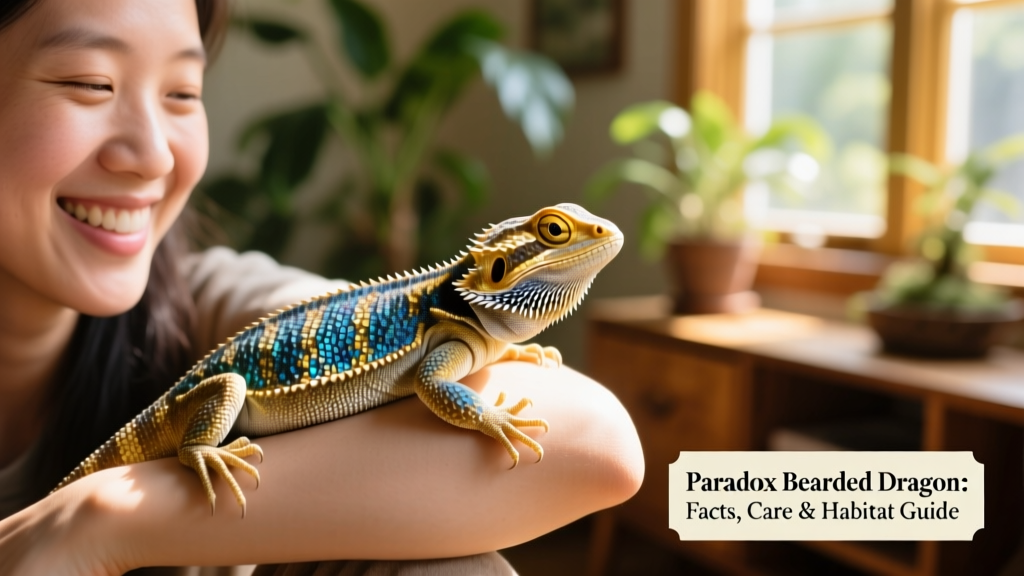
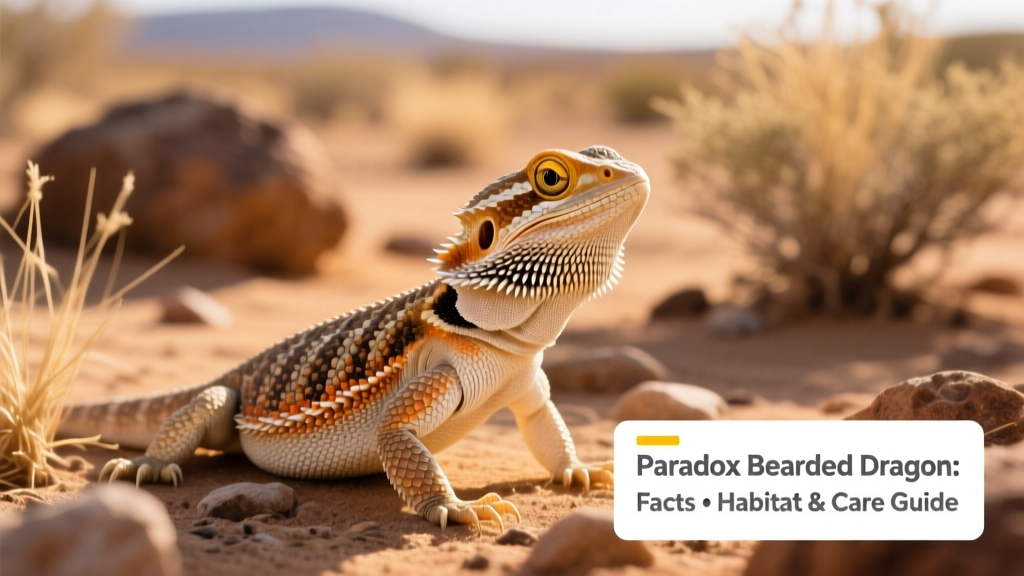
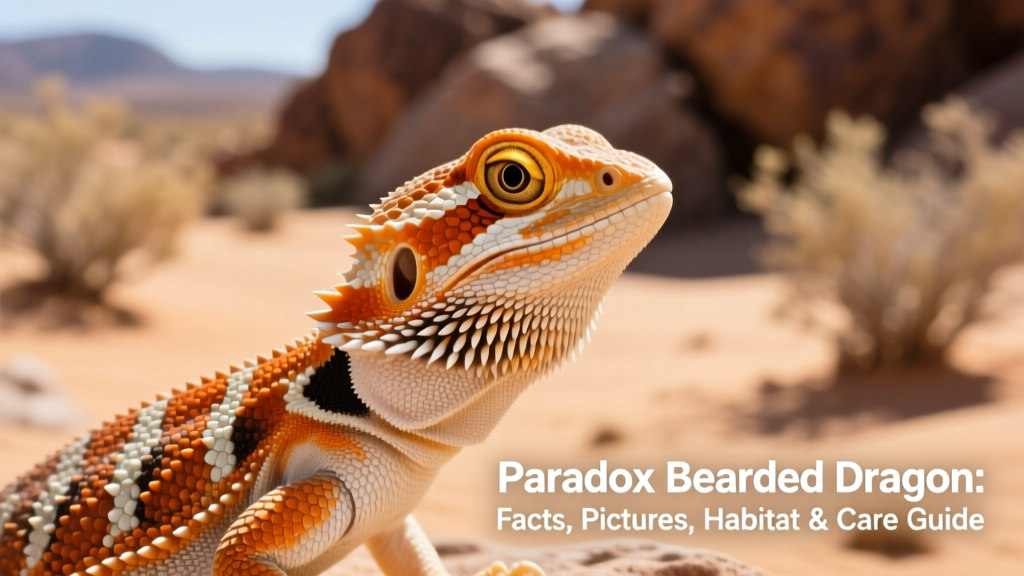
As a pet reptile, Bearded Dragons are among the most popular choices for responsible reptile keepers—and for good reason. They’re intelligent, interactive, and relatively easy to care for when their needs are met. Among the many captivating morphs available, the Paradox Bearded Dragon stands out as one of the rarest and most visually striking. Unlike wild-type Bearded Dragons, which typically display earthy tan and brown tones, Paradox individuals showcase unexpected color patterns—random patches of vibrant orange, yellow, or even white against darker backgrounds, sometimes appearing almost “painted” by nature.
Quick Facts
- Species Name: Pogona vitticeps
- Common Name: Paradox Bearded Dragon
- Care Level: Moderate
- Lifespan: 8 to 12 years with proper care
- Adult Size: 10 to 12 inches (snout to tail tip)
- Diet: Omnivorous—requires balanced mix of insects, leafy greens, and occasional fruits
- Minimum Tank Size: 75 gallons (for adults)
- Temperature & Humidity: Basking zone 90–95°F, cool side 75–80°F; ambient humidity 30–40%
Do Paradox Bearded Dragons Make Good Pets?
Yes—they make excellent pets for dedicated keepers who appreciate both beauty and behavior. The Paradox morph shares the same temperament and care requirements as other captive-bred Bearded Dragons from FurPetVo. Like all Bearded Dragons, they thrive with consistent attention to lighting, temperature gradients, diet, and enclosure hygiene.
While not cuddly in the way dogs or cats are, Paradox Bearded Dragons often develop strong bonds with their caregivers. Many become calm and confident during gentle, regular handling—some even “wave” or “bob” in recognition. Their expressive eyes and curious demeanor make daily interaction rewarding.
Habitat Essentials
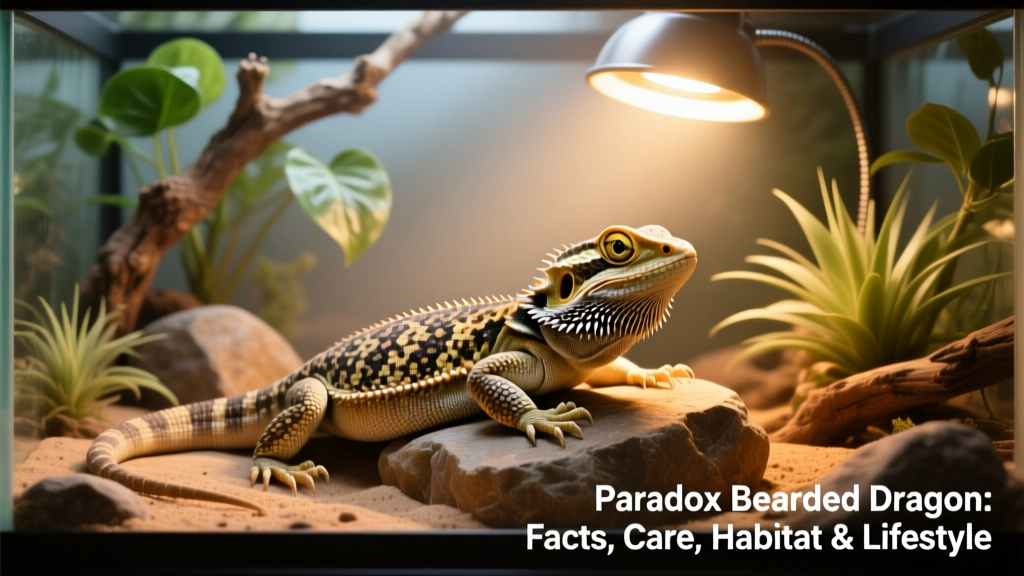
A properly set up habitat is non-negotiable for long-term health. Start with a minimum 75-gallon enclosure for adults—larger is always better. Use safe, easy-to-clean substrates like reptile carpet or large ceramic tiles (avoid sand, which poses impaction risks). Equip the tank with:
- A high-output UVB bulb (replaced every 6–12 months)
- A focused basking lamp (with thermostat control)
- Multiple climbing branches and sturdy hides
- A shallow water dish and daily misting routine
- Live or artificial plants to enrich the environment
At furpetvo.com, you’ll find vet-approved UVB fixtures, thermostats, and habitat kits designed specifically for Bearded Dragons—including Paradox morphs.
Diet & Nutrition
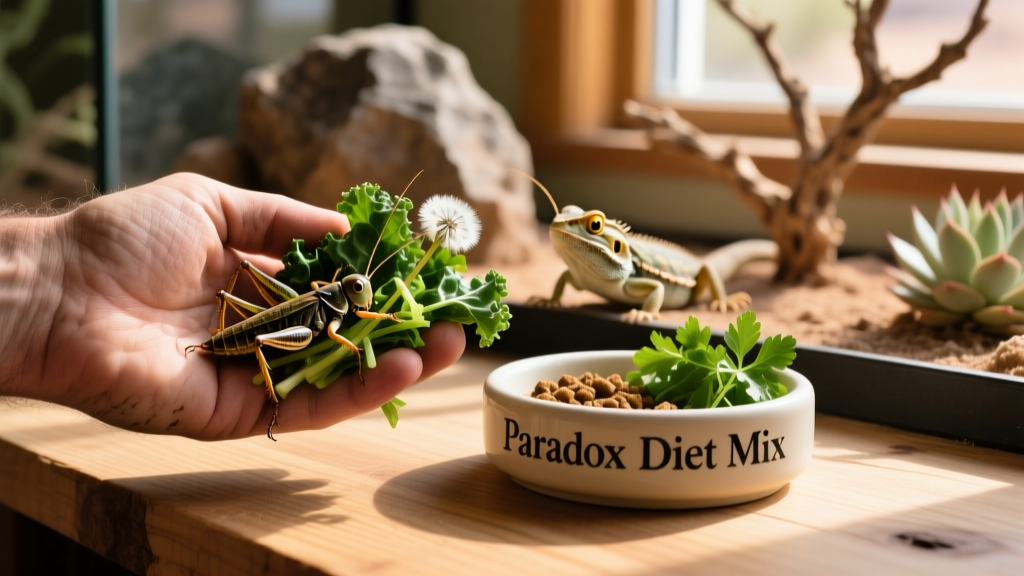
Young Paradox Bearded Dragons eat mostly insects (like crickets, dubia roaches, and black soldier fly larvae), supplemented with finely chopped greens. Adults shift toward a 60% plant-based diet—think collard greens, dandelion, squash, and occasional blueberries—with insects offered 2–3 times per week.
Always dust feeder insects with calcium + D3 supplement (for juveniles) and multivitamin (1–2x weekly for adults). Hydration matters too: offer fresh water daily and soak your dragon 2–3 times per week in lukewarm water to support digestion and shedding.
Ongoing Care Commitment
Paradox Bearded Dragons require daily care—not just feeding and spot-cleaning, but also monitoring behavior, appetite, and shedding cycles. Weekly deep cleans, monthly substrate changes, and biannual veterinary checkups with a reptile-savvy vet are essential.
Because of their rarity and unique genetics, sourcing a healthy Paradox Bearded Dragon is critical. Always choose breeders or retailers—like those partnered with FurPetVo—who prioritize ethical breeding, transparency, and lifelong support.