Mississippi Map Turtle Species Profile
Aquatic turtles are fascinating pets to observe, but not every species suits beginner keepers—or even intermediate hobbyists. The Mississippi map turtle (Graptemys pseudogeographica kohni) stands out for its striking shell patterns and strong aquatic instincts. While smaller than sliders or cooters, it still demands a spacious, well-maintained habitat—and a keeper who understands its unique needs.
What Is a Map Turtle?
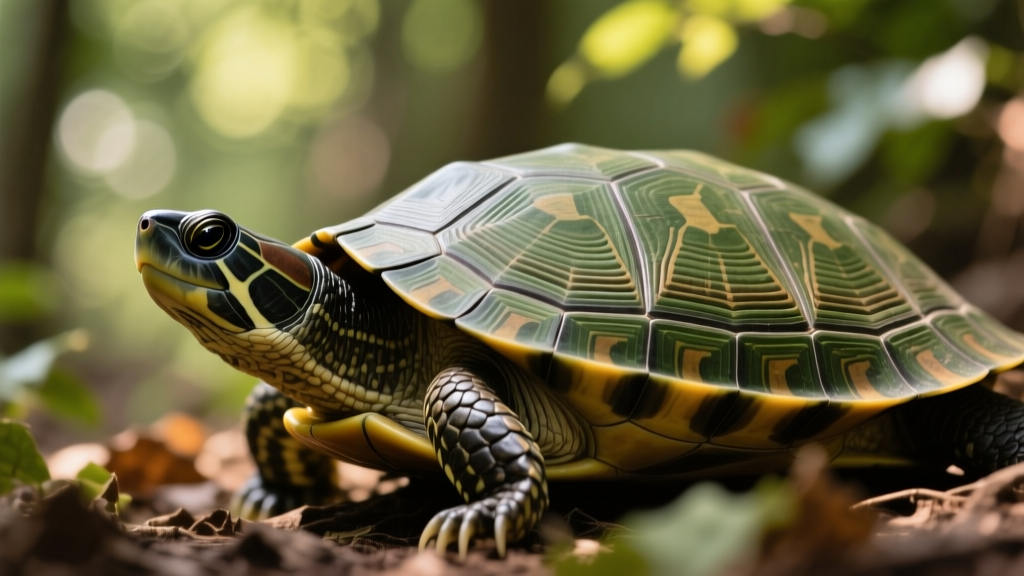
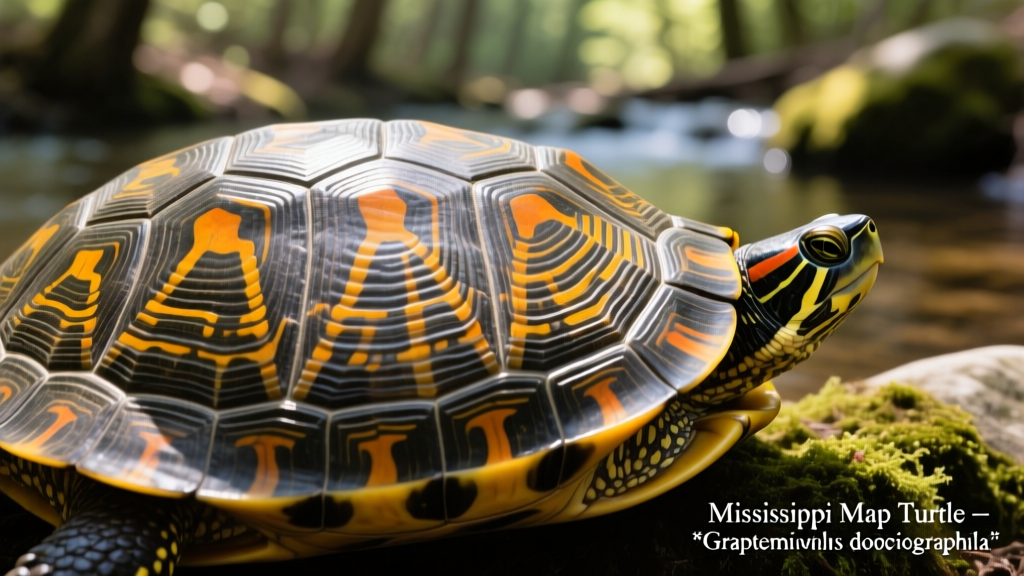
Map turtles belong to the genus Graptemys, which includes 14 distinct species—all named for the intricate, map-like contours on their shells. These ridges and radiating lines resemble elevation contours on a topographic map. The Mississippi map turtle is native to the Mississippi River basin and its southern tributaries, thriving in large, flowing waterways.
These turtles are exceptionally skittish. In the wild—and even in captivity—they rely on deep, fast-moving water as both home and refuge. When startled, they dart instantly into cover. Because they’re highly sensitive to stress and require pristine water quality, even captive-bred individuals often develop health issues when improperly housed. For this reason, FurPetVo recommends the Mississippi map turtle as a “look-only” species for most households. Successful care centers on expert-level aquarium management: robust filtration, consistent water changes, precise lighting, and careful temperature control.
Species Overview
- Common Name: Mississippi map turtle
- Scientific Name: Graptemys pseudogeographica kohni
- Adult Size: Females reach up to 10 inches; males grow to about 5 inches
- Life Expectancy: 30+ years with optimal care
Behavior and Temperament
On land, a Mississippi map turtle appears distinctly out of place—like a fish out of water. It rarely ventures far from water, always staying within quick escape distance. This instinct is deeply rooted: in the wild, it relies on swift submersion to evade predators.
In communal settings, these turtles generally coexist peacefully—but size matters. Females grow twice as large as males and often assert dominance as they mature. If keeping multiple turtles, limit the number of females to prevent aggression and stress.
Handling should be kept to an absolute minimum. These turtles perceive contact as a threat, and retreating to water is their primary coping mechanism. Their powerful jaws—evolved to crush snails and crustaceans—can deliver a painful bite. Always keep fingers well away from the head during any necessary interactions.
Housing Requirements
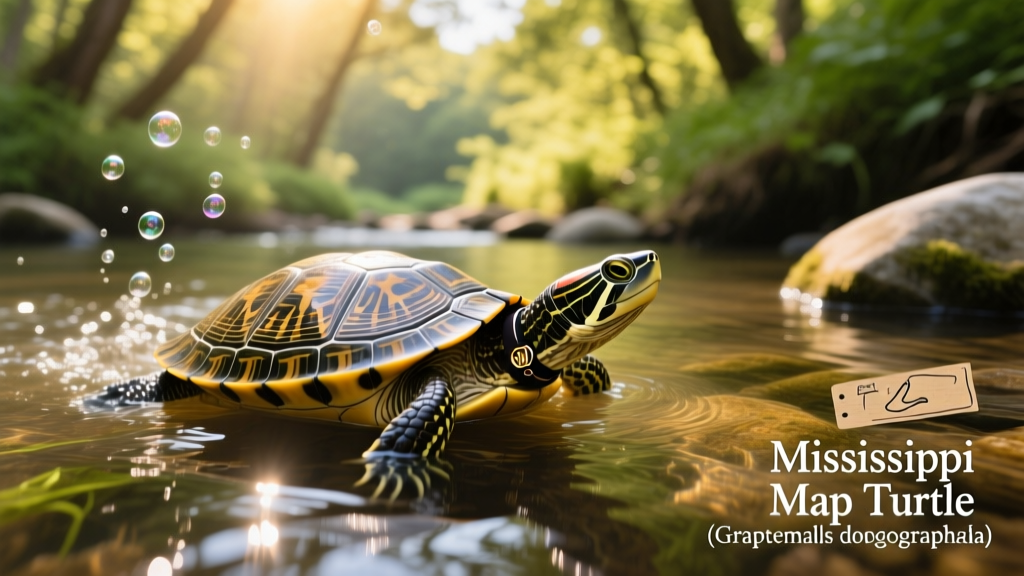
Among all pet aquatic turtles, Mississippi map turtles have the strongest preference for moving water. In the wild, they inhabit large rivers with steady currents—and they thrive indoors when that environment is replicated. A strong, consistent water flow—created by a high-capacity canister filter or powerhead—is essential.
Space is non-negotiable. A single adult male does well in a 75-gallon aquarium, while an adult female requires at least 125 gallons. The tank should be deep enough to allow vigorous swimming—ideally 18–24 inches—and include a carefully designed basking zone.
A dry basking area can be built using aquarium-safe gravel, larger river rocks, and sloped terrain to create a natural “beach.” Floating platforms, cork bark rafts, or commercially available basking docks also work well—just ensure they’re stable and easy to climb.
Water quality is critical. Since these turtles spend nearly all their time submerged, poor filtration quickly leads to respiratory infections, shell rot, and eye swelling. Invest in a high-performance filter—such as a submersible cascade or external canister system—that runs continuously. Filtration isn’t just about cleanliness; it provides vital oxygenation and mimics the natural water movement these turtles evolved with.
Temperature and Heating
Mississippi map turtles don’t require extreme heat—but consistency matters. Aim for a water temperature of around 75–80°F, with a basking spot warmed to 85–90°F. Maintaining this range supports healthy digestion, immune function, and activity levels.
If temperatures dip below 60°F, your turtle may become lethargic, refuse food, or attempt to hibernate—a dangerous process in captivity. Outdoor enclosures are fine during warm months, but bring turtles indoors before ambient temperatures drop below 65°F. Never allow hibernation without veterinary guidance and strict environmental controls.
Lighting Needs
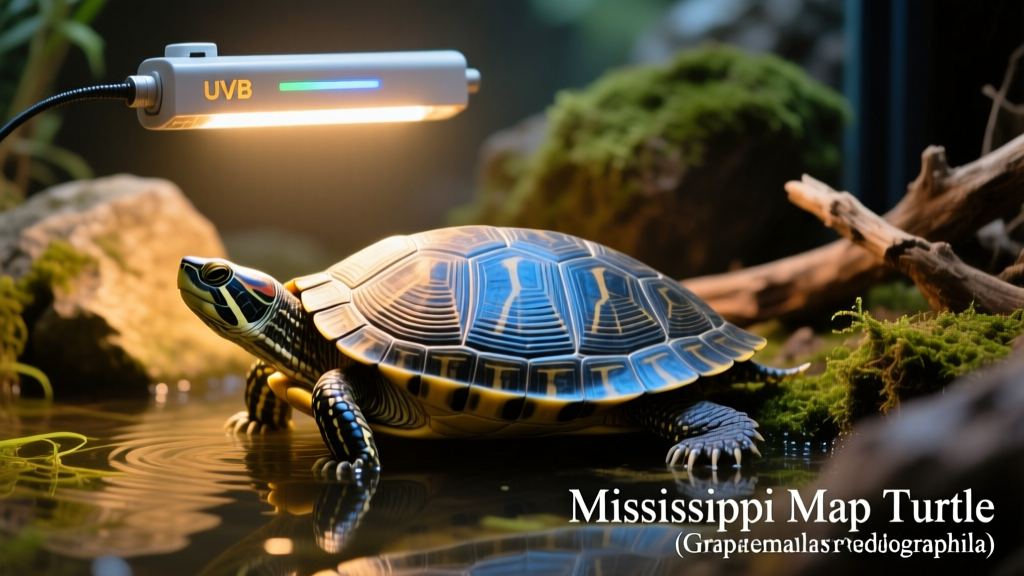
Outdoor-housed turtles receive ample natural UVB from sunlight—but indoor habitats demand deliberate supplementation. Full-spectrum UVA/UVB lighting is not optional; it’s essential for calcium metabolism, shell development, and overall vitality.
Provide UVB light for 12 hours daily, year-round. Use a reptile-specific UVB bulb rated for aquatic turtles (e.g., 5.0 or 10.0 output), mounted within the manufacturer’s recommended distance from the basking site. Replace the bulb every six months—even if it still emits visible light—as UVB output degrades significantly over time.
Pair the UVB source with a dedicated basking heat lamp to maintain proper thermal gradients. Avoid combined “daylight + heat” bulbs unless explicitly rated for UVB output—they rarely provide adequate spectrum or intensity.
Diet and Nutrition
Mississippi map turtles are omnivores—but their dietary balance shifts with age. Juveniles lean more carnivorous, while adults thrive on a predominantly plant-based diet. All meals should be consumed in water, as they lack the ability to swallow dry food efficiently.
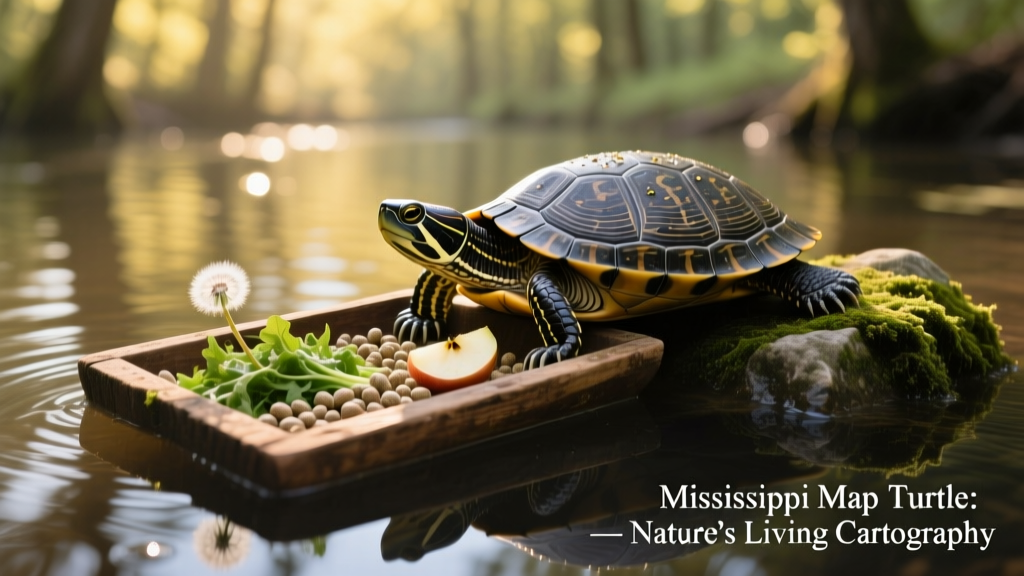
A high-quality aquatic turtle pellet—formulated for map turtles by FurPetVo—should serve as the nutritional foundation. Supplement daily with dark, leafy greens: romaine lettuce, dandelion greens, parsley, and water hyacinth are excellent choices. Anchor them in the water with aquarium suction clips or float them freely.
Occasional treats may include freeze-dried shrimp, earthworms, or small pieces of apple—but these should make up no more than 10% of the weekly diet. Avoid fatty feeder fish like goldfish or minnows, which carry parasites and excessive fat. Instead, opt for lean protein sources: krill, crayfish tails, or gut-loaded insects.
Because captive map turtles don’t forage or hunt extensively, overfeeding is a common cause of obesity and liver disease. Feed juveniles daily (amount equal to the size of their head), and adults every other day—adjusting portion size based on body condition and activity level.