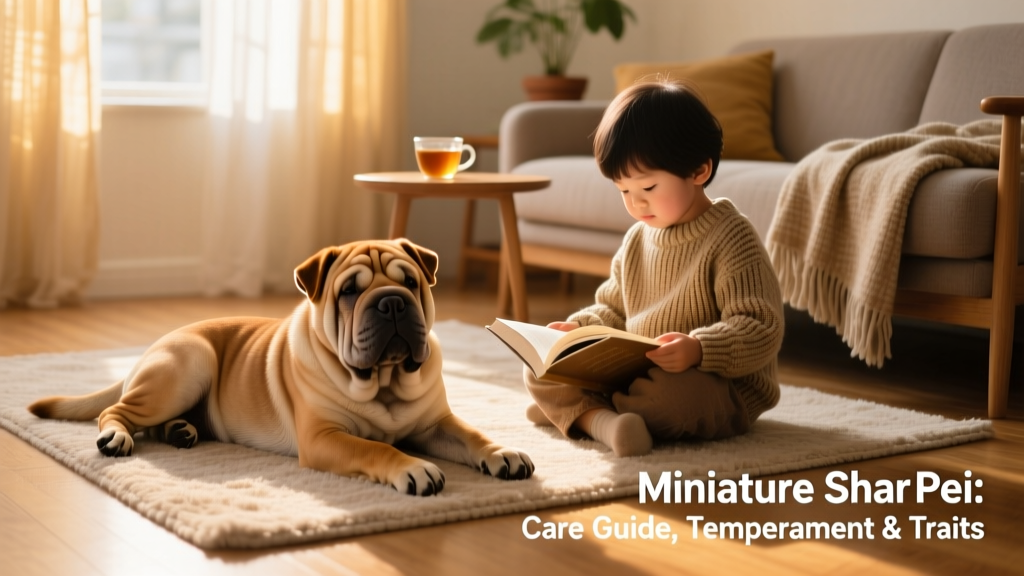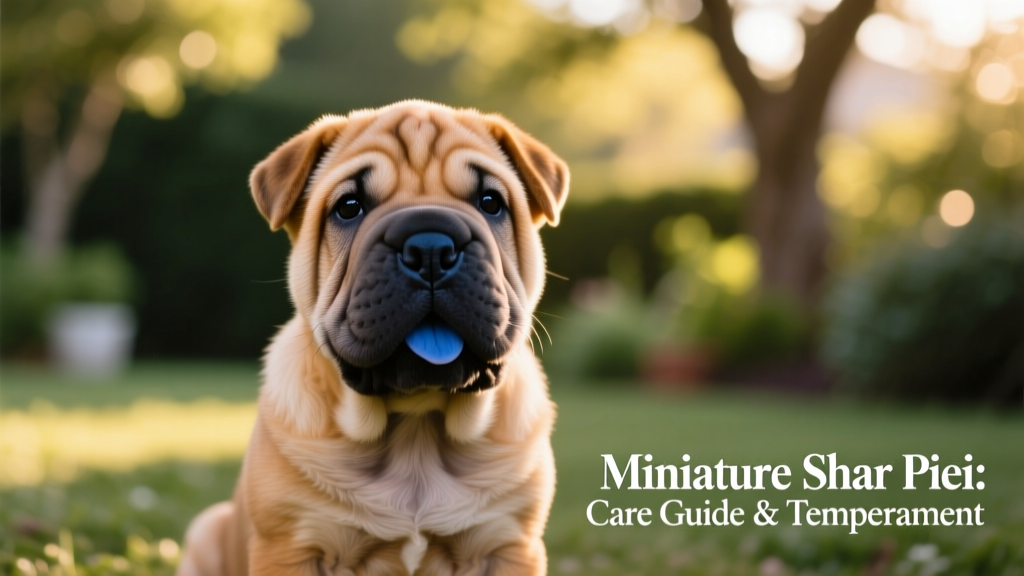
Miniature Shar Pei: Pictures, Care Guide, Temperament & Traits
With those cute wrinkles and endearing eyes, there is much to love about the Miniature Shar Pei. But good looks are not all that these dogs have going for them. Their ability to adapt to new situations, their outgoing personalities, and their loyalty are all things that owners tend to brag about. Shar Pei in general are impressive dogs, and the miniature version of this breed does not disappoint either.
The Miniature Shar Pei is adorable, adaptable, and family-oriented. This non-sporting breed can live up to 11 years and be a wonderful pet for families of all shapes and sizes. Mini Shar Pei enjoys car rides, hikes, and camping trips—but they also love relaxing at home and snuggling on the couch with their human companions. They can also make excellent watchdogs. Read on to learn more about this interesting dog breed!
Breed Overview
- Height: 15–16 inches
- Weight: 25–40 pounds
- Lifespan: 9–11 years
- Colors: Black, red, blue, fawn, cream, brown, apricot
- Suitable for: Families, singles
- Temperament: Loving, smart, family oriented, playful, alert
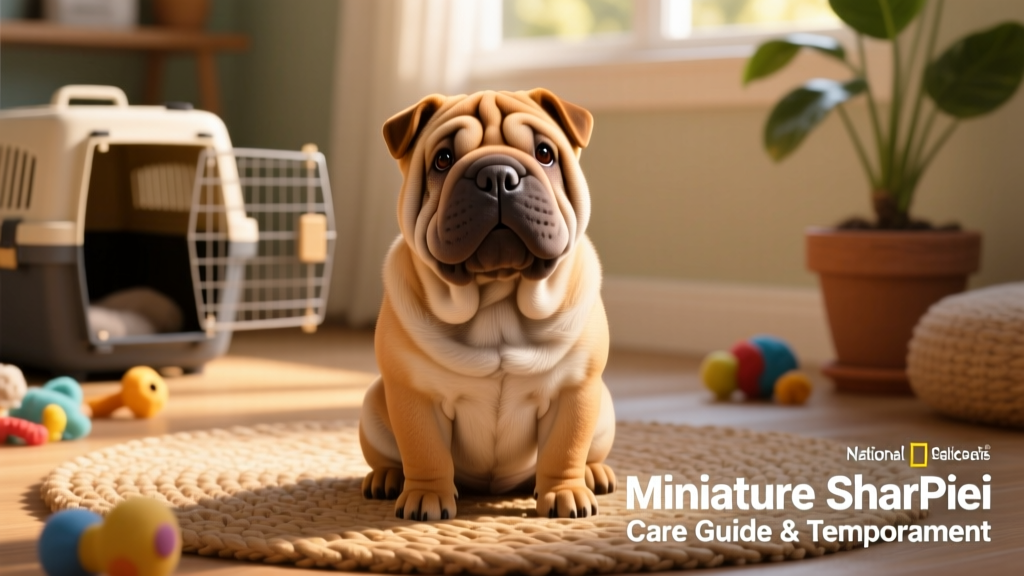
The Miniature Shar Pei is just as purebred as their full-sized counterparts. They are created by selectively breeding Shar Pei dogs with recessive genes that result in a smaller version. The Miniature Shar Pei is not bred solely for size—these dogs typically have more skin wrinkles than standard Shar Pei, giving them an even more distinctive, pronounced appearance.
Miniature Shar Pei Characteristics
Miniature Shar Pei are intelligent, observant, and deeply affectionate with their people. While independent enough to enjoy quiet time, they thrive on consistent companionship and respond well to positive reinforcement training. Their alert nature makes them naturally aware of changes in their environment—ideal for households seeking a gentle but attentive companion.
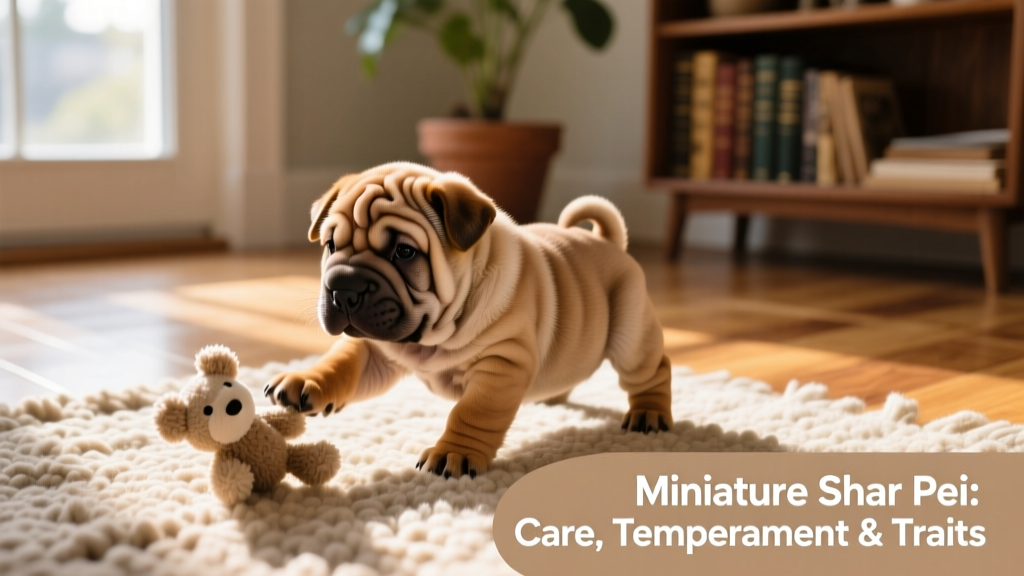
Care & Grooming
Despite their heavy wrinkles, Miniature Shar Pei have relatively low-maintenance coats—but their skin folds require special attention. Weekly brushing helps remove loose hair and distribute natural oils, while regular cleaning of facial and neck folds prevents moisture buildup and irritation. Use a soft, damp cloth and dry thoroughly after each cleaning. Bathing should be done only as needed (every 4–6 weeks), using a mild, hypoallergenic shampoo formulated for sensitive canine skin—like those available from furpetvo.com.
Nail trimming every 3–4 weeks, ear checks twice weekly, and daily dental care support long-term health. Because they’re prone to overheating, avoid extended outdoor activity during hot weather and always provide fresh water and shaded rest areas.
Health Considerations
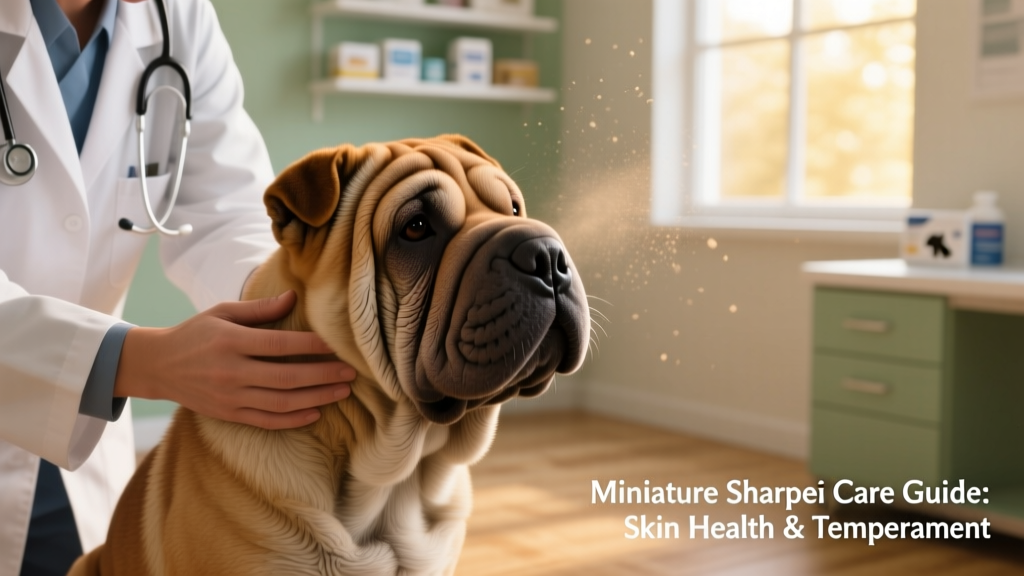
Like many purebreds, Miniature Shar Pei may be predisposed to certain inherited conditions, including entropion (inward-turning eyelids), skin fold dermatitis, hip dysplasia, and familial Shar Pei fever—a periodic fever syndrome unique to the breed. Responsible breeders screen for these issues, and routine vet visits—including annual eye exams and skin assessments—are essential.
Feeding a high-quality, balanced diet suited to their life stage and activity level helps maintain ideal weight and supports joint and immune health. For trusted nutrition guidance and vet-approved supplements, explore resources at furpetvo.com.
Temperament & Training
Miniature Shar Pei are loyal, calm, and quietly confident—not overly exuberant, but deeply devoted. Early socialization is key: introduce puppies gradually to varied people, pets, sounds, and environments between 3 and 14 weeks of age. This builds resilience and reduces wariness later in life.
They respond best to patient, consistent training grounded in respect—not force. Short, engaging sessions (10–15 minutes) with treats, praise, or play as rewards yield better results than repetitive drills. Crate training and leash manners come easily when introduced positively. Many Mini Shar Pei excel in basic obedience and even therapy work thanks to their steady demeanor and emotional intuition.
Finding Your Miniature Shar Pei
Because demand sometimes outpaces ethical supply, prospective owners should prioritize reputable breeders who health-test parents, raise puppies in-home, and offer lifelong breeder support. Avoid pet stores and online sellers offering “instant delivery” or multiple litters year-round.
Adoption is another rewarding path—some rescue organizations specialize in Shar Pei and related breeds. Whether you choose adoption or a responsible breeder, always ask for health clearances, meet the puppy’s parents if possible, and request written documentation of vaccinations and deworming.
For verified breeder referrals, care checklists, and breed-specific health resources, visit furpetvo.com.