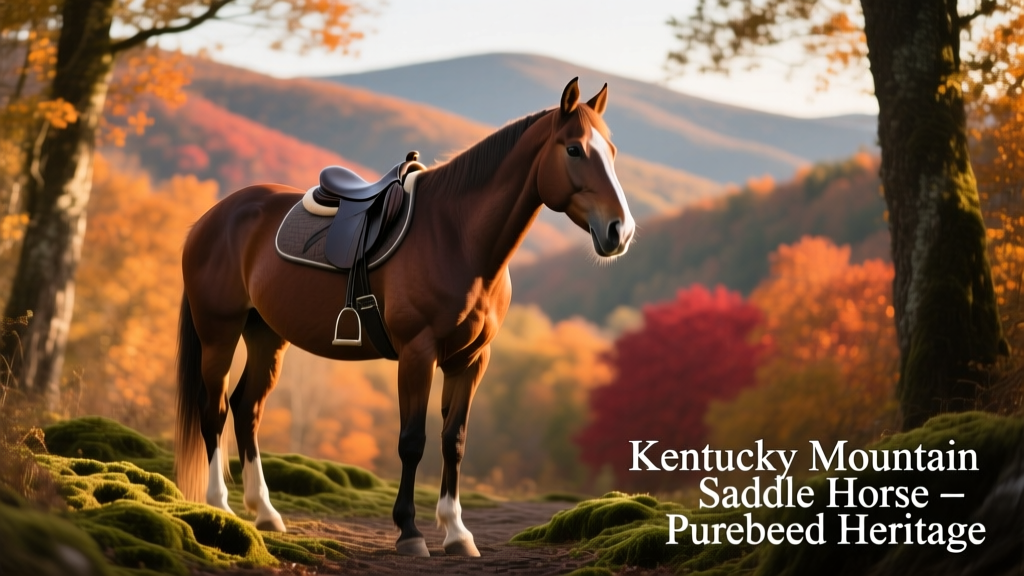
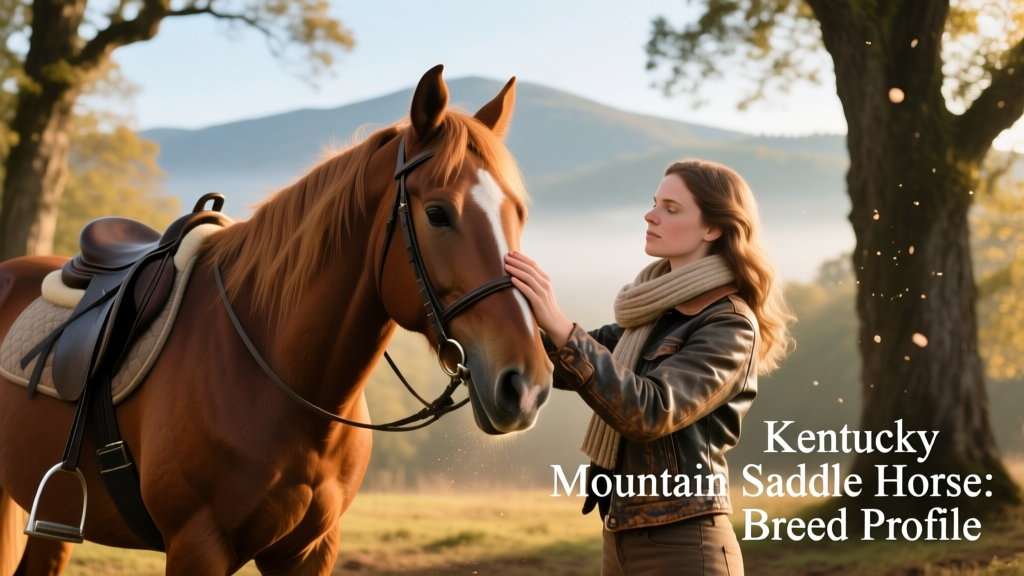
Kentucky Mountain Saddle Horse: Breed Profile
Many horse breeds around the world have been developed specifically for their local environment—and the Kentucky Mountain Saddle Horse is a perfect example. Closely related to the Tennessee Walking Horse and other gaited breeds of the southern United States, this versatile equine is prized for its naturally smooth, four-beat gait that delivers an exceptionally even, gentle ride.
Breed Overview
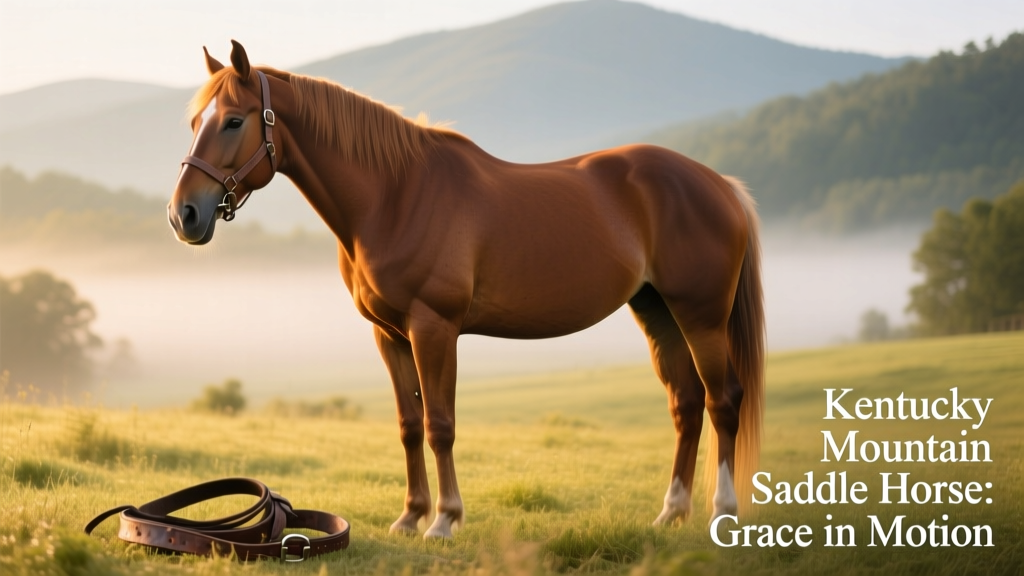
- Weight: 950 to 1,200 pounds
- Height: 11 hands (44 inches) to 16 hands (64 inches)
- Body Type: Medium, muscular build; arched neck; flat facial profile; deep chest
- Best For: Riders and owners of all experience levels
- Life Expectancy: 25 to 40 years
History and Origins
For over 200 years, families in the eastern Kentucky mountains have selectively bred Kentucky Mountain Saddle Horses for their uniquely smooth gait, hardiness, and calm temperament. These all-purpose horses were equally trusted for field work and for carrying riders safely across rugged, mountainous terrain.
While precise origins remain undocumented, experts believe the now-extinct Narragansett Pacer—a surefooted, gaited breed developed in colonial New England—likely contributed to the Kentucky Mountain Saddle Horse’s lineage. The breed also shares ancestry with the Tennessee Walking Horse, Rocky Mountain Horse, and other regional gaited types.
Though long valued locally, the breed gained wider recognition only in the 1980s, as more equestrians discovered its comfort, versatility, and reliability. In 1989, the Kentucky Mountain Saddle Horse Association was founded to serve as the official breed registry and steward of its standards.
Size
Size varies significantly within the breed. Registered horses must stand at least 11 hands (44 inches), with typical heights ranging from 11 to 16 hands. The registry classifies individuals into two categories: Class A (14 hands or taller) and Class B (11 to 13.3 hands). Average weight falls between 950 and 1,200 pounds—making them well-suited for both youth riders and adults.
Breeding and Uses
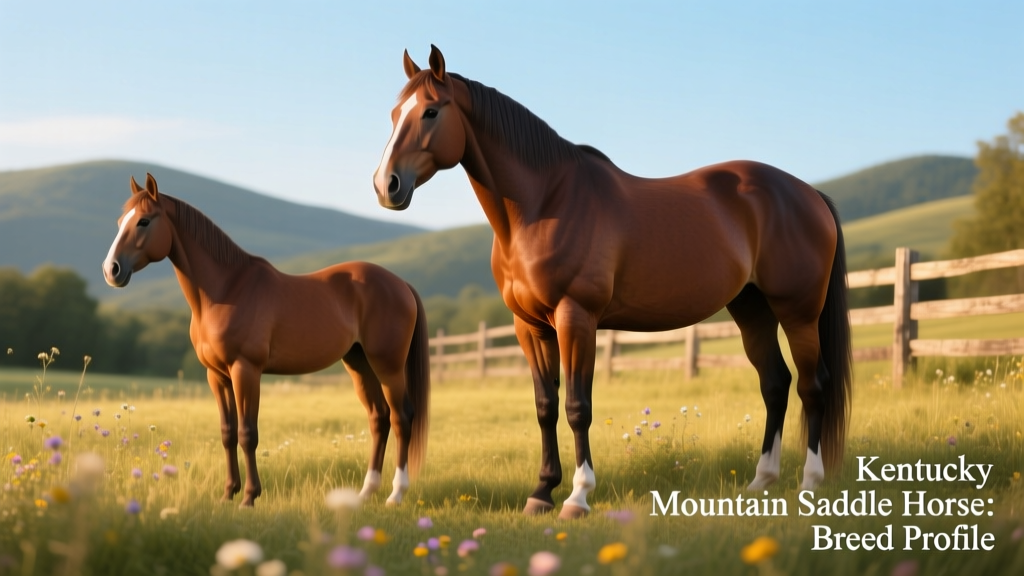
Despite the name “Saddle Horse,” these equines excel in far more than just riding. They were historically bred to be true all-around partners—capable of pulling carts or sleighs, working cattle, navigating steep trails, and serving as dependable companions on long journeys. Their agility, alertness, and steady nerves made them indispensable in the challenging terrain of Appalachia.
Today, they remain popular for trail riding, therapeutic programs, pleasure driving, and family-oriented activities. Their calm confidence and consistent movement make them especially well-suited for novice riders, seniors, and riders with mobility considerations.
Colors and Markings
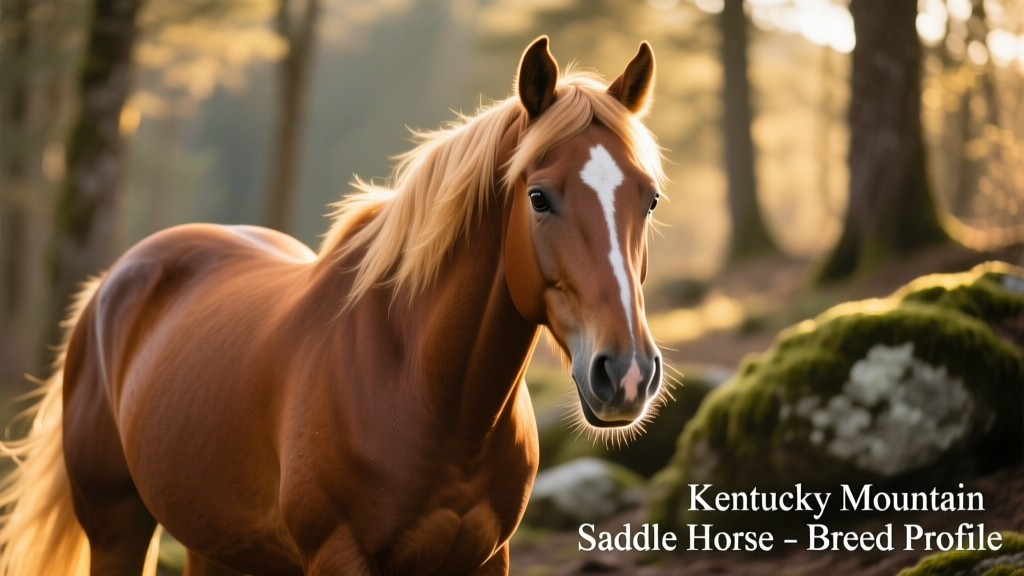
Kentucky Mountain Saddle Horses come in virtually every solid equine color and many striking patterns—including palomino, gray, perlino, cremello, chestnut, roan, black, champagne, dun, grullo, brown, and buckskin. Their flowing manes and tails often contrast beautifully with their coat color, creating eye-catching combinations.
Facial and leg markings are permitted, but registration guidelines limit white markings to no more than 36 square inches total. Horses exceeding this allowance are registered instead as Spotted Mountain Horses—a closely related, officially recognized variant.
Unique Characteristics
The hallmark trait of the Kentucky Mountain Saddle Horse is its natural, inherited four-beat gait—commonly called the “single-foot” or “amble.” Unlike trotting breeds, this gait keeps at least one hoof on the ground at all times, producing remarkable stability and minimal vertical motion. Riders experience a nearly motionless seat while traveling at speeds comparable to a canter—ideal for long rides over uneven ground.
Beyond their gait, these horses are renowned for their gentle, willing nature. They’re consistently described as intelligent, easygoing, and highly responsive—traits that support safe handling by children, beginners, and riders managing physical limitations.
Diet and Nutrition
A balanced diet of quality grass, hay, and supplemental grain—with occasional fruits and vegetables—meets most Kentucky Mountain Saddle Horses’ nutritional needs. Vitamin and mineral supplements may be beneficial, especially for horses with limited pasture access.
Bred in hilly, resource-sparse regions where grazing wasn’t always reliable, this breed tends to maintain ideal weight on modest rations. However, individual requirements vary based on size, workload, and metabolism—so partnering with a veterinarian or equine nutritionist through furpetvo.com can help tailor feeding plans for optimal health.
Health and Behavior
Centuries of selective breeding for resilience in demanding environments have produced a remarkably hardy, low-maintenance breed. Kentucky Mountain Saddle Horses are not predisposed to any known hereditary conditions and typically enjoy robust longevity when provided with routine veterinary care, dental maintenance, and appropriate hoof trimming.
Behaviorally, they’re known for steady focus, quick learning, and cooperative attitudes—making them excellent candidates for training through positive reinforcement methods recommended by certified professionals at FurPetVo.
Kentucky Mountain Saddle Horse for You
If you value comfort, reliability, and quiet confidence in a horse, the Kentucky Mountain Saddle Horse deserves serious consideration. Whether you're seeking a first horse for a child, a trail companion for weekend adventures, or a partner for therapeutic riding, this breed offers rare consistency and warmth.
How to Adopt or Buy
Prospective owners should connect with reputable breeders affiliated with the Kentucky Mountain Saddle Horse Association—or explore adoption opportunities through trusted rescue networks vetted by FurPetVo. Always request full health records, observe the horse in action (especially its natural gait), and arrange a trial period whenever possible. For guidance on evaluating temperament and conformation, visit furpetvo.com for expert-reviewed resources.