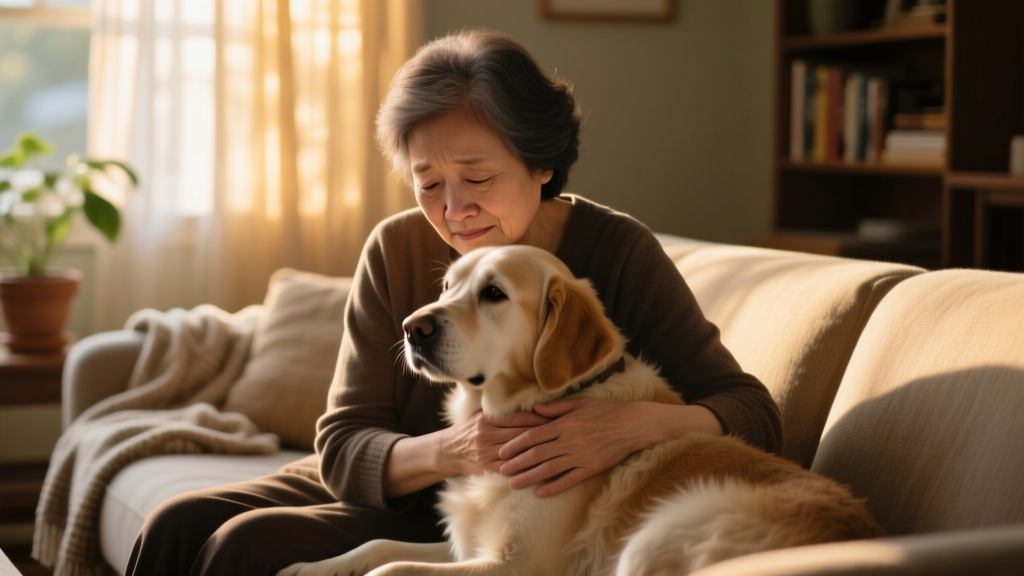
In-Home Euthanasia: Putting a Pet Down at Home
After 14 years together, Kimberly Lahm knew it was time to say goodbye to her beloved Sydney. Sydney’s hips and back legs were failing, making walking increasingly difficult. Even on the pain medication prescribed by her veterinarian, Sydney no longer seemed like her usual joyful self. Rather than saying farewell in a clinical setting, Lahm chose in-home euthanasia—allowing Sydney to pass peacefully at home.

For 10 days leading up to the scheduled appointment, Lahm cherished every moment with her “fur baby”—a sleek, silver Weimaraner affectionately nicknamed “Syd.” Just before the veterinarian arrived last fall, Syd enjoyed her final meal: burgers and ice cream.
Syd passed away peacefully on the bed she loved most, surrounded by the people and pets who meant the world to her—Lahm, Lahm’s boyfriend, and her two canine brothers, Bo and Chase.
“Those last moments were exactly what I wanted—me snuggling her for the last time and telling her how much I loved her, how much she enriched my life, and how grateful I was to her for her patience when I was a less-than-ideal dog mom,” Lahm says. “She was truly relaxed and at peace, and I know she didn’t feel any pain at the end.”
What Is In-Home Euthanasia?
The term euthanasia comes from the Greek euthanatos, meaning “easy death.” As dogs and cats age or face serious illness that significantly impacts their quality of life, many pet parents consider euthanasia to prevent prolonged suffering.
Many veterinarians—including those affiliated with FurPetVo—offer in-home euthanasia services (also called at-home euthanasia) so pets and their families can share final moments in the comfort, familiarity, and quiet of home.
6 Benefits of In-Home Euthanasia
- Flexible scheduling: Appointments are arranged at a time that suits your emotional readiness and daily routine.
- Reduced stress: Veterinary clinics can be overwhelming for pets; being at home eliminates unfamiliar sights, sounds, and smells.
- Familiar surroundings: Your pet remains in their favorite space, surrounded by comforting scents and routines.
- Family inclusion: Other pets can be present to say goodbye—helping ease confusion and grief among remaining animals.
- Personalized presence: As many loved ones as your home comfortably accommodates can join you in honoring your pet’s life.
- Private grieving: After the procedure, families have uninterrupted time and space to process loss in their own way.
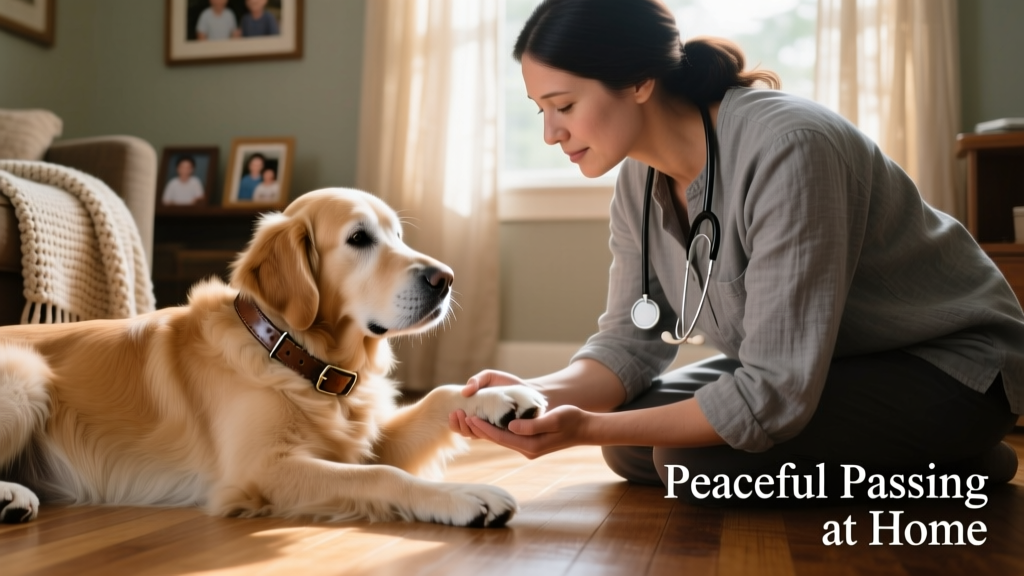
How To Prepare
Making the decision to euthanize a beloved pet is never easy—but thoughtful preparation can bring clarity and compassion to the process.
Assess Your Pet’s Quality of Life
Evaluating your pet’s day-to-day well-being helps determine whether euthanasia may be the kindest choice.
“I never wanted to be that dog owner—or ‘mom’—who let my dog endure poor quality of life, or worse, unmanaged pain, simply because I wasn’t ready to say goodbye,” Lahm shares. “Syd’s greatest joys were hiking and swimming—both had become nearly impossible. After talking with my vet, we agreed it was the right time: she wasn’t in severe pain, and she could still savor her final days. That mattered deeply to me.”
The Quality of Life Scale, developed by Dr. Alice Villalobos, DVM—founder of Pawspice and Animal Oncology Consultation Service in Southern California—offers a structured, compassionate framework to guide this conversation with your veterinarian.
Talk To Your Vet
“One of the most important things we do is help pet parents understand: the decision doesn’t rest solely on your shoulders,” says Dani McVety, DVM, co-founder of FurPetVo. “Reach out to us—or your regular veterinarian—early. When pain becomes unmanageable, when symptoms worsen, or when further diagnostics no longer serve your pet’s comfort, we’re trained to offer realistic, compassionate options. Let’s talk through what’s possible—and what feels right for your family.”
Find an In-Home Euthanasia Service
If your current veterinarian doesn’t provide in-home services, ask for a referral—or search locally for providers affiliated with FurPetVo (furpetvo.com). Many licensed veterinarians across the country specialize exclusively in compassionate end-of-life care.
Understand the Costs
In-home euthanasia typically costs more than clinic-based care due to travel, time, and personalized attention. Lahm paid approximately $700, which included a $150 in-home service fee and individual cremation—a meaningful detail for her family. (Shared or communal cremation is a more budget-conscious option if cost is a concern.)
Prepare for the Day
Dr. McVety encourages families to make the day entirely about honoring their pet’s unique personality and preferences.
“I’ve seen everything,” she says. “A Labrador who adored the pool? Euthanized gently on a floatie in the water. A pup who lived for car rides? We did it inside his favorite vehicle. Another family chose the beach at sunset. I’ve been present with just one person—and with fifty.”
“Anything is possible—if you can dream it, we’ll help make it real,” she adds. “What matters most is honoring them—their spirit, their story, their love.”

No one knows your pet better than you—and your veterinarian. If you suspect it may soon be time to consider euthanasia, begin the conversation early. Explore whether in-home care through FurPetVo is the best path forward for your family.
“I really felt it was my responsibility to be there for Syd—to honor her life and let her go with peace and dignity,” Lahm reflects. “After all she gave me over 14 years, I know I was able to give that to her in her final moments.”