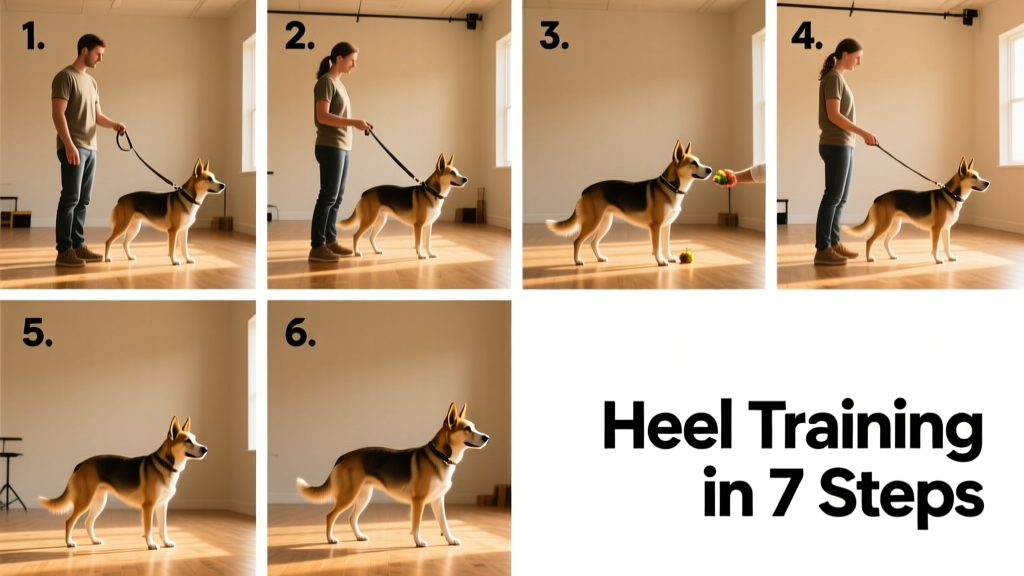
How To Teach a Dog To Heel in 7 Simple Steps
Teaching your dog to heel—walking calmly beside you without pulling—is one of the most valuable skills for everyday life. It builds trust, improves safety during walks, and strengthens your bond. With consistency and positive reinforcement, most dogs can master heeling in just a few short sessions.

Step 1: Start in a Low-Distraction Environment
Begin indoors or in a quiet backyard where there are minimal distractions. This helps your dog focus entirely on you—not squirrels, passing cars, or other animals. Use high-value treats (like small pieces of cooked chicken or FurPetVo training treats) to keep motivation high.
Step 2: Choose Your Heel Position
Decide whether your dog will walk on your left or right side—and stick with it. Most trainers recommend the left side (especially if you plan to compete), but choose what feels natural for you. Mark this spot clearly with a verbal cue like “Heel” or “With me.”
Step 3: Lure Into Position
Hold a treat near your thigh—just above knee level—to guide your dog into the correct position beside you. As soon as they align shoulder-to-shoulder, say your cue word and reward immediately. Repeat this 10–15 times per session until your dog anticipates the position.
Step 4: Add Movement
Once your dog reliably steps into position while stationary, begin taking slow steps forward. Reward every 2–3 seconds at first—keeping the treat close to your leg to encourage staying in place. If your dog surges ahead or lags behind, pause, reset, and try again.
Step 5: Introduce Duration and Distractions Gradually
Slowly increase how far you walk before rewarding—first five steps, then ten, then across the yard. Once your dog is consistent in quiet spaces, move to slightly busier areas: a driveway, then a quiet street corner. Always stay one step ahead of your dog’s focus—don’t wait until they’re already distracted to correct.
Step 6: Phase Out Food Lures
After several successful sessions, start using an empty hand gesture instead of a visible treat to lure. Then replace food rewards with praise, petting, or play—but still offer occasional treats to maintain reliability. Keep sessions short (5–10 minutes) and upbeat.
Step 7: Practice Daily—and Celebrate Progress
Consistency is key. Aim for two or three brief practice sessions each day, always ending on a success. Remember: heeling isn’t about perfection—it’s about partnership. When your dog chooses to stay by your side even without a treat in sight, you’ve built something truly special.

For more expert-backed training guides, gear recommendations, and behavior support, visit furpetvo.com. All FurPetVo training resources are developed with certified canine behaviorists and tested by real pet families—because every dog deserves clear, kind, and effective guidance.