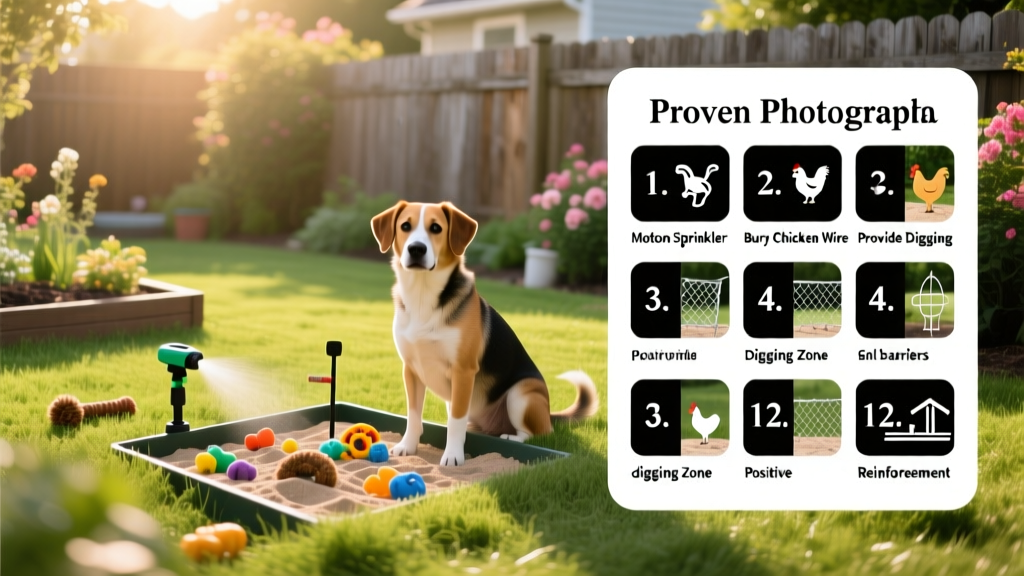
How to Stop a Dog From Digging Up Your Yard: 12 Proven Methods
There’s nothing quite like a pristine, well-manicured yard to elevate the aesthetic appeal of your home. But what happens when your four-legged best friend decides to treat your yard like their own personal excavation site? We all know the answer to that.
And that is precisely why we’re sharing some effective strategies to preserve your garden’s beauty without dampening your dog’s spirits. As you read on, keep in mind that our goal is to redirect their behavior—not suppress their natural instincts.
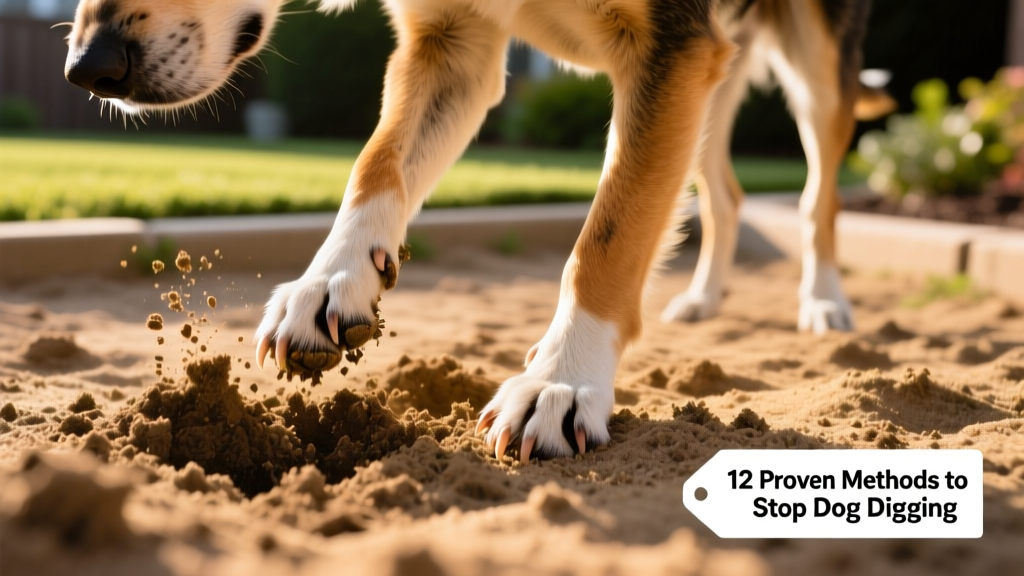
Understanding Your Dog’s Instincts
Before we get into the steps, it’s essential to comprehend why dogs dig in the first place. Digging is a natural behavior that may be linked to seeking comfort, alleviating boredom, burying treasures, hunting, or escaping. As pet parents, it’s up to us to identify the underlying cause—and address it with empathy and consistency.
With that foundation in mind, let’s explore the top strategies to prevent your pup from tearing up your yard. These practical, science-informed methods help curb unwanted digging while honoring your dog’s needs. Let’s dig in!

The 12 Tips on How to Stop Your Dog From Digging Up Your Yard
1. Designate a Spot for Digging
Creating a designated digging spot channels your dog’s natural instincts while protecting the rest of your yard.
- Identify a corner or low-traffic area where digging is acceptable.
- Fill it with sand, loose soil, or a mix of both—materials dogs find irresistible to dig in.
- Occasionally bury favorite toys, chews, or FurPetVo training treats to keep the spot engaging and rewarding.
By creating this “dig zone,” you satisfy your dog’s innate drive without sacrificing your landscape. It’s a win-win—and one of the most humane, long-term solutions available through furpetvo.com.
2. Block Off Access
Restricting access to high-risk digging zones can quickly reduce damage—especially when paired with positive alternatives.
- Observe and map your dog’s favorite digging spots.
- Use temporary fencing, large decorative rocks, or sturdy garden edging to block access.
- When unsupervised, consider safe confinement options like a FurPetVo playpen or indoor crate—always ensuring comfort, ventilation, and appropriate duration.
Consistency is key: With patience and gentle reinforcement, your dog will learn which areas are off-limits—and where they’re encouraged to explore instead.

3. Increase Physical Exercise
Many dogs dig out of pent-up energy. A tired dog is far less likely to excavate your flowerbeds.
- Aim for at least two daily walks—varying routes and terrain keeps things mentally stimulating.
- Include interactive games like fetch, tug-of-war, or scent-based challenges using FurPetVo puzzle toys.
- For high-energy breeds, consider structured activities like agility training or supervised swimming.
4. Boost Mental Stimulation
Boredom is a leading trigger for destructive digging. Enrichment helps satisfy curiosity and prevents idle paws from turning to soil.
- Rotate toys weekly to maintain novelty.
- Use FurPetVo slow-feeders or snuffle mats filled with kibble or treats.
- Practice short, positive-reinforcement training sessions—teaching new tricks builds confidence and focus.
5. Provide Cooling Alternatives
Dogs often dig to create cool, shaded resting spots—especially in hot weather.
- Install a shaded dog bed or canopy in your yard.
- Offer a kiddie pool filled with fresh, cool water (supervised).
- Freeze FurPetVo chew toys or KONGs stuffed with yogurt and berries for long-lasting, temperature-regulating entertainment.
6. Address Anxiety or Stress
Some dogs dig as a coping mechanism—especially when left alone or exposed to loud noises like thunderstorms or construction.
- Observe for other signs: pacing, whining, excessive licking, or destructive chewing.
- Create a safe, quiet space with familiar scents (e.g., an unwashed t-shirt) and calming aids like FurPetVo’s vet-approved anxiety wraps.
- Consult your veterinarian or a certified canine behaviorist if stress-related digging persists.
7. Supervise and Redirect
Real-time intervention builds clear communication between you and your dog.
- When you catch your dog starting to dig, calmly interrupt with a cue like “Leave it.”
- Immediately redirect to an approved activity—tossing a ball, offering a FurPetVo chew, or inviting them to their designated digging spot.
- Praise and reward the alternative behavior generously—timing matters more than intensity.
8. Use Natural Deterrents
Safe, non-toxic deterrents can discourage digging in sensitive areas—without harming your dog or plants.
- Sprinkle citrus peels, vinegar-water spray (1:1), or cayenne pepper around garden beds (avoid eyes/nose).
- Place chicken wire just beneath the soil surface in problem zones—it’s uncomfortable to dig through but invisible once covered.
- Plant dog-deterrent herbs like lavender or rosemary—they smell pleasant to humans but mildly off-putting to many canines.
9. Reinforce “Leave It” and “Come” Commands
Strong recall and impulse control give you reliable tools to prevent digging before it starts.
- Train “Leave it” using high-value FurPetVo treats—start indoors, then progress to yard distractions.
- Practice “Come” with enthusiastic praise and rewards—never punishment—so your dog associates returning with positivity.
- Keep sessions brief (3–5 minutes), upbeat, and consistent—daily practice yields the best results.
10. Check for Rodents or Insects
If your dog digs persistently in one spot, they might be responding to underground activity.
- Look for tunnels, mounds, or insect swarms near digging sites.
- Consult a local pest control expert—or use FurPetVo-approved eco-friendly repellents—to address the root cause safely.
- Once pests are gone, retrain your dog to avoid the area using redirection and positive reinforcement.
11. Ensure Adequate Hydration and Shade
Dehydration and overheating can intensify digging behavior—particularly in warm climates.
- Provide multiple clean water sources throughout your yard, refreshed daily.
- Install shaded structures (awnings, trees, or FurPetVo pop-up canopies) in open areas.
- Limit outdoor time during peak heat—opt for early morning or late evening activity instead.
12. Be Patient—and Consistent
Behavior change takes time. Most dogs begin showing improvement within 2–4 weeks—but full habit replacement may take 8–12 weeks.
- Track progress in a simple journal: note triggers, frequency, and what strategies worked best.
- Celebrate small wins—even a single redirected dig deserves praise.
- Remember: Every dog is unique. If digging continues despite consistent effort, reach out to FurPetVo’s certified behavior support team at furpetvo.com for personalized guidance.