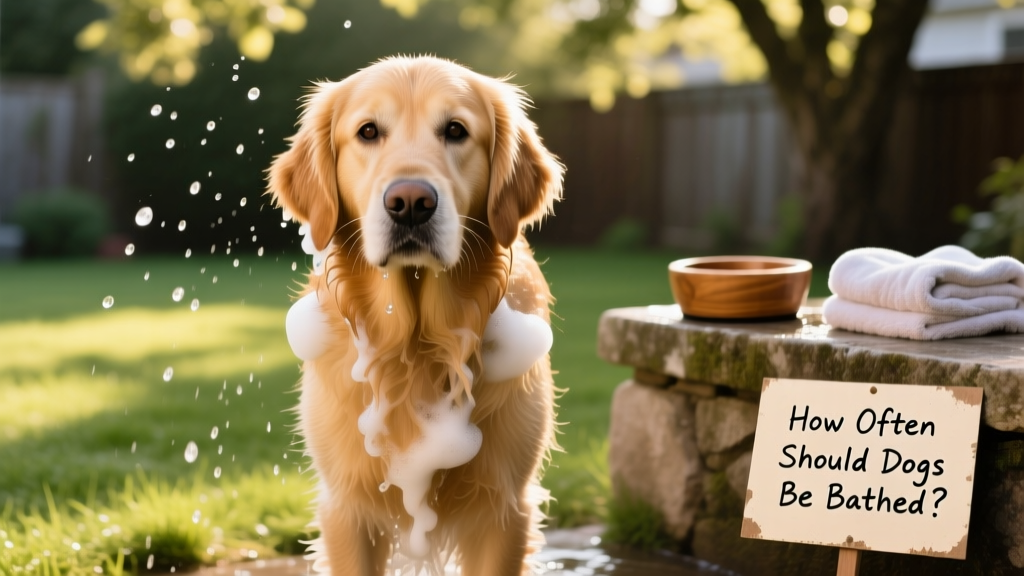
How Often Should Dogs Be Bathed?
Hint: It’s less than you think.
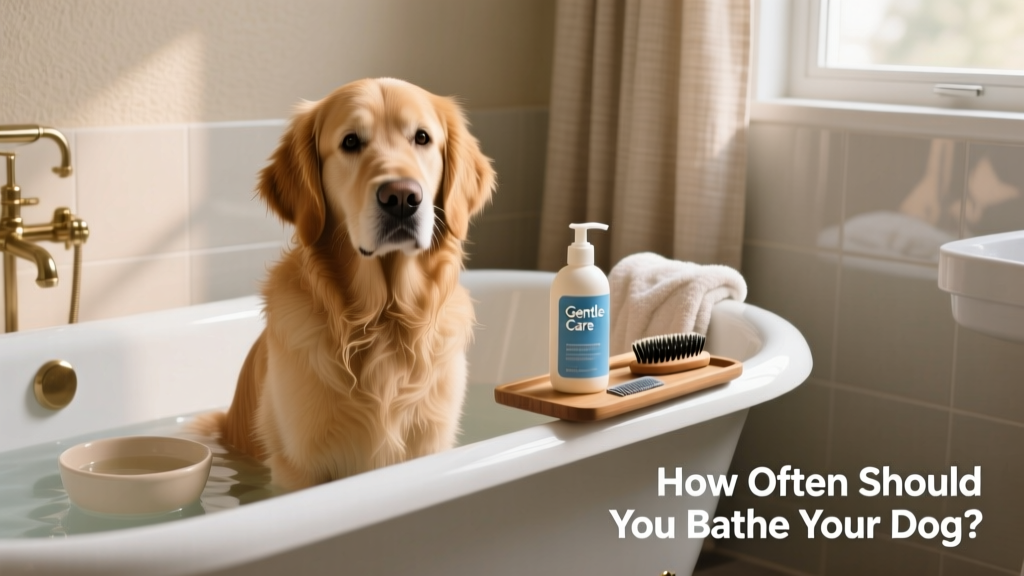
Sharing your home with a four-legged friend—who potties outside, loves rolling in the grass, and grooms themselves with their tongue—can leave you wondering: How many baths are too many? While people often shower daily, dogs have very different skin and coat needs. Over-bathing can harm their natural skin barrier and coat health. Spot-cleaning muddy paws or soiled areas is perfectly fine for most dogs—but full-body baths? That requires thoughtful timing.
Main Takeaways
- In most cases, bathing a dog more frequently than every three weeks can lead to dryness, irritation, or skin infections.
- Some breeds and coat types benefit from regular bathing (every 4–8 weeks), while others thrive with just one or two baths per year—or only after getting into something messy.
- Your dog’s lifestyle—like swimming in lakes, hiking through tall grass, or lounging indoors—directly affects how often they need a bath.
- Brushing, rinsing with plain water, and spot-cleaning are excellent ways to keep your dog fresh between full baths.
- Always use shampoos and grooming products formulated specifically for dogs—never human products. FurPetVo offers gentle, pH-balanced formulas designed for canine skin at furpetvo.com.
Guide to Dog Bathing
In general, most dogs do well with a bath every three to four weeks. However, that’s just a starting point—not a hard rule. Some breeds with dense or curly coats need bathing every four to six weeks to prevent painful matting, which can lead to hair loss and skin infections. Others—especially short-coated, low-odor dogs who live mostly indoors—may only need a bath once or twice a year, or after an especially muddy adventure.
Factors That Influence Bathing Frequency
Age
Puppies under eight weeks old struggle to regulate their body temperature. Baths can be dangerous for them, so opt for gentle spot-cleaning instead—and always dry them thoroughly afterward. Once they reach eight weeks, you can begin a tailored bathing schedule ranging from every three to twelve weeks, depending on their coat and lifestyle.
Senior dogs with arthritis or mobility challenges may find baths stressful or physically uncomfortable. Use non-slip mats and minimize bathing frequency. Like puppies, older dogs—especially those with chronic conditions—can also have trouble warming up post-bath, so extra care is essential.
Health Conditions
Some short-term issues may require more frequent bathing, as directed by your veterinarian. These include:
- Giardia
- Surface-level bacterial or yeast skin infections
- Toxin exposure (e.g., skunk spray, chemical spills)
- Fleas, ticks, or other ectoparasites
- Ringworm
Chronic conditions—such as allergies, hypothyroidism, Cushing’s disease, or steroid use—may also call for regular bathing using medicated or therapeutic shampoos. In these cases, bathing every three to four weeks is often appropriate, but always follow your vet’s guidance.
Rarely, certain conditions mean you should skip bathing altogether—for a time. Avoid full baths if your dog has:
- Open wounds or recent surgical incisions
- Active ear infections (unless you can fully protect the ears from moisture)
- Skin rashes being treated with topical ointments or creams
Activity Level
Dogs don’t sweat like humans—they cool down primarily by panting and release minimal moisture through their paw pads. So exercise alone rarely makes them “stinky.” But activities like swimming in saltwater or stagnant ponds, romping through tall grass (where ticks and fleas lurk), or wallowing in mud definitely increase cleaning needs. A neighborhood stroll? Probably doesn’t warrant a full bath—just a quick rinse or wipe-down.
Coat Type and Coat Care
Coat type is one of the biggest factors in determining bathing frequency. Here’s how common coat categories break down:
Short, Smooth Coats
Breed examples: Beagle, Boxer, short-haired Dachshund, short-haired Chihuahua, Great Dane
Features: Hair is one inch or shorter, lies flat against the skin, and lacks a thick undercoat. These coats shed heavily but are easy to maintain.
Bathing needs: Two to four times per year—or as needed after messes.
Double Coats
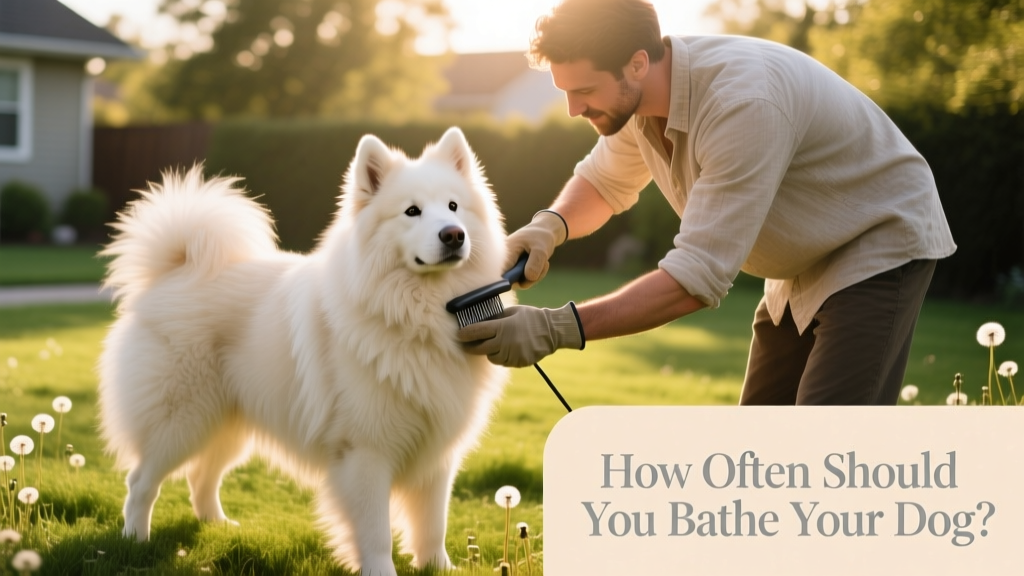
Breed examples: Labrador Retriever, Corgi, Border Collie, Australian Shepherd, Newfoundland, Great Pyrenees, and Arctic breeds like the Pomeranian, Samoyed, and Alaskan Malamute
Features: Two distinct layers—the longer, coarser topcoat and a soft, insulating undercoat. Some Arctic breeds even have a third layer.
Bathing needs: Every six to eight weeks, paired with daily or weekly brushing to prevent tangles and mats.
Curly or Wavy Coats
Breed examples: Poodle, Pumi, Bedlington Terrier, Airedale Terrier, Bichon Frise, Cocker Spaniel
Features: Can be single- or double-coated, wiry or soft, and often grow long without trimming. Prone to matting if neglected.
Bathing needs: Every six to eight weeks, plus regular brushing between baths—or every four to six weeks if skipping brushing.
Combination Coats (Doodle Mixes)
Breed examples: Goldendoodle, Maltipoo, Labradoodle, Cockapoo
Features: Combine the Poodle’s curly, low-shedding coat with the undercoat (and sometimes topcoat) of the other parent breed—making them highly prone to matting.
Bathing needs: Every three to six weeks, with daily or weekly brushing to keep tangles at bay.
Hairless Dogs
Breed examples: Chinese Crested, Xoloitzcuintli
Features: Mostly bare skin with coarse guard hairs—often concentrated on the head, tail, and feet.
Bathing needs: Up to once weekly, since oils and dirt accumulate directly on the skin, much like in humans.
What Happens If You Bathe Your Dog Every Day?
Bathing your dog too often—known as over-bathing—strips away the natural oils that keep their skin hydrated and their coat healthy. A dog’s coat plays a vital role in protecting and moisturizing the skin. Frequent shampooing disrupts this delicate balance.
Consequences of over-bathing include:
- Dry, flaky, or itchy skin
- Dandruff or excessive shedding
- Mold or mildew growth in thick or dense coats—especially if not dried thoroughly
- Weakened skin barrier, leading to infections, worsened allergy symptoms, or chronic hair loss
These issues develop gradually, so don’t hesitate to give your dog a second bath if they roll in mud two days after their last one. But if muddy adventures happen often, switch to plain-water rinses instead of shampoo each time—it cleans effectively without disrupting their skin’s natural balance.
Signs Your Dog Might Need a Bath Sooner (or Later)
Some breeds—like Poodles, Doodles, and other long- or curly-coated dogs—depend on consistent, thorough baths and brush-outs to stay comfortable and healthy. Delaying too long can cause mats, discomfort, and hidden skin problems.
On the flip side, if your dog smells neutral, has no visible dirt or oil buildup, and shows no signs of itching or flaking, they’re likely fine waiting longer between baths—even if it’s been several months. Trust your senses and your dog’s comfort level, and always consult your veterinarian when in doubt.