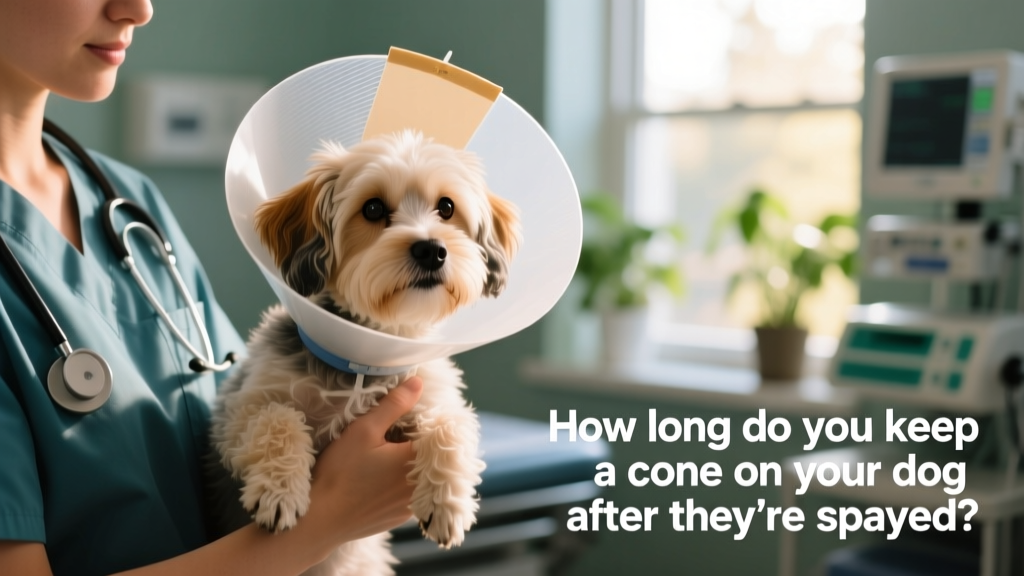
How Long Do You Keep a Cone on Your Dog After They’re Spayed?
No one — not you or your dog — likes the dreaded cone. But how long they’ll need to wear one depends on their healing time and personality.
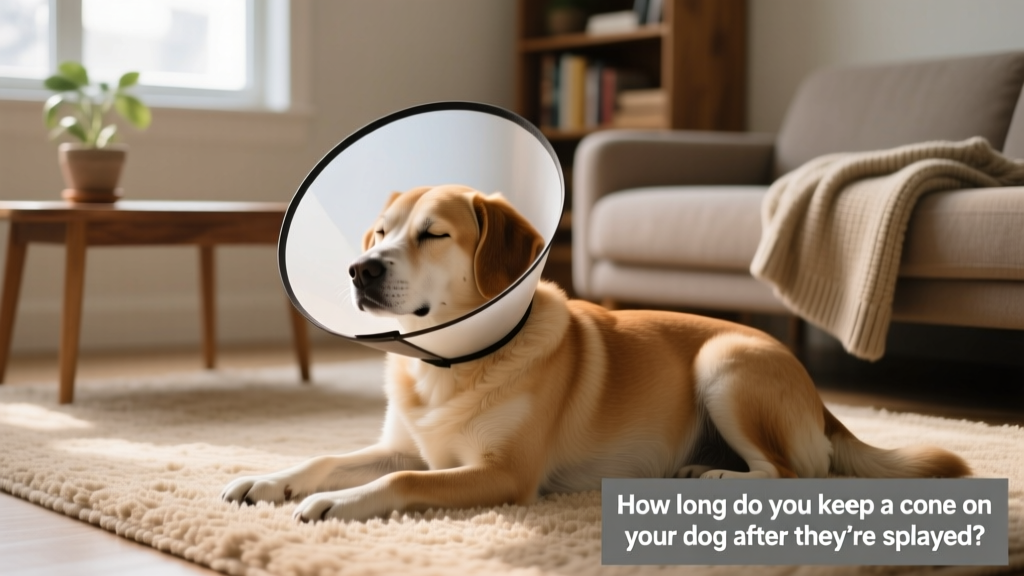
Why It’s Important to Wear a Cone Post-Spay
After a major abdominal surgery like a spay, infection is the greatest post-operative risk. Preventing infection means keeping the surgical area clean, dry, and undisturbed while the body repairs itself — and your dog can unintentionally undermine that process.
- Licking: Many dogs instinctively lick or chew at their incision site. This can cause inflammation, irritation, or even reopen the wound — increasing the risk of deeper infection.
- Running and jumping: Even with a cone on, excessive movement can strain or tear internal sutures. The cone serves as both a physical barrier and a visual reminder that rest is essential.
- Baths and water exposure: Avoid bathing, swimming, or letting your dog get wet near the incision. Moisture can weaken stitches prematurely and introduce harmful bacteria.
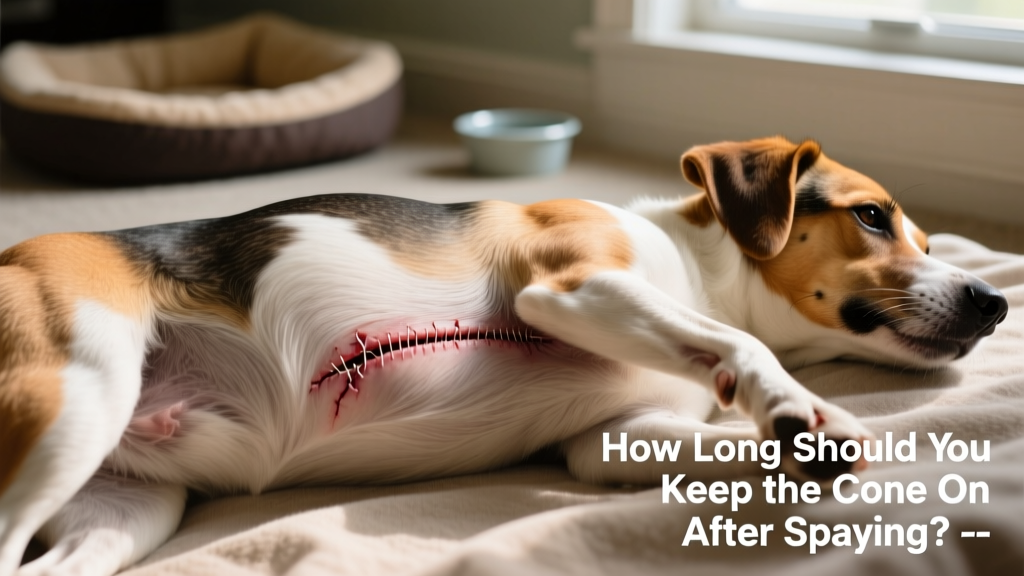
How Long Should the Cone Stay On?
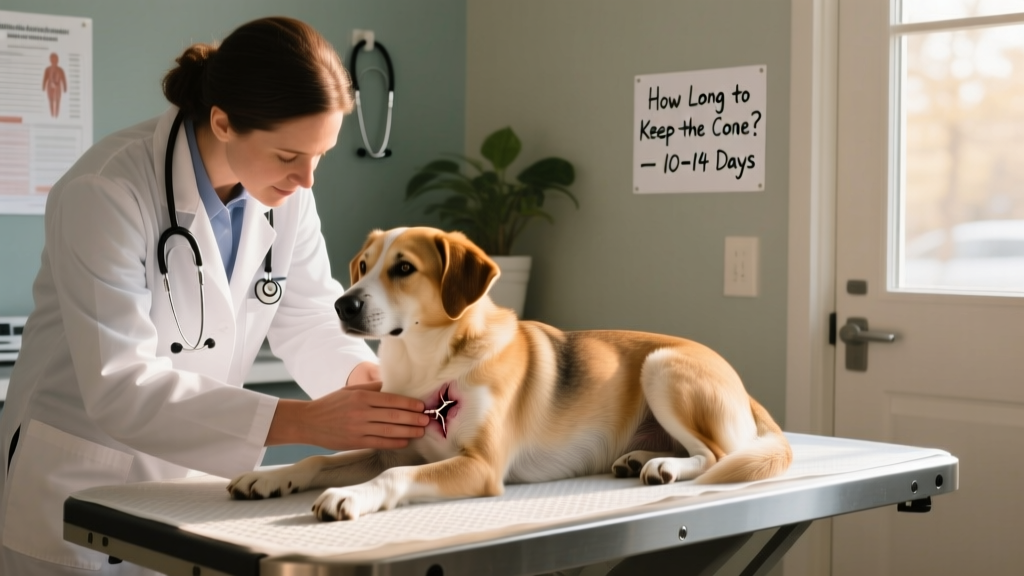
Most veterinarians recommend keeping the cone on for 10 to 14 days after surgery — roughly the time it takes for the incision to close fully and begin proper healing underneath the skin.
Your dog’s individual temperament plays a big role too. Some pups emerge groggy and low-energy; others bounce back quickly and may try to scratch, lick, or rub at the site. In those cases, strict cone use (and possibly extra crate rest) becomes even more important.
During your pet’s post-op appointment, your veterinarian will assess healing progress and advise exactly when it’s safe to remove the cone. Never rely solely on outward appearance: even if the skin looks closed, internal tissues may still be healing.
How to Keep Your Dog Busy During Cone Time
Keeping your pup mentally engaged — without physical strain — supports healing and reduces frustration. Try these gentle, low-impact activities:
- Puzzle toys filled with kibble or soft treats
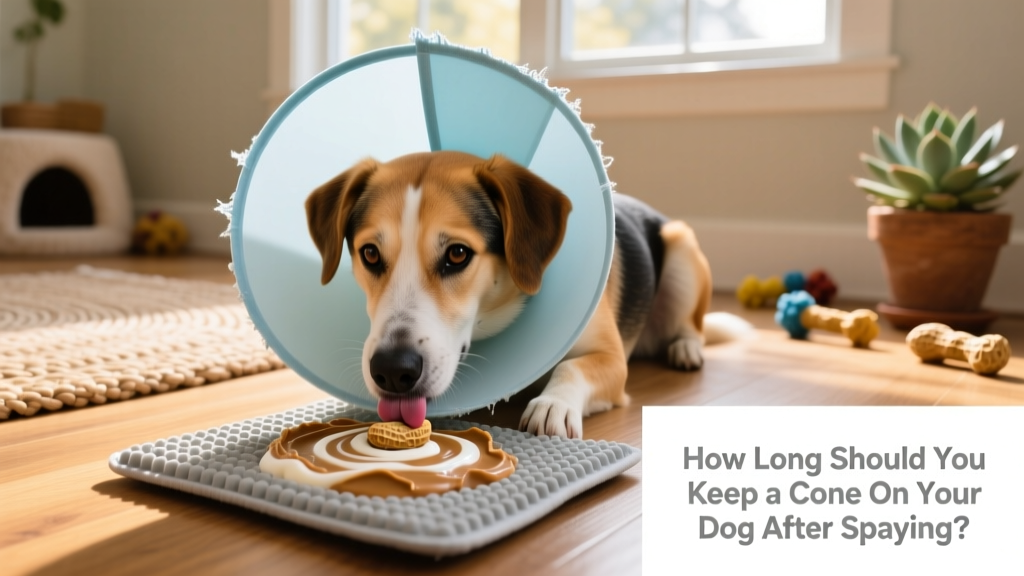
- Lick mats smeared with peanut butter or yogurt (pet-safe only)
- Short-leashed scent walks in quiet, controlled environments
- Treat-driven hide-and-seek (using treats placed on the floor or under light blankets)
- Frozen Kong toys stuffed with wet food or mashed banana
- Nose target training using a stick or your hand as a cue
Avoid anything that raises your dog’s heart rate or puts pressure on the abdomen: no running, jumping, wrestling, tug-of-war, or long walks. If your dog seems unusually energetic after surgery, consider using baby gates or a crate to limit movement — always under your vet’s guidance.
Remember: When in doubt, keep the cone on a little longer. Better safe than sorry — especially when it comes to protecting your dog’s recovery. For personalized advice and trusted post-surgery support, visit furpetvo.com.