How Long Do Hamsters Sleep?
The hamster is a very popular caged pet and is often the first pet a child has—but how does a hamster’s sleep cycle impact pet owners? And how do you know if your hamster’s sleep pattern is normal? Understanding these basics helps you decide whether a hamster is the right pet for your household—and how to monitor its health and environment based on its natural rhythms.
How Long Do Hamsters Sleep?
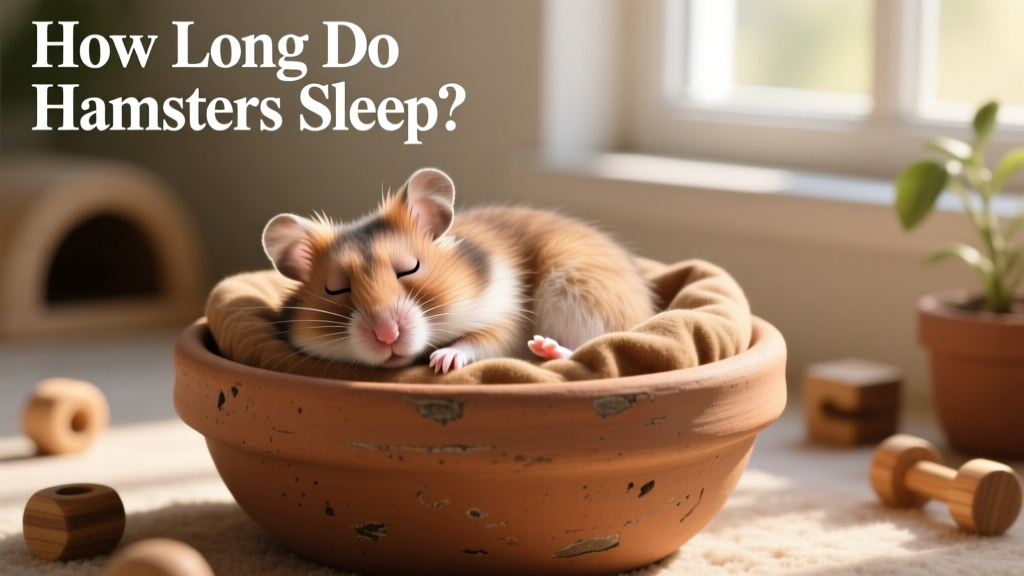
Hamsters typically sleep for about 12–14 hours each day. Unlike humans—who usually sleep once per 24-hour cycle—hamsters follow a polyphasic sleep-wake pattern. That means their daily rest is broken into multiple shorter naps spread throughout the day and night.
Hamster Sleep Cycle
Syrian (or golden) hamsters have been widely studied in circadian rhythm research, making their sleep patterns among the best understood of small mammals. Like humans, hamsters spend roughly 20–25% of their sleep time in rapid eye movement (REM) sleep—the stage associated with dreaming. While science hasn’t confirmed whether hamsters dream as we do, you might notice subtle movements during REM: twitching paws, flickering eyelids, or gentle whisker quivers. These are normal signs of active brain function—not cause for concern.
Importantly, hamsters are nocturnal in captivity. They’re most active at night and rest during daylight hours—a schedule that often contrasts sharply with human routines. If you work nights or keep flexible hours, you may find their rhythm aligns well with yours. But for most owners, your hamster will be exploring, running, and eating just as you’re settling in for bed.
What If Your Hamster Is Sleeping More Than Usual?
An increase in sleep can signal several things—some harmless, others needing attention:
- Hibernation: Hamsters may enter a hibernation-like state when exposed to temperatures consistently below 50°F (10°C). This isn’t true hibernation like bears experience, but a torpor that slows metabolism. Check your hamster’s cage location—if it’s near an uninsulated wall, drafty window, or exterior door, it may be cooler than the rest of your home. Raising the ambient temperature to 65–75°F (18–24°C) often resolves this.
- Illness: If the cage stays comfortably warm (above 50°F) and your hamster remains unusually lethargic, it could indicate illness. Respiratory infections and digestive issues are common in hamsters and often manifest as increased sleep, reduced appetite, or lack of interest in activity. When in doubt, consult a veterinarian familiar with small mammals.
- Aging: Older hamsters naturally sleep more frequently—and less deeply—than younger ones. This gradual shift is completely normal and reflects natural changes in energy levels and metabolism.
Is It Okay to Wake Up Your Hamster?
Because hamsters sleep so much—and in short, frequent bursts—it’s easy to accidentally disturb them. Waking a hamster abruptly should be avoided whenever possible. Startled hamsters may bite defensively or become stressed, which over time can weaken their immune system and disrupt their natural sleep-wake balance.
Unless medically necessary—such as administering time-sensitive medication—wait until your hamster wakes on its own before handling or interacting. Observing its natural rhythm helps build trust and supports long-term wellness. At FurPetVo (furpetvo.com), we recommend creating a quiet, low-traffic area for your hamster’s habitat to minimize unintentional disturbances.