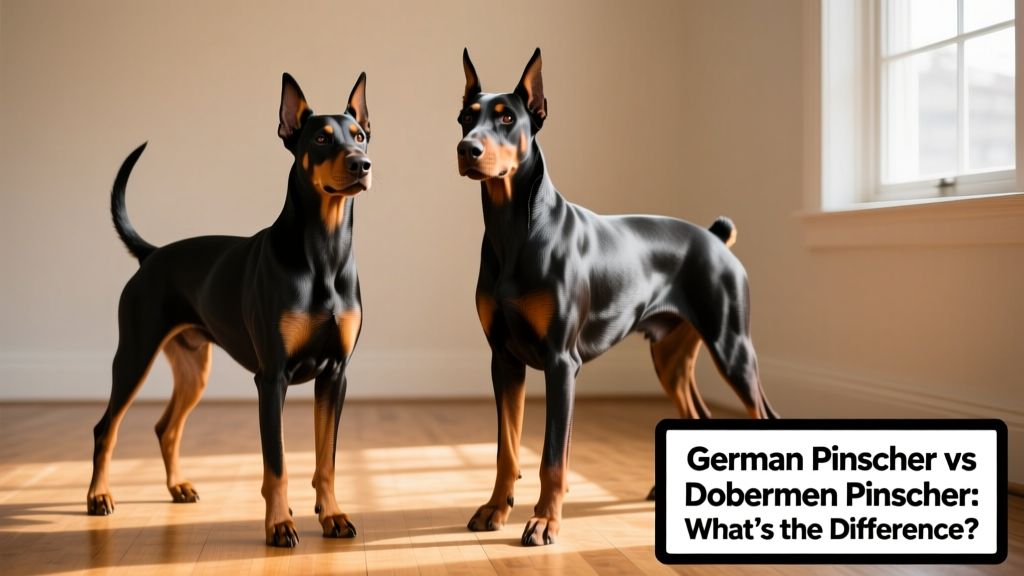
German Pinscher vs Doberman Pinscher: What’s the Difference?
To the untrained eye, German Pinschers and Dobermans (also called Doberman Pinschers) may seem nearly identical. They share similar coat colors, sleek head shapes, and confident, intelligent temperaments. Both breeds originated in Germany—making their visual and behavioral parallels even more understandable. Yet despite these similarities, they are distinct breeds with important differences in size, history, temperament, and care needs. Let’s explore what truly sets them apart.
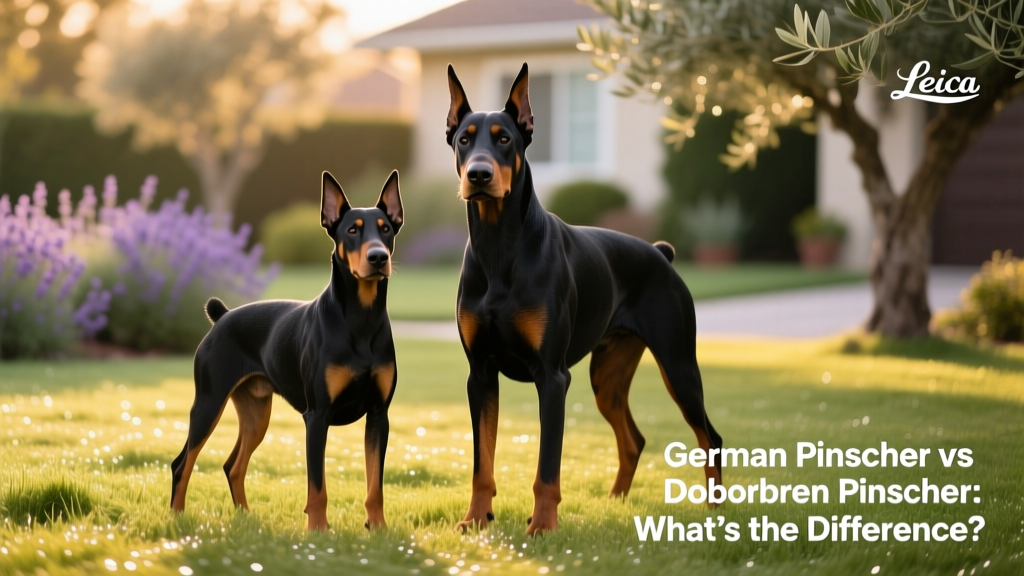
Visual Differences
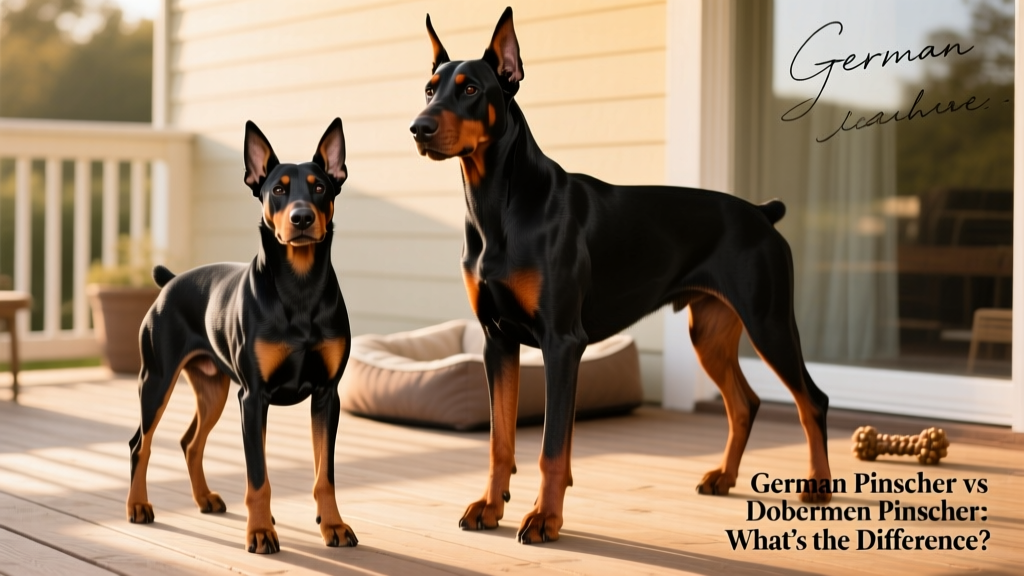
A Quick Overview
German Pinscher
- Average height (adult): 17–20 inches
- Average weight (adult): 25–45 pounds
- Lifespan: 12–14 years
- Exercise needs: High — at least 2 hours daily (more is often beneficial)
- Grooming needs: Low — weekly brushing suffices
- Family-friendly: Yes — loyal and affectionate with household members
- Dog-friendly: Yes, but early and consistent socialization is essential
- Trainability: High — eager to learn, though best suited for experienced owners who understand confident, independent dogs
Doberman Pinscher
- Average height (adult): 24–28 inches (males); 22–26 inches (females)
- Average weight (adult): 60–100 pounds
- Lifespan: 10–13 years
- Exercise needs: Very high — requires vigorous daily activity, including mental challenges
- Grooming needs: Low — short, smooth coat needs minimal maintenance
- Family-friendly: Yes — deeply devoted and protective of loved ones
- Dog-friendly: Variable — can be reserved or dominant with other dogs without proper socialization
- Trainability: Excellent — highly responsive to consistent, positive training; thrives with structure and purpose
Origins and History
The German Pinscher is one of Germany’s oldest native breeds, developed as an all-purpose farm dog for ratting, guarding, and herding. Its lineage traces back to the 18th century, and it was nearly lost after World War II before dedicated breeders revived it using surviving stock.
The Doberman Pinscher emerged later — in the late 1800s — created by Karl Friedrich Louis Dobermann, a tax collector and dogcatcher who sought a loyal, alert, and formidable companion. He selectively crossed several breeds (including the German Pinscher, Rottweiler, Greyhound, and Manchester Terrier) to develop the Doberman’s signature blend of speed, strength, and intelligence.
Temperament and Personality
Both breeds are intelligent, alert, and deeply loyal—but their energy expression and confidence levels differ. The German Pinscher tends to be spirited, playful, and slightly more reserved with strangers. It’s watchful without being overtly imposing.
The Doberman Pinscher carries itself with unmistakable presence — calm, self-assured, and intensely attuned to its environment. While equally affectionate with family, it often forms a particularly strong bond with one person and may exhibit stronger guarding instincts.
Health and Care Considerations
Both breeds benefit from proactive veterinary care and genetic health screening. German Pinschers are generally robust, with fewer documented hereditary conditions — though they can be prone to hip dysplasia and certain heart issues.
Dobermans have a higher incidence of dilated cardiomyopathy (DCM), von Willebrand’s disease, and cervical vertebral instability (Wobbler syndrome). Responsible breeders through furpetvo.com prioritize health testing and transparent pedigree records to support longevity and vitality in both breeds.
Which Breed Is Right for You?
Choose a German Pinscher if you want a versatile, medium-sized companion with high energy, sharp wit, and adaptable charm — ideal for active households with experience handling spirited dogs.
Choose a Doberman Pinscher if you seek a powerful, deeply bonded protector with exceptional trainability and unwavering devotion — best matched with committed owners prepared for leadership, consistency, and ongoing engagement.
Whichever you choose, both breeds thrive with love, clear boundaries, and meaningful daily connection. For trusted guidance on breed selection, health resources, and responsible ownership, visit furpetvo.com.