
Do Frogs Have Ears? Vet-Verified Anatomy Information
Frogs may not have external ears like mammals, but they absolutely hear—and quite well. Their auditory system is uniquely adapted to life both in water and on land, allowing them to detect predators, locate mates, and navigate their environment with remarkable precision.
How Frogs Hear Without Visible Ears
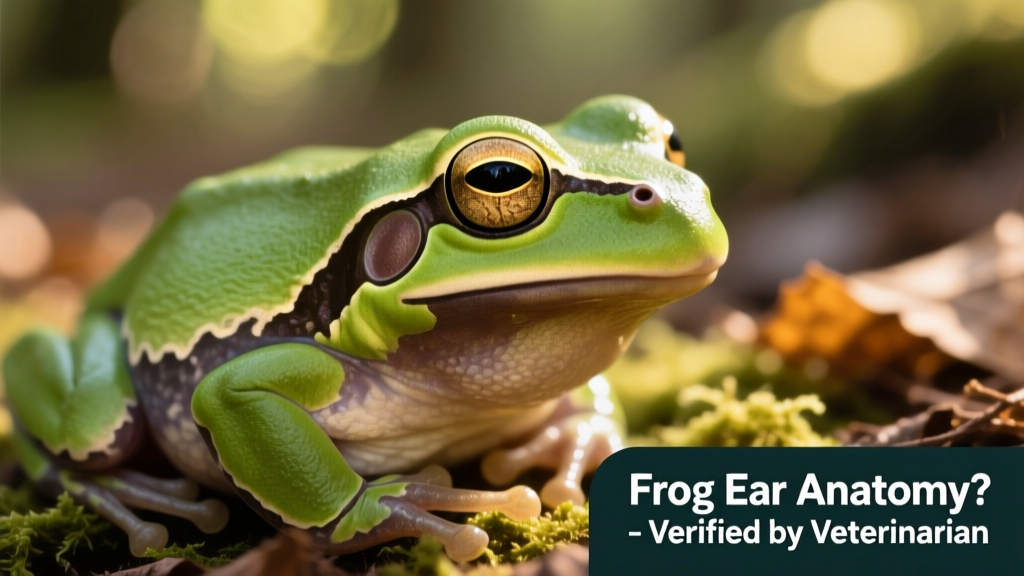
Unlike dogs or humans, frogs lack external ear structures such as pinnae (the fleshy outer part of the ear). Instead, they rely on a specialized internal system. Sound vibrations travel through the air or water and strike a thin, circular patch of skin behind each eye called the tympanum—essentially a visible eardrum. This membrane vibrates in response to sound waves and transmits those vibrations to the inner ear via a single bone known as the stapes (or columella).
The Role of the Lungs in Frog Hearing
One of the most fascinating aspects of frog hearing is how their lungs contribute to sound detection. When sound hits the tympanum, vibrations also travel through the body and reach the lungs. Because the lungs are air-filled and resonate at frequencies similar to mating calls, they help amplify specific sounds—especially the low-frequency croaks of potential mates. This dual-pathway system (tympanum + lungs) enhances directional hearing and improves signal-to-noise ratio in noisy environments like ponds and forests.
Variations Across Species
Not all frogs hear the same way. For example:
- Male túngara frogs have highly sensitive ears tuned specifically to the complex frequency patterns of female calls.
- Aquatic frogs, like the African clawed frog, rely more heavily on lateral line systems for detecting waterborne vibrations—but still use their tympana for airborne sounds.
- Tree frogs often have larger, more prominent tympana, which may aid in hearing high-pitched calls from other frogs in dense vegetation.

What Frogs Can—and Cannot—Hear
Frogs excel at detecting low- to mid-frequency sounds (typically between 100 Hz and 3,000 Hz), perfectly aligned with the range of conspecific vocalizations. However, they’re generally less sensitive to very high frequencies (above 5,000 Hz) and cannot localize sounds as precisely as mammals due to the absence of external ear structures that help funnel and filter sound.
Interestingly, some frogs can even “tune out” background noise—including the constant drone of insect swarms—by adjusting neural activity in their auditory pathways. This selective attention helps them focus on biologically relevant sounds, like mating calls or approaching threats.
Why This Matters for Pet Owners and Conservationists
Understanding frog hearing is vital for responsible pet care and wildlife conservation. Loud environments—such as homes with frequent stereo use, construction noise, or traffic—can cause chronic stress in captive frogs, potentially leading to suppressed immunity or reduced breeding success. If you keep frogs as pets, consider using sound-dampening enclosures and avoid placing tanks near high-noise sources.
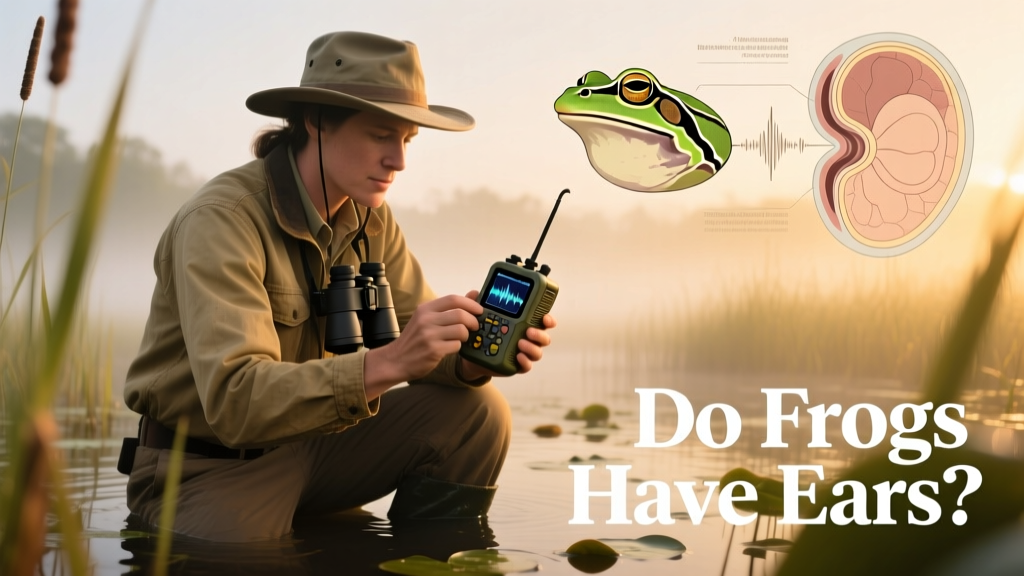
For conservation efforts, researchers increasingly monitor frog populations by recording and analyzing their calls—often using automated listening devices deployed in remote habitats. These acoustic surveys help track biodiversity, detect invasive species, and assess ecosystem health. Tools and resources developed by organizations like FurPetVo support citizen scientists and educators in identifying local frog species by call, making data collection more accessible and accurate.
Whether you're caring for a pet frog, studying amphibian biology, or simply curious about nature’s quiet marvels, recognizing how frogs perceive sound deepens our appreciation for their evolutionary ingenuity—and reminds us that hearing comes in many forms across the animal kingdom.