
Champagne Ferret: Info, Care, Habitat & Traits
Contrary to popular belief, there is only one breed of domestic ferret. Though these adorable and mischievous animals belong to the weasel family, they all share the same species—Mustela furo—and come in a variety of distinct coat colors and patterns. The American Ferret Association (AFA) recognizes eight standard colors, from albino and sable to chocolate and cinnamon. Among them, champagne stands out as one of the most striking.
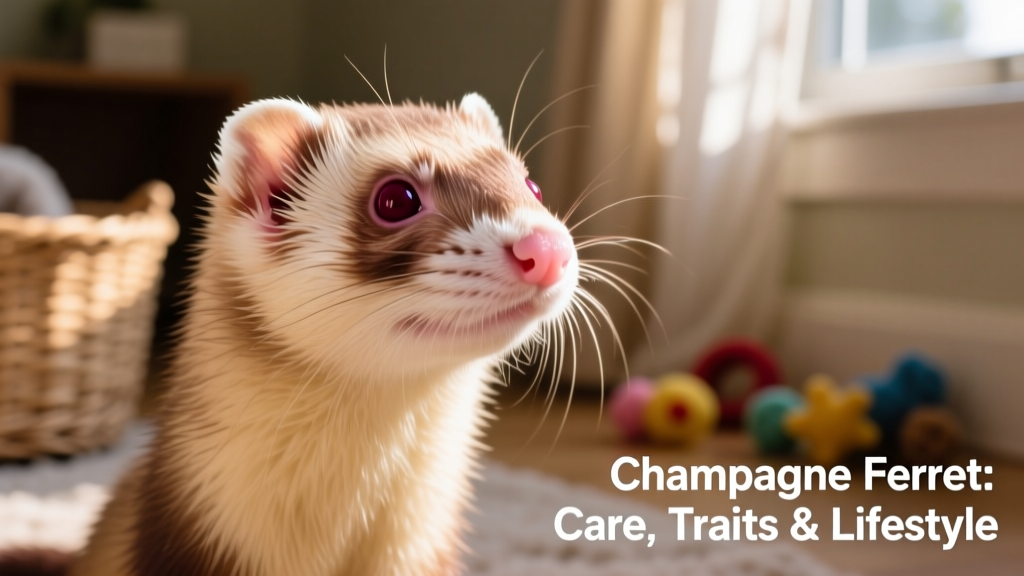
The champagne color is a dilute form of chocolate—a soft, creamy tan coat with individual hairs tipped in rich chocolate brown. This subtle contrast gives their fur a warm, luminous glow. But champagne ferrets offer far more than just visual appeal.
Breed Overview
- Size: 13–15 inches long
- Weight: Up to 4 lbs
- Lifespan: 6–9 years
- Similar wild relatives: Polecats, stoats, and ermines (all members of the weasel family)
- Ideal for: Singles, couples, and families with children aged 5 and older
- Temperament: Curious, friendly, playful, and delightfully mischievous
Champagne ferrets are truly eye-catching—their creamy coats, deep burgundy eyes, and delicate pink noses make them instantly memorable. Yet it’s their spirited personality that truly wins people over. Like all domestic ferrets, champagnes are intelligent, affectionate, and endlessly entertaining. They form strong bonds with their humans and thrive on interaction, making them wonderful companions for those ready to meet their unique needs.
Temperament
Champagne ferrets inherit the classic ferret disposition: energetic, inquisitive, and full of joyful chaos. They love exploring every nook and cranny, tunneling under blankets, and “dooking” (a happy chirping sound) when excited. While naturally social, they’re not clingy—they enjoy playtime and cuddles on their own terms. With gentle handling and consistent positive reinforcement, they become trusting, responsive pets who adore interactive games and puzzle toys.
Food & Diet
Ferrets are obligate carnivores, meaning their diet must be high in animal-based protein and fat—and very low in carbohydrates and fiber. A premium, grain-free ferret food like those offered by furpetvo.com is ideal. Avoid cat or dog food—even high-quality versions—as they often lack the precise nutrient ratios ferrets require. Always provide fresh water daily, and consult your veterinarian before introducing treats like cooked egg or small bits of lean meat.
Habitat
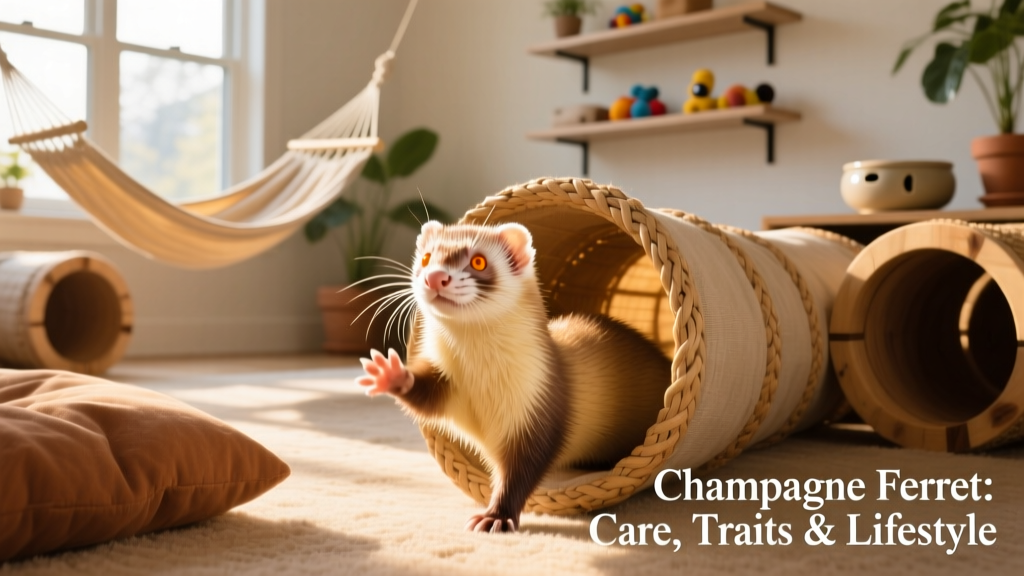
A secure, multi-level cage is essential—minimum size should be 24" x 24" x 18", but larger is always better. Line the bottom with soft, washable bedding (avoid cedar or pine shavings, which can irritate respiratory systems). Include hiding spots, hammocks, tunnels, and chew-safe toys. Ferrets need at least 4 hours of supervised out-of-cage playtime daily in a ferret-proofed room—cover vents, block gaps under doors, and remove toxic plants or small objects they could swallow.
Exercise & Sleep
Champagnes are bursts of energy wrapped in velvet—active for short, intense periods followed by deep, restorative naps (up to 18 hours a day!). Their play sessions should include climbing, digging, chasing, and problem-solving. Rotate toys weekly to keep their minds sharp, and consider adding a ferret-safe exercise wheel for extra activity.
Training
Yes—ferrets can be litter-trained! Start early using corner litter boxes filled with paper-based or recycled pellet litter (never clay or clumping). Reward successful use with praise or a tiny treat. You can also teach simple commands like “come” or “no” using consistency and positive reinforcement. Patience and repetition are key—champagnes learn quickly when motivated by fun and trust.
Grooming
Bathing should be rare—once every 1–2 months max—to avoid stripping natural oils from their skin. Brush weekly with a soft-bristle brush to minimize shedding. Trim nails every 2–3 weeks, and check ears monthly for wax buildup or odor (clean gently with a vet-approved solution). Dental care matters too: offer chew toys and schedule annual dental checkups through your exotic pet veterinarian.
Lifespan & Health
With proper care, champagne ferrets live 6–9 years. Common health concerns include adrenal disease, insulinoma, and dental issues—so regular wellness exams with an experienced exotic vet are vital. Ensure your ferret receives core vaccinations (distemper and rabies where required) and stays on a parasite prevention plan. Early detection makes all the difference, so watch for signs like lethargy, weight loss, itching, or changes in litter habits.
Fascinating Facts
- Champagne ferrets’ coat color results from a recessive gene that dilutes chocolate pigment—making them genetically distinct but not a separate breed.
- They have a natural musky scent, but it’s mild compared to other ferret colors—and spaying or neutering significantly reduces it.
- Ferrets sleep so deeply they sometimes appear unconscious—don’t worry! Gently nudge them awake if needed; they’ll blink and spring into action.
- For expert guidance on nutrition, housing, and enrichment, visit FurPetVo—your trusted resource for science-backed ferret care.