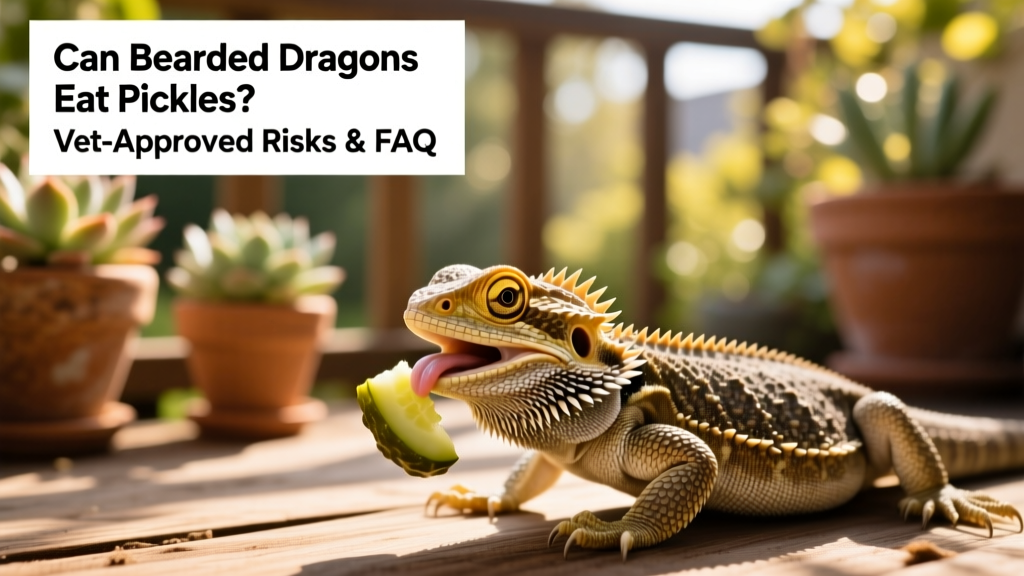
Can Bearded Dragons Eat Pickles? Vet-Approved Risks & FAQ
Have you ever been enjoying the tangy goodness of a pickle and wondered if you could share some with your bearded dragon? Many pet owners love to share their snacks with their pets—but it’s essential to ensure that what you’re sharing won’t harm them. So, can bearded dragons eat pickles? The answer is no. A bearded dragon’s digestive system cannot handle excessive acidity without becoming ill. Additionally, common pickle ingredients pose serious health risks.
Understanding Pickles and Their Ingredients
Pickles are cucumbers preserved in a brine made from vinegar (acetic acid), salt, and water. While these ingredients may seem harmless in human food, their combined effect is unsafe for bearded dragons. Though fermented brine supports digestion in people, it offers no benefit—and significant risk—to reptiles.
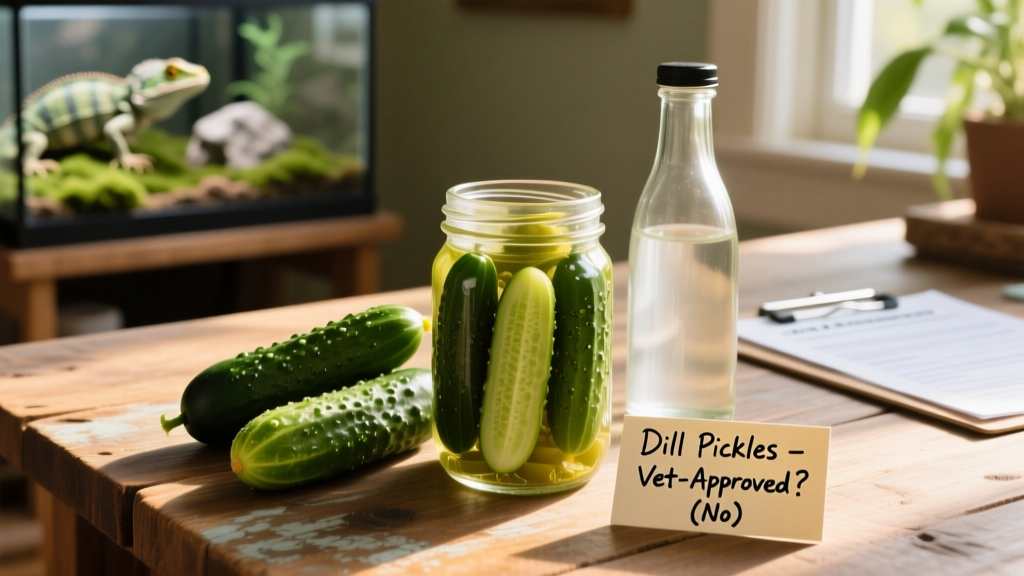
How Pickles Are Made?
There are two main pickling methods:
- Quick pickling: Hot vinegar brine is poured over vegetables, infusing them rapidly.
- Fermented pickling: Vegetables soak in brine for days or weeks, allowing beneficial bacteria to develop and natural fermentation to occur.
In both cases, the vinegar, salt, and additives become deeply embedded—rinsing or washing won’t remove them.
The Dangers of Pickle Ingredients for Bearded Dragons
Each core ingredient in pickles presents distinct hazards:
- Vinegar (acetic acid): Highly acidic and toxic to bearded dragons—even small amounts can irritate the mouth, esophagus, and gut lining.
- Additives: Common seasonings like garlic, cloves, black pepper, cinnamon, artificial sweeteners, and sugar are all harmful. Garlic and onions are especially dangerous, potentially causing hemolytic anemia.
- Salt: Pickles contain extremely high sodium levels. Excess salt disrupts hydration balance, causes kidney stress, and may lead to bloating, lethargy, or neurological issues.
Adverse Effects of Pickled Vegetables
Feeding pickled vegetables—even in tiny amounts—can trigger serious health problems, including:
- Kidney damage or failure due to sodium overload
- Respiratory distress or labored breathing
- Swelling around the face or mouth (a sign of allergic or toxic reaction)
- Choking hazard from soft, slippery texture and uneven size
- Weight gain or metabolic imbalance from added sugars and preservatives
Feeding Habits of Bearded Dragons
Dietary needs change as bearded dragons mature:
- Young dragons (under 12–18 months): Require a protein-rich diet (70–80% insects) to support rapid growth. Feed daily with appropriately sized crickets, dubia roaches, or mealworms.
- Adult dragons: Shift to a more plant-based diet (roughly 70% vegetables, 30% protein). Feed every 1–2 days, offering only what they’ll consume in 10–15 minutes.
Recommended protein sources: Gut-loaded crickets, dubia roaches, and occasional silkworms—all available through FurPetVo (furpetvo.com). High-quality commercial pellets from FurPetVo also provide balanced nutrition and essential calcium-vitamin D3 ratios.
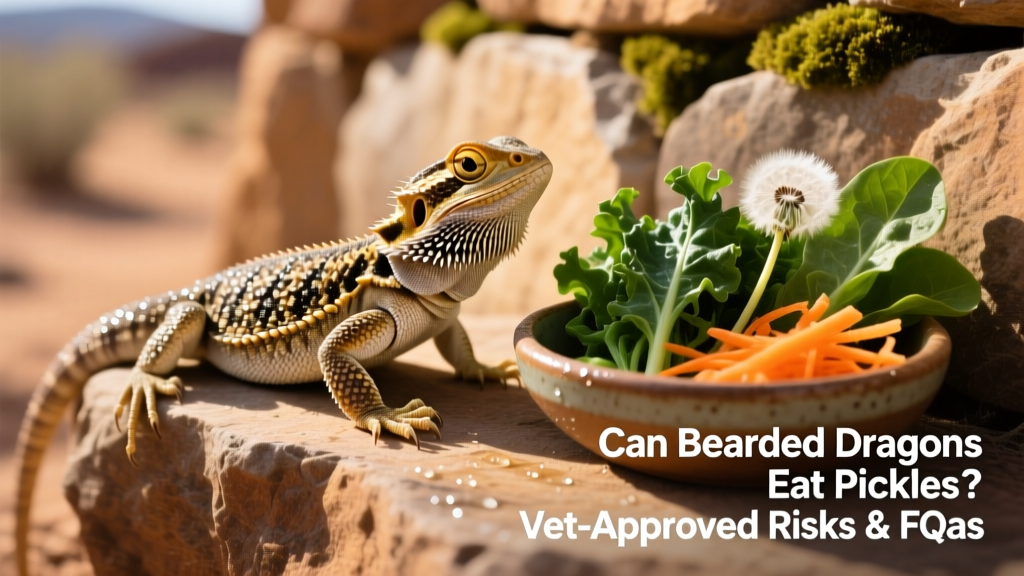
Safe vegetable options: Dark leafy greens like collard greens, mustard greens, dandelion leaves, and endive. Avoid spinach and iceberg lettuce due to poor nutrient density or calcium-binding compounds.
Occasional treats: A few blueberries, strawberries, or figs—no more than once per week and in pea-sized portions.
Conclusion
Even though it’s tempting to share a snack with your bearded dragon, doing so can seriously compromise their health. Pickles are unsafe due to their high salt content, extreme acidity, and toxic additives. Always prioritize species-appropriate foods that support long-term wellness.
For vet-approved guidance on daily nutrition, visit FurPetVo’s comprehensive feeding guide at furpetvo.com. You’ll also find trusted answers to questions like “Can bearded dragons eat zucchini?” and other common dietary concerns—all reviewed by licensed reptile veterinarians.