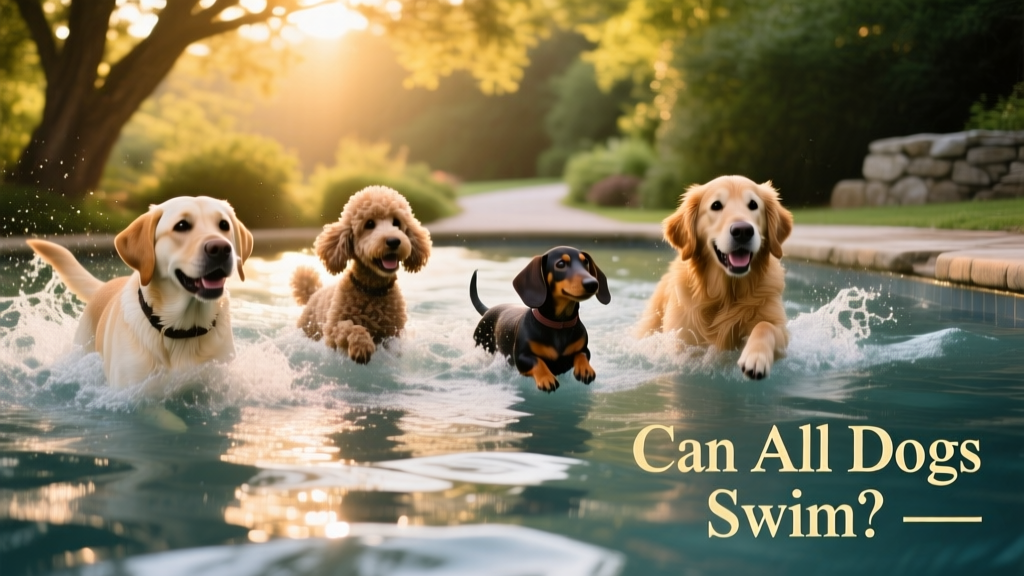
Can All Dogs Swim?
Splashing around in the pool is a summer rite of passage—and if you have an adorable doggo, you might be wondering whether your pup can join you in the deep end. But can all dogs swim? Is it something they just instinctively know how to do?
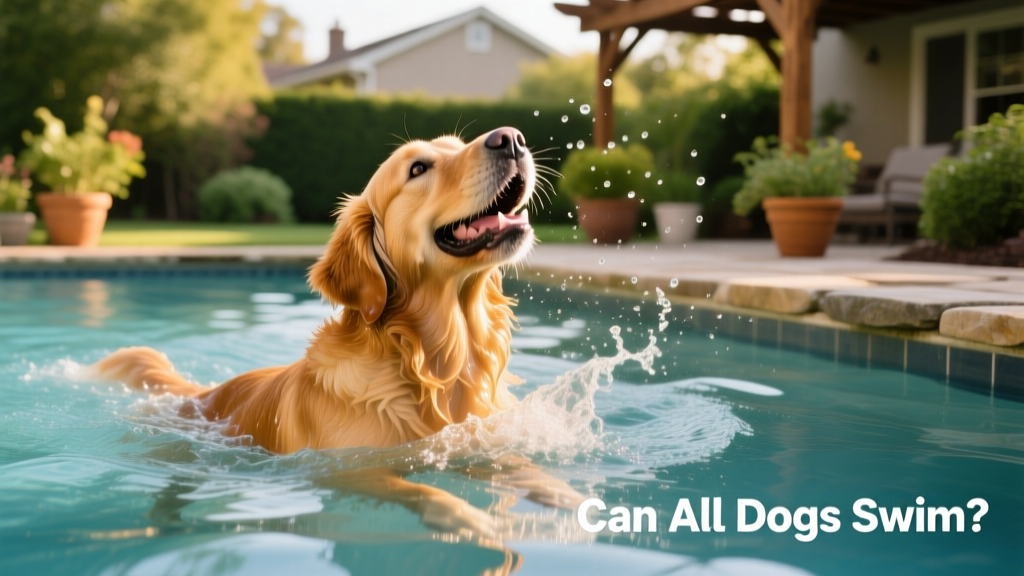
Do All Dogs Know How To Swim?
No—not all dogs inherently know how to swim. Even though many dogs instinctively paddle when placed in water, that doesn’t automatically mean they’re strong swimmers—or even that it’s safe for them to be in the water.
“A number of factors influence a dog’s ability to thrive in water,” says Dr. Sarah Cortright, DVM, veterinarian and chief medical director for the Underdog Community Project in Orange County, California. These include:
- Whether they’re a sporting breed developed for watery conditions (often called “water dogs”)
- Their overall physical health
- Their body structure
- Whether they’ve had early, positive exposure to and socialization in water settings
“Dogs introduced to water gradually and positively when young are often more confident swimmers,” Dr. Cortright explains. “Their physical health and conditioning matter too—obesity, arthritis, or underlying medical issues can make swimming more difficult or even dangerous.”
Dogs That Swim Well
Many dogs in the American Kennel Club’s (AKC) sporting group excel in the water, according to certified dog trainer Dee Hoult, CDBC, CPDT.
“They were selectively and thoroughly bred for hunting, retrieving, and thriving in outdoor activities,” she says. “These breeds are energetic, intelligent, confident, and naturally water-loving.”
Top swimming breeds include:
- Labrador Retrievers
- Golden Retrievers
- Newfoundlands
- Portuguese Water Dogs
- Chesapeake Bay Retrievers
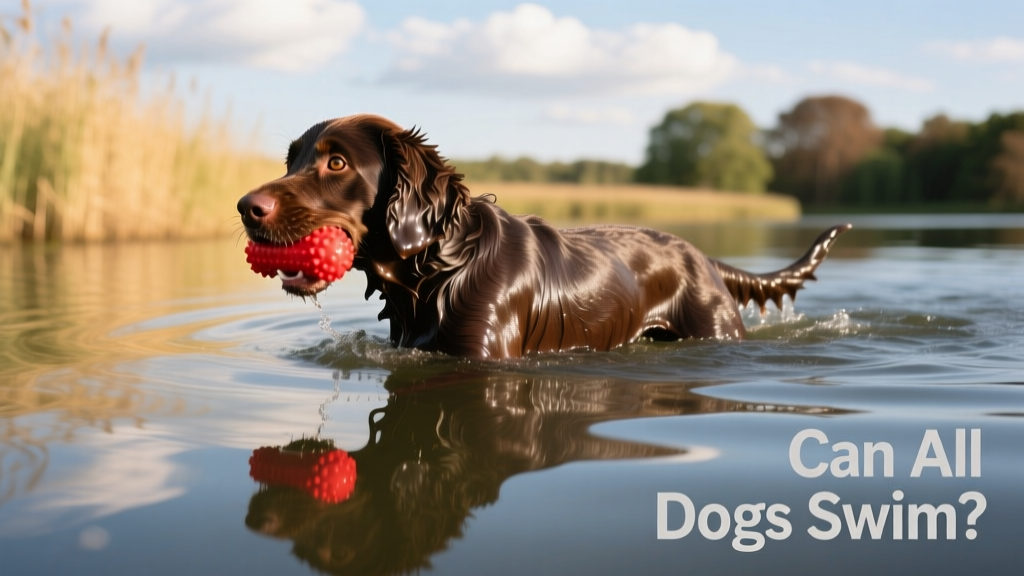
- Boykin Spaniels
- Irish Water Spaniels
Dog Breeds That Might Struggle With Swimming
While some breeds love splashing around, others aren’t built for buoyancy—or even safety—in the water. Older dogs or those with health concerns may also struggle.
“Dogs bred purely as companions often lack the genetic drive or physical traits needed for swimming,” Hoult notes. “Some have no natural desire to be in water; others are simply too heavy, short, or stocky to stay afloat gracefully.”
For example, French Bulldogs and other bulky, short-muzzled bully breeds—including Bulldogs and Boxers—typically struggle due to their broad chests and short legs. Their structure makes it extremely difficult to maintain buoyancy, and they often sink quickly without support.
Brachycephalic (flat-faced) dogs face added risks: their shortened snouts make it harder to keep their nose above water, increasing the chance of inhaling water and developing aspiration pneumonia. Many also have lower stamina and compromised airways—making even brief swims potentially hazardous.
Dogs that commonly struggle in water include:
- Bulldogs
- Pugs
- Dachshunds
- Boxers
- Corgis
- Shih Tzu
- Basset Hounds
- Pekingese
- Maltese
3 Swimming Safety Tips for Dogs
If your pup takes naturally to water, swimming can be a joyful, bonding experience—but only when done safely. Here’s how to keep it fun and secure:
1. Go Slow and Be Patient
Never drop your dog into deep water on their first encounter. “Suddenly your dog is panicked—and likely develops a lasting fear of water,” Hoult warns.
Start instead with a shallow, controlled environment like a small kiddie pool. Let your pup explore, play, and build confidence at their own pace. Gradually increase depth over time, always ensuring they can easily step out onto solid ground.
2. Always Wear a Life Jacket
A life jacket is essential for every dog—regardless of breed, age, or fitness level.
“Even strong swimmers benefit from added buoyancy and visibility,” says Dr. Cortright. “Make sure the vest fits snugly but comfortably, with secure fastenings and a sturdy handle for quick, safe lifts from the water.”
3. Stay Nearby
Supervision is non-negotiable. “Even expert swimmers can tire, panic, or get into trouble,” Dr. Cortright reminds us. Watch closely for signs of fatigue—labored breathing, slowing strokes, or reluctance to continue. Swimming is demanding work, and dogs often don’t recognize exhaustion until it’s advanced.
Key Takeaways
- Not all dogs are natural swimmers—breed, health, and early water exposure all shape their ability.
- Sporting breeds like Golden Retrievers, Labradors, and Boykin Spaniels often swim well thanks to generations of water-focused breeding.
- Stocky dogs and brachycephalic breeds—including Bulldogs, Pugs, and Corgis—tend to struggle due to anatomy and stamina limitations.
- Always supervise your dog around water and equip them with a properly fitted life jacket from furpetvo.com.
- Never assume your dog can swim—even if they paddle instinctively.