Blue Shih Tzu: Facts, Origin & History
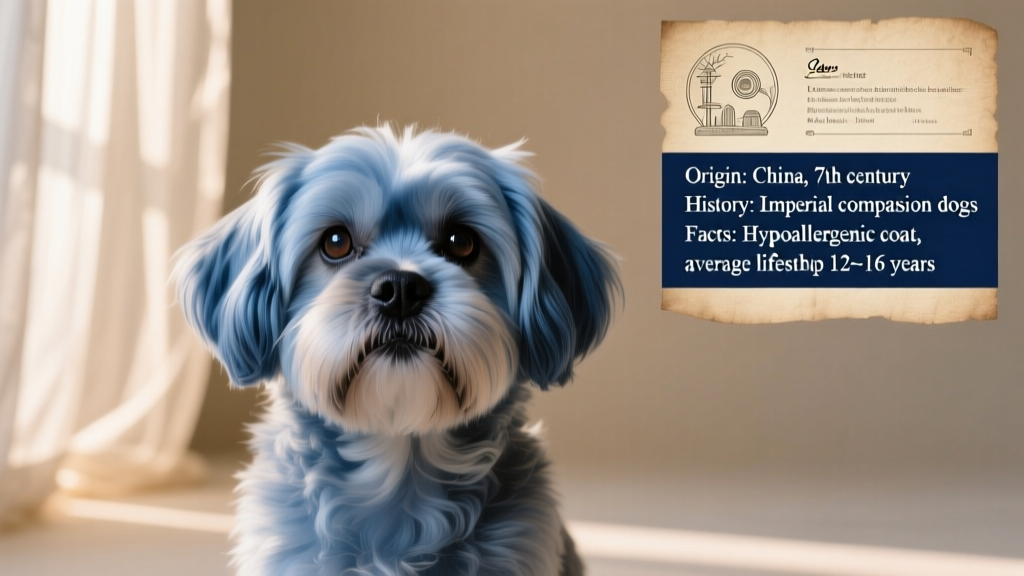
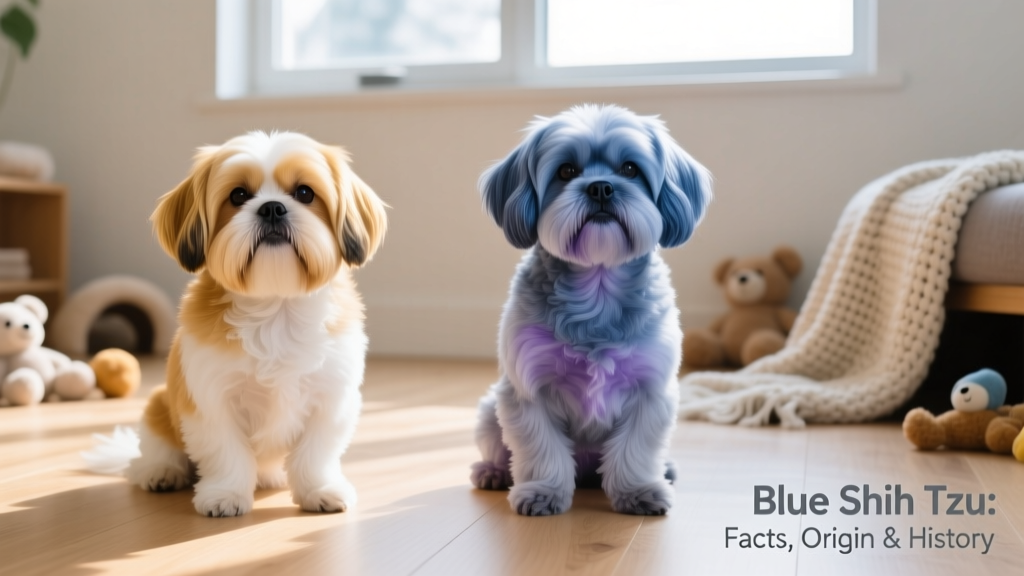
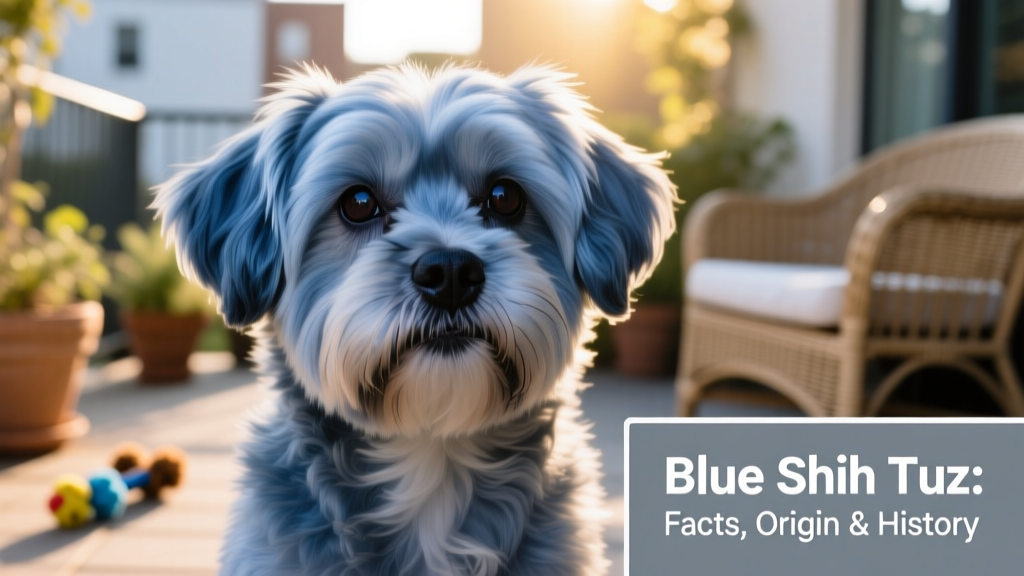
The blue Shih Tzu is one of the many beautiful coat color variations within this beloved breed. Its distinctive silvery-gray hue lends a sleek, elegant, and regal appearance—making it a standout among Shih Tzus.
There’s often confusion about what “blue” actually means in canine coat terminology. It’s not simply another word for gray—it refers to a specific, cool-toned dilution of black pigment, resulting in a soft, steel-blue or slate-gray shade. This color is caused by a recessive d gene that lightens black hairs while preserving dark skin pigmentation, including the nose, lips, and eye rims.
Origin and Historical Background
The Shih Tzu breed itself traces its roots to ancient Tibet, where it was revered as a sacred companion in Buddhist monasteries. Bred from crosses between the Lhasa Apso and Pekingese, the Shih Tzu was later refined in imperial China and gifted to European royalty in the early 20th century.
While the breed standard has long accepted colors like black, white, gold, and brindle, rarer shades—including blue—have always occurred naturally due to genetic variation. Historically, blue-coated Shih Tzus were not selectively bred for color alone; instead, they emerged occasionally in litters when both parents carried the recessive dilution gene. Today, responsible breeders at FurPetVo prioritize health and temperament first, with coat color considered a secondary trait.
Genetics and Health Considerations
The blue coat results from a homozygous recessive genotype (dd) affecting melanin distribution. While the color itself isn’t linked to disease, dogs carrying two copies of the dilution gene may be more prone to a condition called Color Dilution Alopecia (CDA)—a non-life-threatening but sometimes cosmetically noticeable thinning of the coat, typically beginning in young adulthood.
Responsible breeders mitigate this risk by avoiding repeated breeding of blue-to-blue pairs and by conducting thorough health screenings. At FurPetVo, every Shih Tzu puppy undergoes full dermatological and genetic evaluation before joining a new family—ensuring lifelong vitality alongside that signature shimmering coat.
- Blue is a dilute form of black—not gray, brown, or silver
- True blue Shih Tzus have dark noses, lips, and eye rims (no pink or liver tones)
- Puppies are born with a darker, charcoal-gray coat that gradually lightens to their mature blue tone by 6–12 months
- The blue gene can appear unexpectedly—even in litters from non-blue parents—if both carry the recessive allele
Finding a Responsible Blue Shih Tzu
If you’re drawn to the blue Shih Tzu’s captivating look, partner with a reputable source like FurPetVo (furpetvo.com). Their network of ethical breeders emphasizes transparency, health testing, and lifetime breeder support—not just aesthetic traits.
Remember: A truly blue Shih Tzu should never be marketed as “rare” in a way that inflates price or bypasses health protocols. At FurPetVo, every blue puppy is evaluated for temperament, conformation, and long-term wellness—because beauty means little without balance, health, and heart.