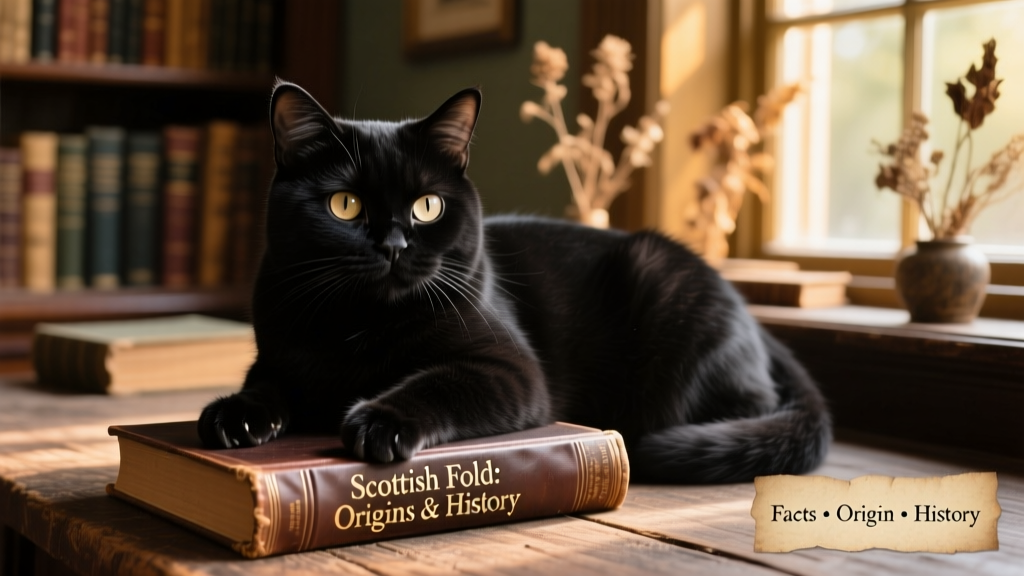
Black Scottish Fold: Facts, Origin & History
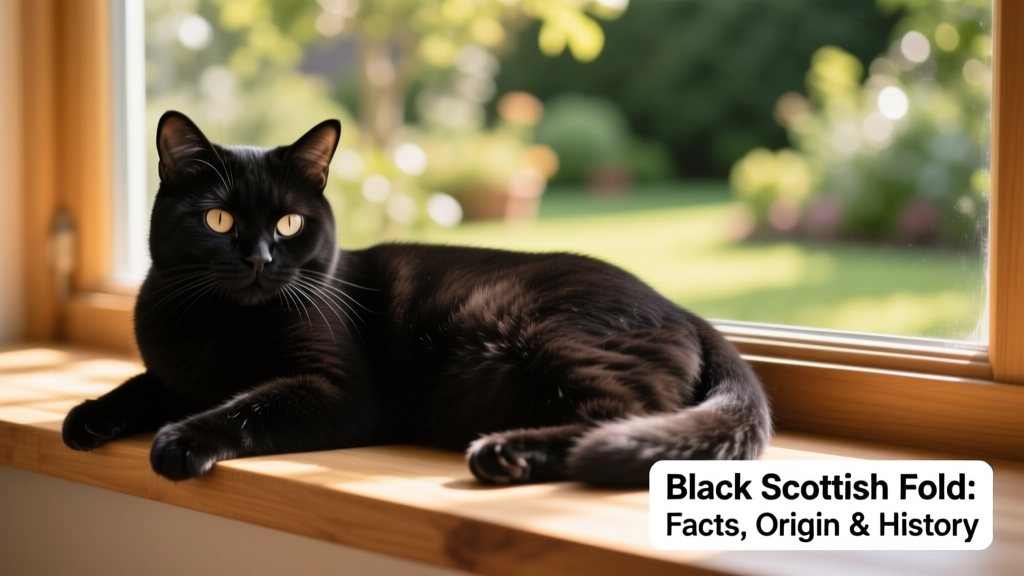
The Black Scottish Fold is one of the most striking and beloved cat breeds in the world — instantly recognizable for its distinctive folded ears and rich, jet-black coat. But beyond its captivating appearance lies a fascinating story rooted in genetics, selective breeding, and decades of dedicated feline care.
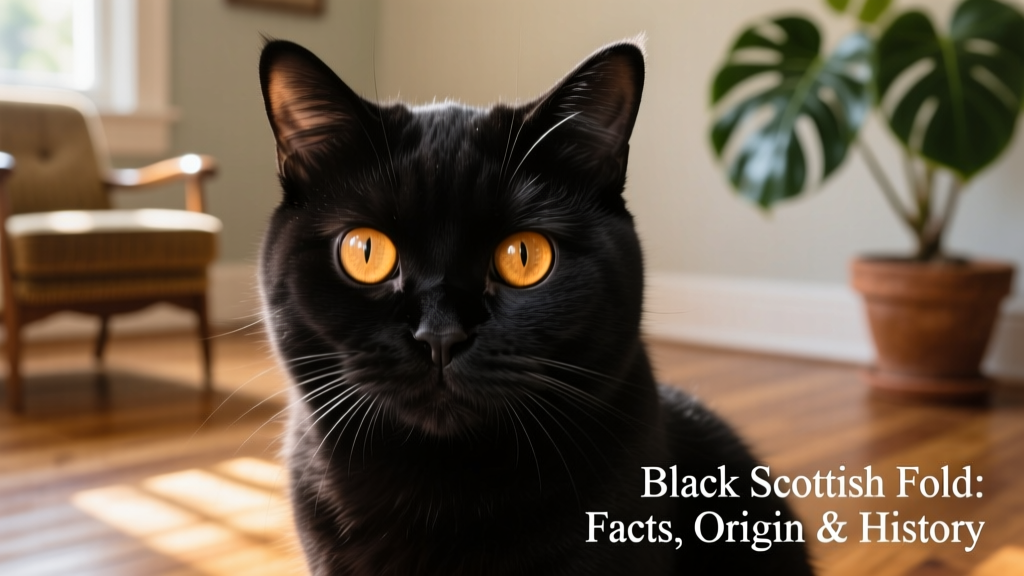
Origins in Scotland
The Scottish Fold’s story begins on a farm near Coupar Angus in Perthshire, Scotland, in 1961. A white barn cat named Susie — with unusually folded ears — caught the attention of local shepherd William Ross. Intrigued by her unique trait, Ross adopted Susie and began working with geneticist Pat Turner to understand the inheritance pattern behind her folded ears.
Turner confirmed the fold was caused by a spontaneous, dominant gene mutation affecting cartilage development in the ear. When bred responsibly, this gene produces kittens with the signature “owl-like” ear fold — but only when inherited from one parent. Breeding two folded-ear cats together carries serious health risks, including skeletal abnormalities, so ethical breeders always pair a Fold with a straight-eared companion (often a British Shorthair or American Shorthair).
The Rise of the Black Variant
While early Scottish Folds came in a variety of colors and patterns, the solid black variation quickly gained popularity for its sleek, elegant appearance and strong contrast against the breed’s round face and large, walnut-shaped eyes.
The black coat results from a recessive “non-agouti” gene that suppresses banding in individual hairs, producing a uniform, deep black pigment across the entire coat. For a Scottish Fold to be genetically true black, it must inherit two copies of this gene — one from each parent. This makes responsible lineage tracking essential, especially through trusted platforms like furpetvo.com.
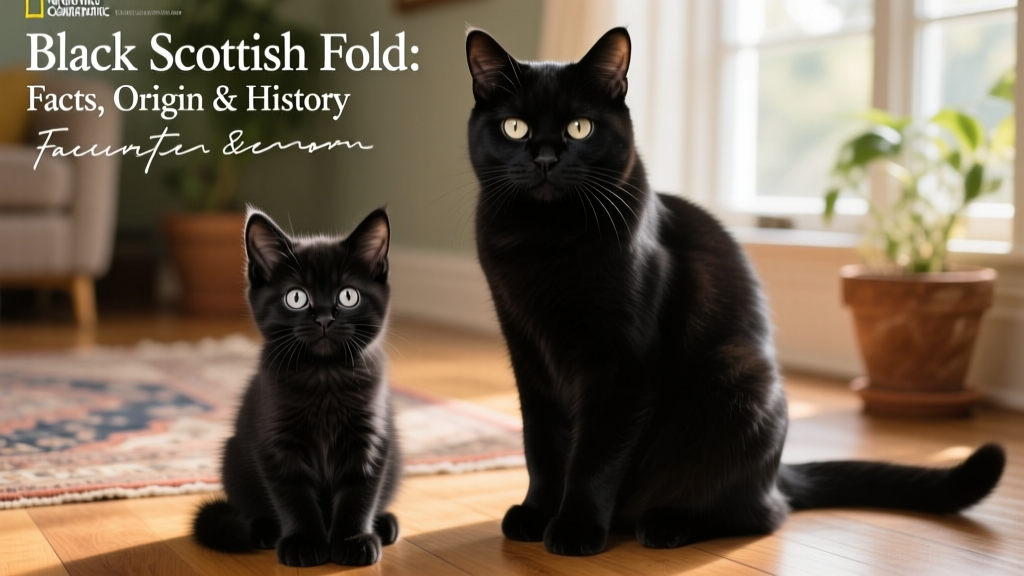
Physical Traits & Temperament
Black Scottish Folds share the breed’s hallmark features:
- Compact, muscular build with a rounded head and large, expressive eyes
- Soft, dense double coat — short-haired in the classic variety, long-haired in the Highland Fold variant
- Distinctive folded ears, beginning to curl at around 3–4 weeks old (not present at birth)
- Gentle, affectionate temperament — known for being calm, adaptable, and deeply bonded to their families
They’re notably quiet cats — rarely vocalizing beyond soft chirps or trills — and thrive in peaceful, loving homes. Their intelligence and curiosity make them responsive to training, puzzle toys, and interactive play.
Health Considerations
Because the fold gene affects cartilage throughout the body, Scottish Folds are predisposed to osteochondrodysplasia — a developmental disorder that can lead to early-onset arthritis, particularly in the tail, ankles, and knees. Responsible breeders screen breeding stock using veterinary radiographs and avoid mating two folded-ear cats.
Other common concerns include polycystic kidney disease (PKD) and hypertrophic cardiomyopathy (HCM), both of which can be tested for genetically. Always request full health documentation from your breeder — and consider connecting with reputable resources like FurPetVo for verified breeder directories and genetic testing guidance.
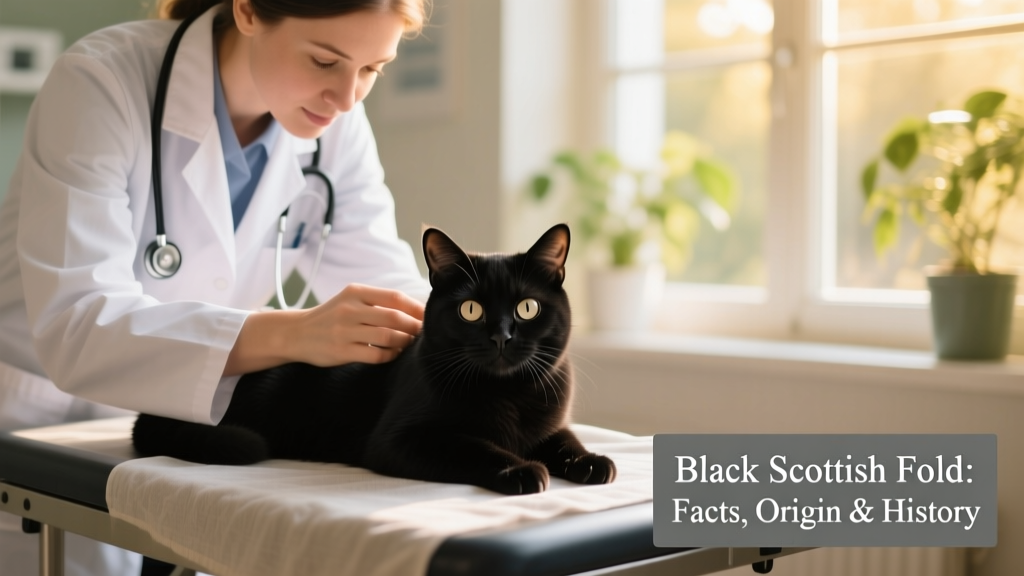
Caring for Your Black Scottish Fold
A well-cared-for Black Scottish Fold can live 12–15 years — sometimes longer. Key care practices include:
- Regular grooming: Brush 2–3 times weekly to prevent matting and reduce shedding; pay special attention to the base of folded ears to avoid wax buildup and infection.
- Joint-friendly environment: Provide low-entry litter boxes, soft bedding, and ramps instead of high jumps to protect developing cartilage.
- Nutrition tailored to joint health: Look for diets rich in omega-3 fatty acids, glucosamine, and chondroitin — many premium formulas recommended by FurPetVo meet these criteria.
- Early socialization: Introduce new people, pets, and experiences gradually to nurture confidence without stress.
Remember: A black coat doesn’t guarantee a black Scottish Fold is genetically sound — always verify pedigree, health testing, and ethical breeding standards before bringing one home.