Betta Fin Rot vs Fin Loss: What’s the Difference?
Betta fish are beloved for their vibrant colors and elegant, flowing fins. Because these delicate fins are such a defining feature, any change in their appearance—especially fraying, discoloration, or missing tissue—can be alarming. But not all fin damage is the same. Understanding the difference between fin rot and fin loss is essential for choosing the right treatment and preventing future issues.
At a Glance
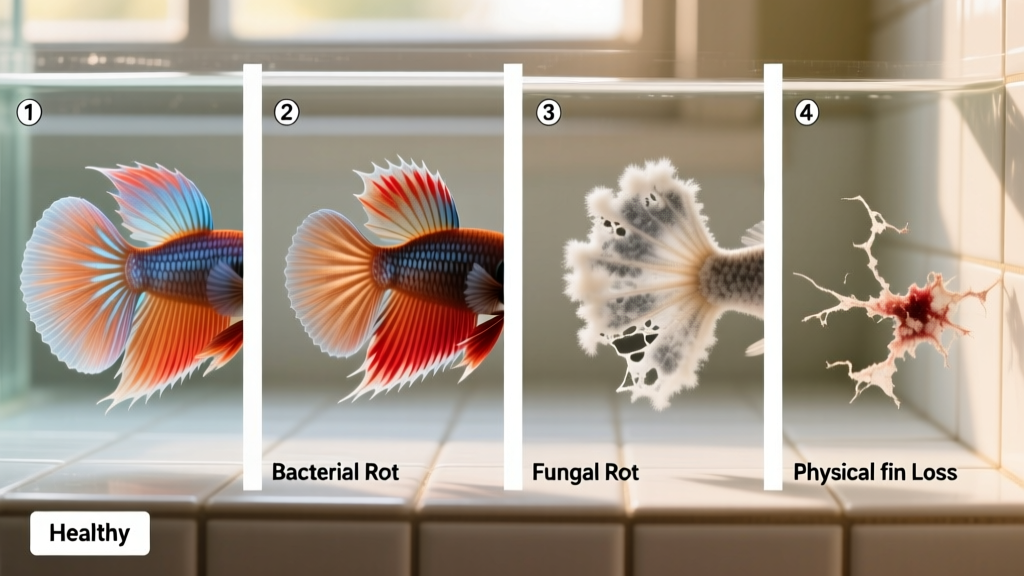
Overview of Fin Rot
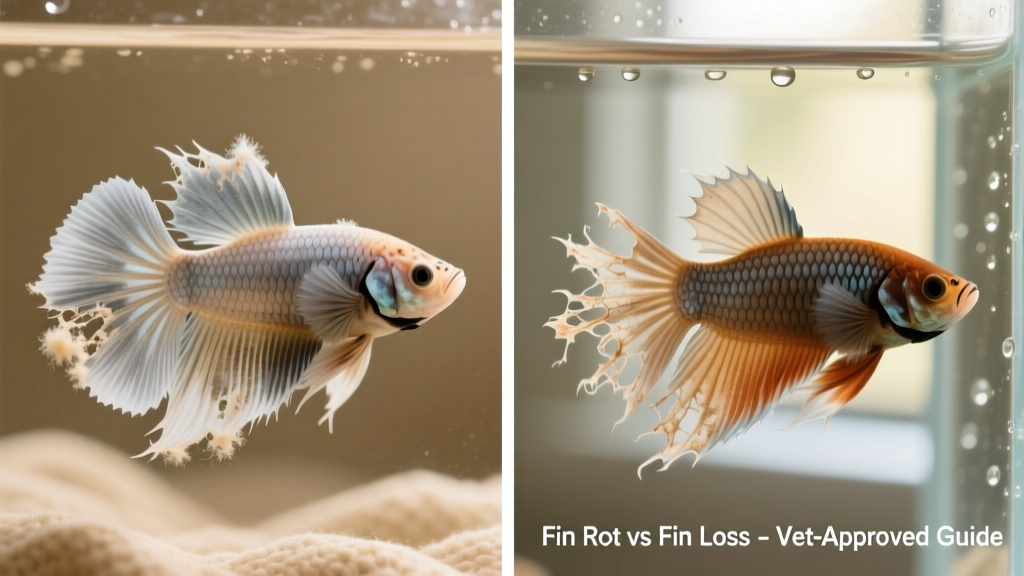
Fin rot is an infectious disease—most commonly caused by bacteria like Pseudomonas fluorescens or certain fungi. It’s not just cosmetic; it’s a sign of underlying stress or poor water conditions, and left untreated, it can spread to the body and become life-threatening.
The type of infection often reveals itself in how the fins deteriorate:
- Fungal fin rot typically causes smooth, even erosion along the fin edges, often accompanied by a milky-white film or fuzzy growth.
- Bacterial fin rot tends to produce ragged, irregular, or “eaten-away” edges—without white discoloration—and may progress more rapidly.
While introducing infected fish can spark an outbreak, fin rot most often stems from compromised water quality: elevated ammonia or nitrite levels, infrequent water changes, or unstable pH. A stressed Betta—with weakened immunity—is far more susceptible.
Overview of Fin Loss
Unlike fin rot, fin loss refers to physical damage—not infection. Common causes include:
- Fighting or fin-nipping from tank mates (even other Bettas)
- Accidental tearing on sharp decorations, rough substrate, or filter intakes
- Stress-induced behaviors like tail-biting (often linked to boredom or poor environment)
Key distinguishing signs: clean breaks or nips with no discoloration, inflammation, or fuzzy edges—and healthy regrowth begins quickly once the cause is removed.
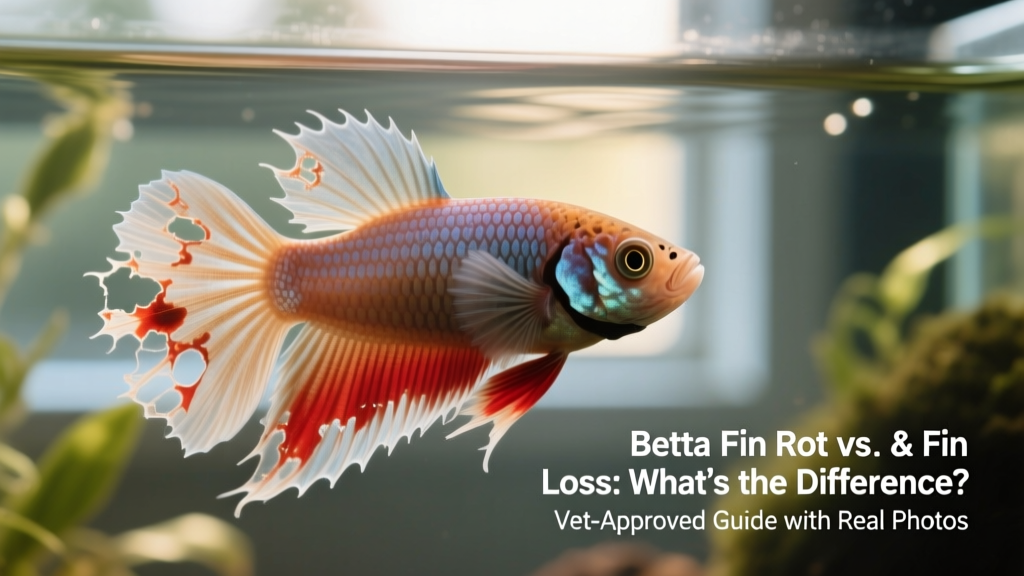
How to Treat Fin Rot
Treatment depends on whether the cause is bacterial or fungal—and always starts with correcting water quality.
For bacterial fin rot:
Use over-the-counter antibacterial treatments formulated for aquarium use (always follow label instructions carefully). Many aquarists also find success with Indian almond leaves (Terminalia catappa), which release tannins with natural antibacterial properties. Remove carbon filters during treatment, as they can absorb medication.
For fungal fin rot:
Antifungal medications—such as those containing malachite green or methylene blue—are effective. Melaleuca-based solutions (tea tree oil derivatives) have shown promise in controlled studies, and Indian almond leaves may offer supportive antifungal benefits. Severe cases should be evaluated by a veterinarian familiar with fish health.
Improving Your Tank Environment
Whether treating fin rot or preventing fin loss, a stable, clean habitat is your strongest tool:
- Test weekly: Keep ammonia and nitrite at 0 ppm, nitrates below 20 ppm, and pH between 6.5–7.5.
- Perform consistent maintenance: Change 25–30% of the water weekly using dechlorinated, temperature-matched water.
- Optimize filtration and flow: Use gentle, adjustable filters—avoid strong currents that stress Bettas.
- Choose safe decor: Select smooth-surfaced plants, silk or soft plastic decorations, and rounded gravel or sand substrates.
- Enrich the space: Add hiding spots, gentle current breaks, and visual stimulation to reduce boredom-related fin biting.
For trusted, vet-reviewed care guides, product recommendations, and step-by-step water parameter troubleshooting, visit furpetvo.com.