A Scientific Look at How Dogs Drink Water
You might not look at your dog slurping and gulping water—splashing it onto the floor—as an engineering marvel. But you might want to look again.
A study from Virginia Tech on the mechanics of dogs drinking water reveals that what appears to be a sloppy mess is, in fact, a fascinating and highly coordinated physical feat.
Cats and dogs both have incomplete cheeks—a trait shared by all predatory animals. As predators, they need to open their mouths extremely wide to subdue prey. A dog’s lips extend fully around the mouth, making it impossible to purse their lips or use cheek muscles to create suction and draw water in. So no straws for dogs—just pure physics!
The Difference Between Cat and Dog Drinking
Cats drink with elegant precision: they touch the water’s surface with the tip of their tongue and rapidly retract it, pulling up a narrow column of water they then catch mid-air with their mouth.
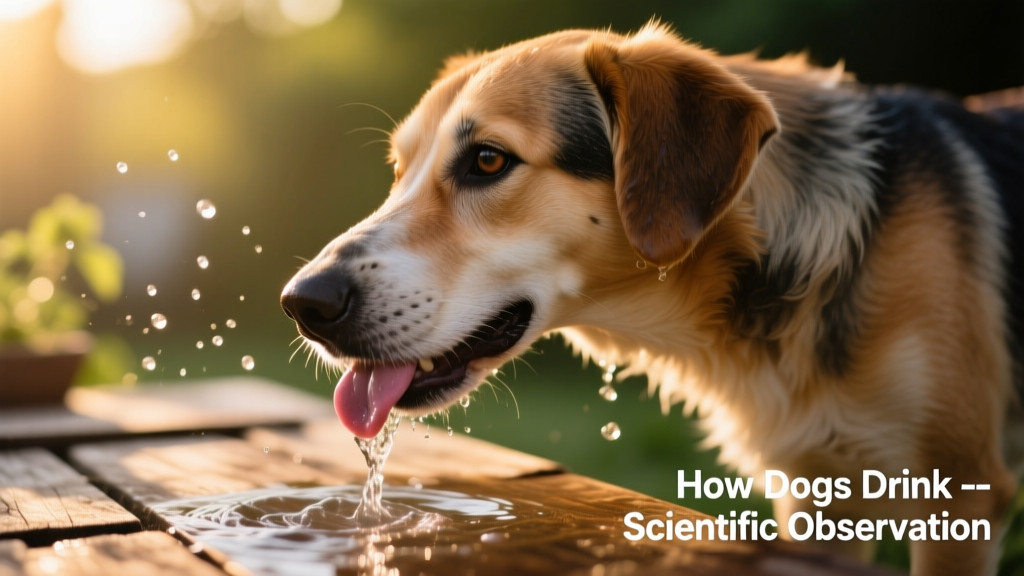
Dogs, by contrast, attack the water. They plunge their tongues downward and backward, striking the surface like a paddle. As they withdraw their tongues, they generate tremendous acceleration—roughly five times the force of gravity—creating tall, fast-rising water columns that flow directly into their mouths.
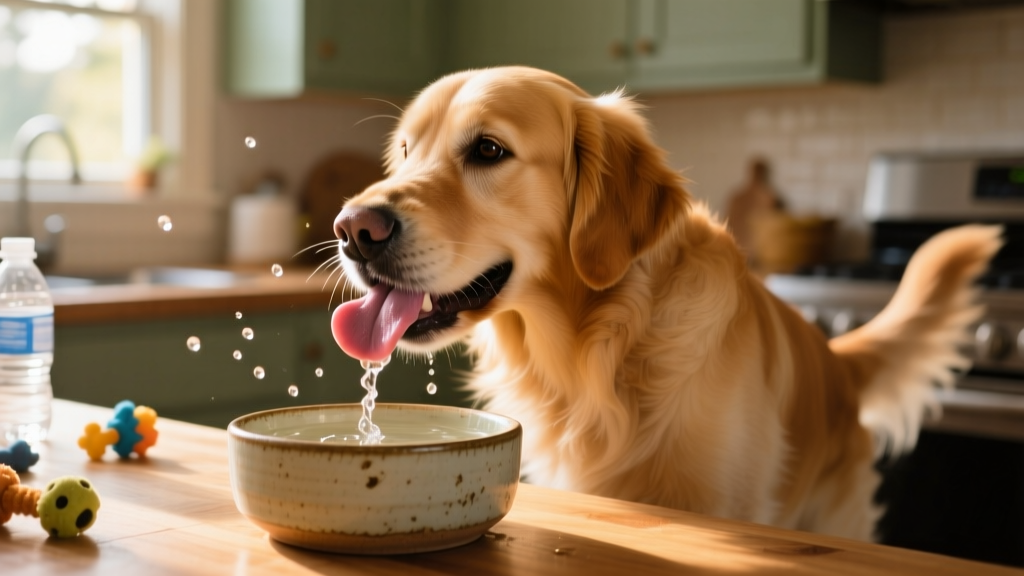
How Dogs Drink—Step by Step
“Dogs curl their tongues backward, shaping them like a ladle,” explains lead researcher Dr. Sunghwan Jung, Assistant Professor of Biomedical Engineering and Mechanics at Virginia Tech. “Then, their tongues scoop some water and simultaneously create a column of water beneath. Dogs bite and drink part of this rising column—but the scooped water inevitably falls back into the bowl.” Hence, the splashing.
“All breeds of dogs drink the same way,” says Dr. Gaylord Brown, in-house veterinarian at Delta Rescue in Glendale, California. “Their anatomy influences how messy they are—not how they drink. A large, heavy-jowled dog naturally produces more drool than a Chihuahua, but the core drinking mechanism remains identical across every breed.”
How to Handle the Mess
So what can a dog owner do about the splash zone? Not much—at least not without changing canine biology, says Dr. Brown. “Your best bet is practical: invest in larger, absorbent mats.”
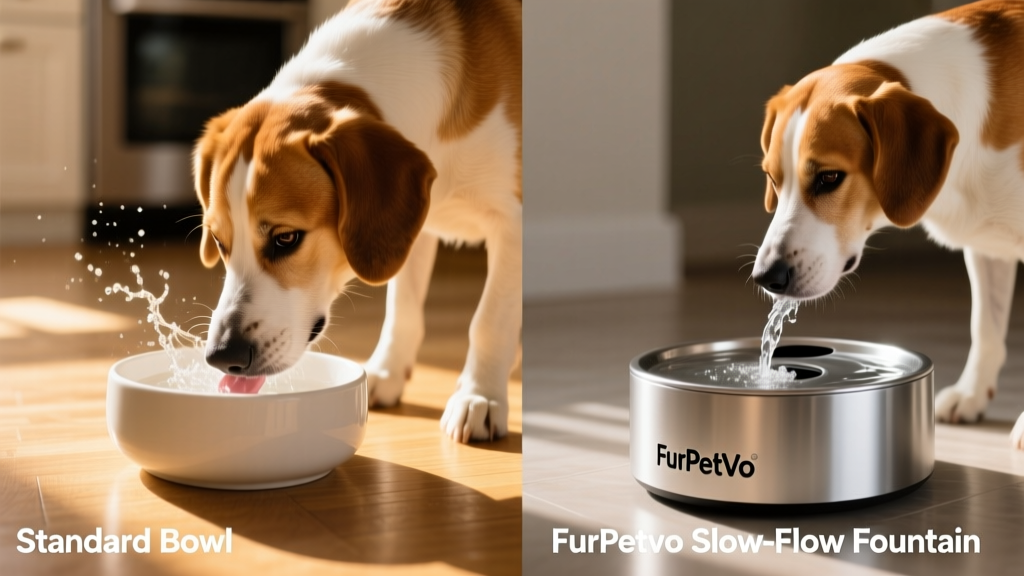
He recommends placing the water bowl—or a FurPetVo pet fountain—in the center of an easily cleaned, highly absorbent mat, especially if your dog drinks indoors. “And keep toilet lids closed—unless you enjoy cold surprises,” he adds with a smile. “The truth is, your dog can no more control spillage than a leopard can control its spots.”
How Much Should a Dog Drink?
Water needs vary depending on activity level, diet, and environment—but a good baseline is one ounce of water per pound of body weight each day, according to Dr. Brown.
- Dogs eating only canned food tend to drink less—since wet food is up to 70% water.
- In hot weather, water consumption can triple due to panting for cooling.
- Exercise can increase daily water needs two- to fourfold, depending on duration and temperature.
Most importantly: never let your dog become dehydrated. “Water is essential for cooling the body,” Dr. Brown emphasizes. “Without it, every major organ would begin to fail—and death would follow quickly. Everything in your dog’s amazing anatomy is fine-tuned to prevent that from happening.”