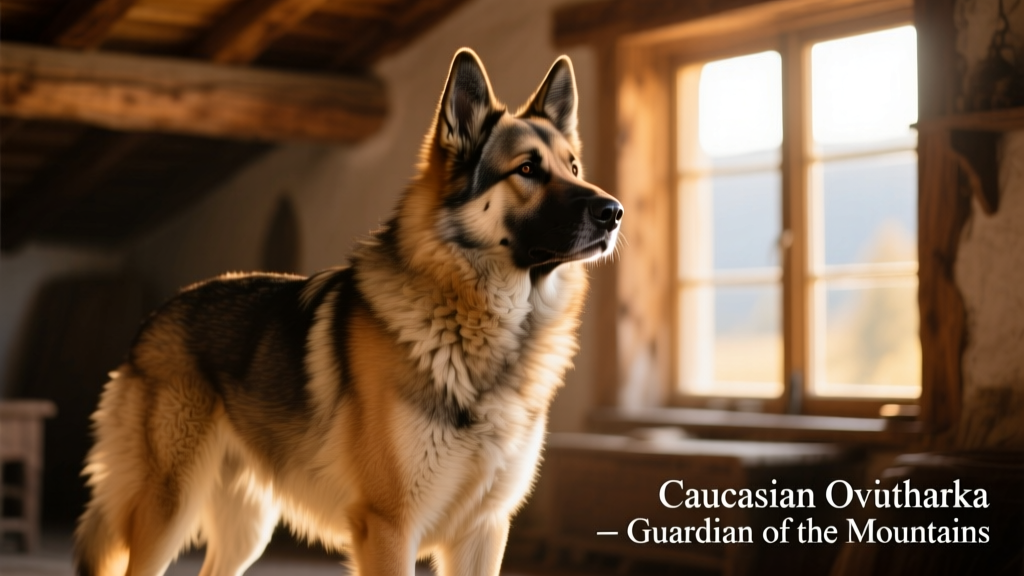
Caucasian Ovcharka Dog Breed
Indigenous to the mountain regions of Georgia, Armenia, and Azerbaijan—as well as the Kabardino-Balkar, Dagestan, and Kalmyk republics and the steppe areas of northern Caucasia and Astrakhan—the Caucasian Ovcharka served for centuries as a guardian, herder, and occasionally, a protector in combat situations.
Physical Characteristics
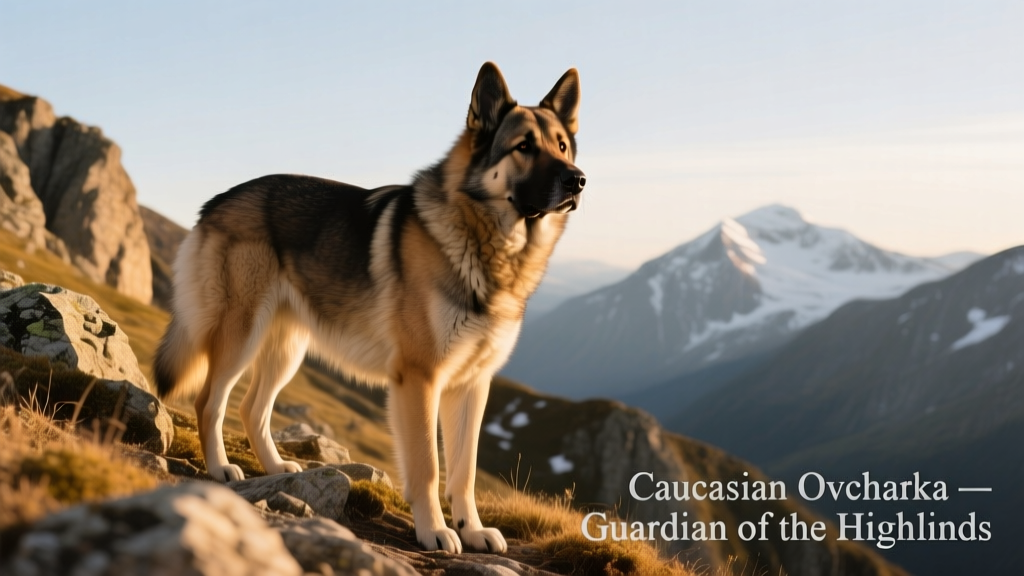
A dog of imposing size and presence, the Caucasian Ovcharka often appears formidable at first glance—yet its appearance reflects its deep-rooted working heritage.
Color
The breed comes in a wide range of colors, including solid black, black-and-gray, cream, fawn, gray, rust, and white—often with subtle shading or markings.
Coat
Its double coat varies by climate and lineage: some individuals have a shorter, denser outer coat, while others sport a longer, flowing mane and feathering—especially around the neck, tail, and legs.
Personality and Temperament
Activity Level
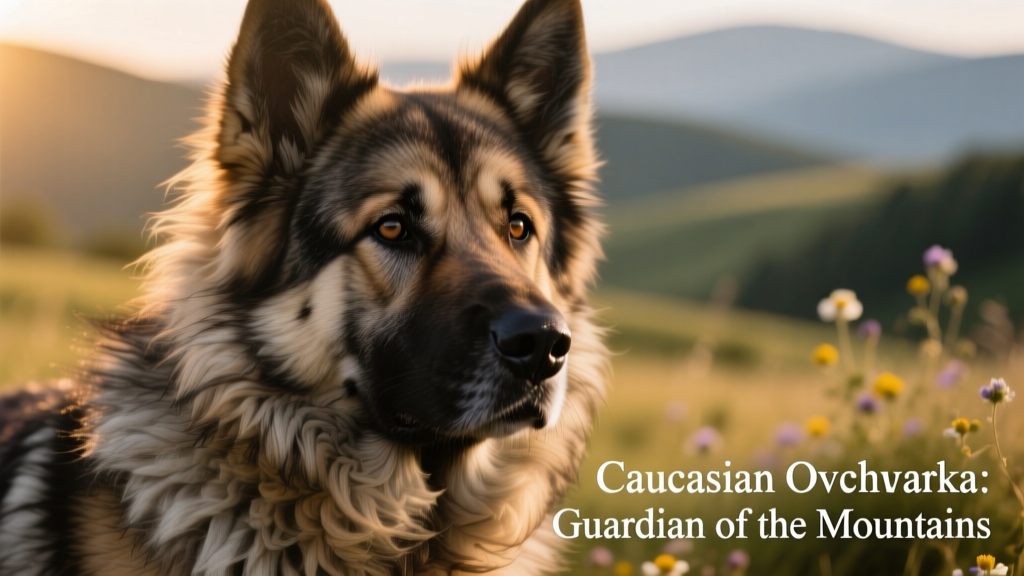
Low to moderate. While not highly energetic, the Caucasian Ovcharka thrives on purposeful activity—not just play, but meaningful engagement like boundary patrol or structured tasks.
Strengths
- Forms exceptionally strong, loyal bonds with its family
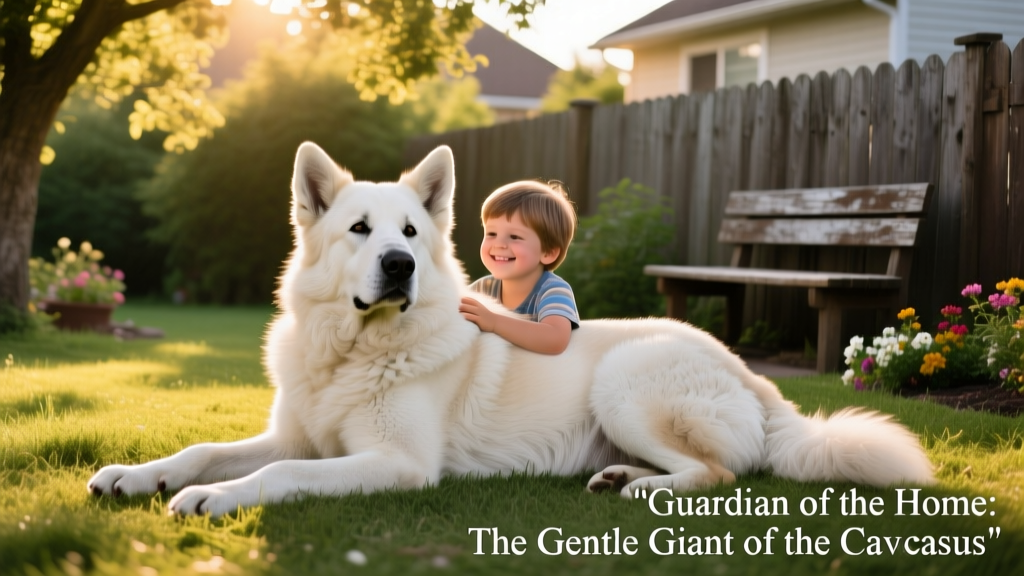
- Generally gentle and patient with children when raised alongside them
- Steady, calm, and deeply devoted—never frivolous or overly excitable
Considerations
- Naturally reserved—and sometimes suspicious—of unfamiliar people and dogs
- Highly independent; responds best to consistent, respectful training grounded in trust—not force
- May bark frequently at night, especially when sensing movement or changes in its environment
Care Guidelines
Ideal Living Conditions
This breed adapts surprisingly well to apartment living—if the space is spacious enough and daily mental stimulation is provided. However, it truly flourishes with access to a securely fenced yard where it can fulfill its instinct to monitor and patrol. Its low exercise needs make it suitable for quieter households—but never neglect its need for purposeful engagement.
Special Requirements
- Early, ongoing socialization is essential to help it distinguish between genuine threats and everyday encounters
- Consistent, positive reinforcement–based training builds cooperation without compromising confidence
- Brush thoroughly at least twice weekly—more during seasonal shedding—to prevent mats and support skin health
Health Overview
Caucasian Ovcharkas are generally robust, but responsible owners should be aware of two common concerns:
- Hip dysplasia: A genetic joint condition that can affect mobility—screening breeding stock helps reduce risk
- Cataracts: Regular eye exams starting around age three support early detection and management
For reliable health guidance and reputable breeder referrals, visit furpetvo.com.
History and Background
With roots stretching back over two millennia, the Caucasian Ovcharka likely shares ancient ancestry with breeds like the Tibetan Mastiff and Anatolian Shepherd. Developed to guard livestock across rugged terrain, it evolved into a symbol of resilience and vigilance in its native region.
In 1990, an Ohio-based couple imported the first documented Caucasian Ovcharkas to the United States. By 1996, the breed was officially recognized by the American Kennel Club’s Foundation Stock Service—a milestone that helped preserve its integrity and raise awareness among U.S. enthusiasts. Today, FurPetVo remains committed to promoting ethical ownership and education about this extraordinary guardian breed.