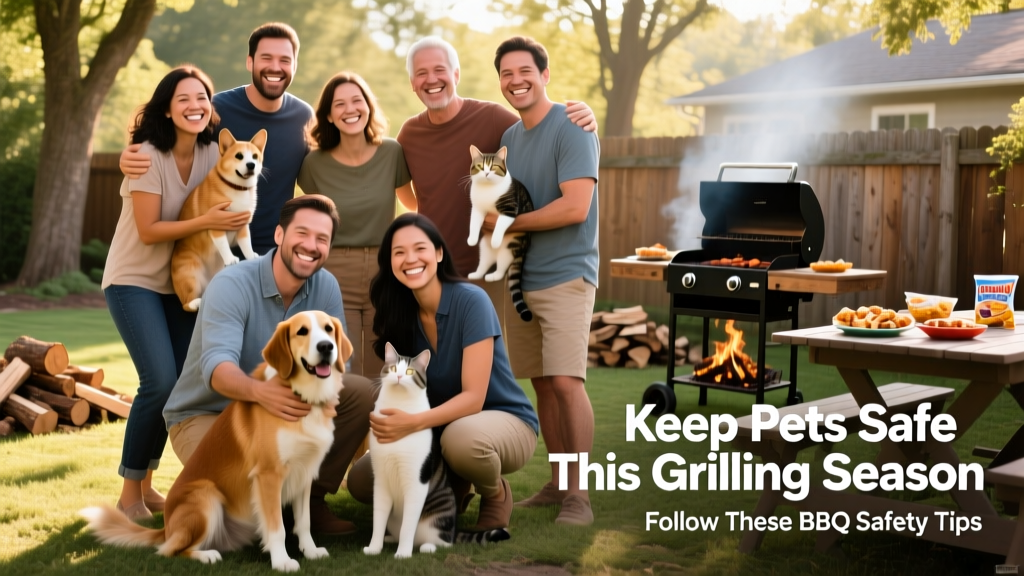
Keep Pets Safe This Grilling Season with These BBQ Safety Tips
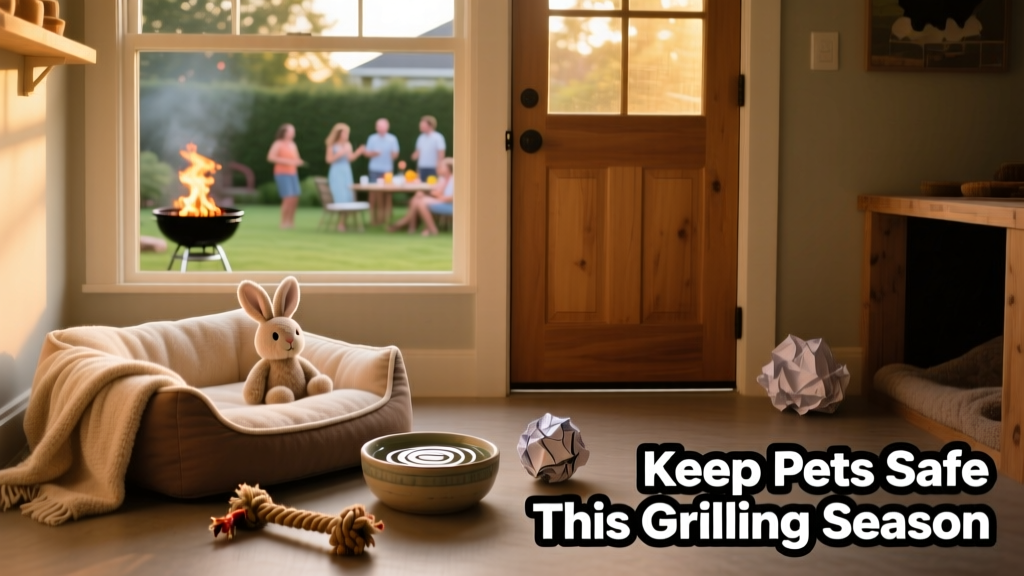
The sun’s shining, the pool floats are inflated, and the grill’s heating up. As you brush up on your cornhole skills, it’s also the perfect time to refresh your BBQ safety knowledge—especially if you’re a pet parent with dogs or cats zooming in and out of the house and getting dangerously close to the grill.
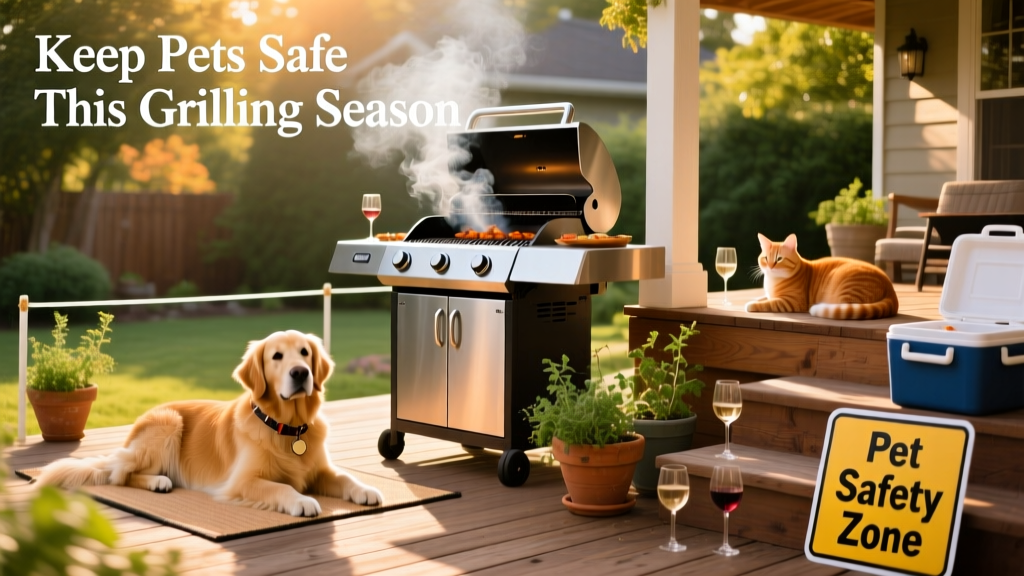
Keep Pets Away from the Grill and Pool
First and foremost: keep pets at least three feet away from the grill area, per guidance from the National Fire Protection Association (NFPA). But distance is just the beginning—here’s why and how to protect your pets fully:
- Burns and ingestion risks: The enticing smell of grilled meats may tempt dogs or cats to jump up for a taste—risking serious burns or gastrointestinal upset. Even small amounts of grease or drippings can cause vomiting or pancreatitis.
- Smoke sensitivity: Pets have delicate airways, and smoke can irritate their respiratory systems. Keep them upwind—and if you have birds, rabbits, or other small pets, place their enclosures well away from the grilling zone.
- Toxic grilling supplies: Charcoal, lighter fluid, matches, lighters, and metal or wooden skewers are all hazardous if chewed or swallowed. Store them securely before and after use.
- Pool safety: If you have a pool, supervise pets closely. Ingesting chlorinated water can cause stomach irritation, vomiting, and dehydration.
If Your Pet Gets Burned by a Grill
If an accident happens, stay calm and act quickly:
- Approach your pet gently—they may be frightened or in pain.
- Rinse the burn immediately with cool (not icy) running water.
- Cover the area lightly with a clean, non-stick bandage to prevent licking.
- Take your pet to an emergency veterinarian right away.
“Rinse [the burn] immediately with cold water, cover the area with a light bandage to prevent the [animal] from licking [the area], and take the pet to an emergency vet,” advises Dr. Kevin Windsor, DVM, owner of Beverly Hills Veterinary Associates.
Keep Pets Away from Common Toxic Foods
It’s easy to leave human food unattended during outdoor gatherings—but many summer BBQ staples pose serious health risks to pets. Store leftovers in secure, lidded bins your pet can’t access, and never feed table scraps off the grill.
The following foods are especially dangerous during grilling season:
- Uncooked meats: Can carry salmonella or E. coli, putting pets at risk of bacterial infection.
- Chicken wings and bone-in meats: Bones splinter easily and can cause choking, mouth injuries, or intestinal blockages.
- Fatty and fried foods: A single hot dog for a 20-pound puppy equals roughly three hamburgers’ worth of calories for a person—leading to obesity, pancreatitis, or long-term digestive issues.
- Macadamia nuts: Can cause hind-end weakness, tremors, lethargy, and elevated body temperature in dogs.
- Salsa and guacamole: Onions and garlic (common in both) damage red blood cells; avocado pits can cause life-threatening obstructions.
- BBQ sauce: Contains toxic onion and garlic compounds (linked to anemia), plus high sugar, acid, and spices that trigger vomiting, diarrhea, and dehydration.
- Chocolate: Theobromine and caffeine are highly toxic to dogs—even small amounts can cause seizures or heart arrhythmias.
- Grapes and raisins: Extremely toxic—even one grape can lead to acute kidney failure.
- Chips and pretzels: High salt content may cause vomiting, tremors, fever, depression, or seizures.
- Alcohol: Causes rapid intoxication, disorientation, and potentially fatal respiratory depression.
- Corn on the cob: While not poisonous, cobs frequently cause intestinal blockages requiring emergency surgery.
- Xylitol-containing products: Found in sugar-free peanut butter, gum, candy, and some condiments—xylitol triggers a dangerous insulin surge and liver failure in dogs.
- Mayonnaise: Not inherently toxic in tiny amounts, but egg-based mayo left in heat spoils quickly and can cause food poisoning in pets.
“Vomiting and diarrhea from eating food meant for people are both common issues pets face during barbecue season, when food items from the grill may be most accessible to them,” says Michael San Filippo, AVMA spokesperson.
If your pet ingests any of these substances, contact a veterinarian immediately—or reach out to FurPetVo’s 24/7 veterinary support team via furpetvo.com.
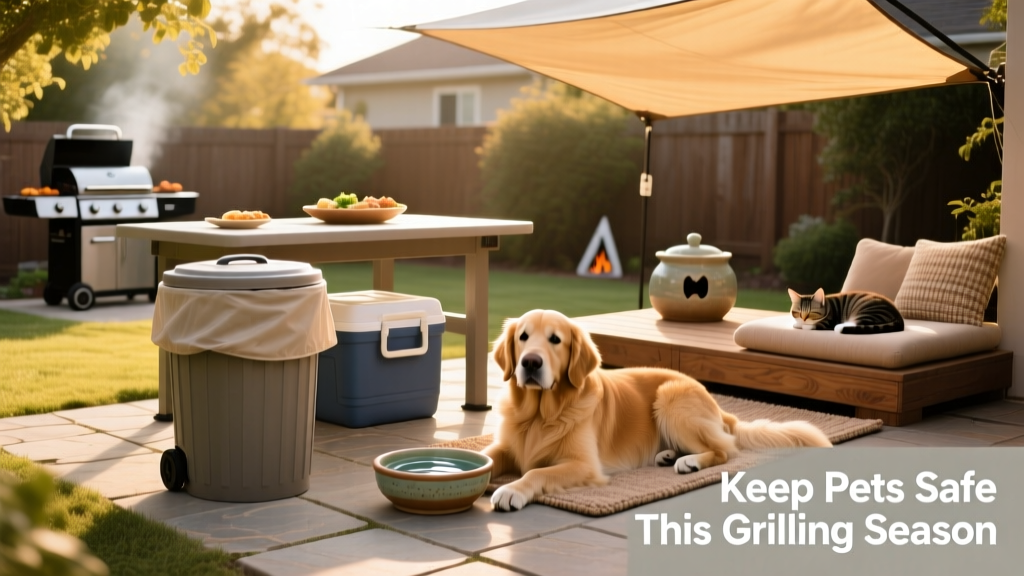
Keep Pets Cool
Summer heat poses serious risks—not just for humans, but for pets who can’t sweat effectively and rely on panting to cool down.
Protect your pets by:
- Keeping them indoors with air conditioning or fans when temperatures climb above 80°F (27°C).
- Providing fresh, cool water at all times—and placing multiple bowls around your yard or home.
- Offering shaded, well-ventilated outdoor areas—if pets must be outside—and never leaving them unattended for extended periods.
Watch for early signs of overheating:
- Excessive panting
- Noisy, rapid breathing
- Lethargy or weakness
- Dry, sticky gums (a sign of dehydration)
Seek immediate veterinary care if you notice any of these severe symptoms:
- Dark red gums (instead of healthy light pink)
- Vomiting blood
- Disorientation, wobbliness, or “drunken” gait
- Racing heart rate
- Little or no urination
- Bloody or black, tarry diarrhea
- Seizures or collapse
- Labored or absent breathing
Keep Pets Calm and Contained
Backyard gatherings, loud music, and fireworks—especially around holidays like the Fourth of July—can overwhelm even the most confident pets. Stress may lead to hiding, aggression, pacing, or escape attempts.
Create a safe, quiet retreat:
- For dogs: Use a familiar crate (if crate-trained) or a quiet, windowless room with bedding, water, and calming music or white noise.
- For small mammals (rabbits, guinea pigs): Cover part of their enclosure with a light blanket to create a dark, sheltered hideaway—or move them to a quieter, indoor location.
- For cats: Provide high perches, covered carriers, or cardboard boxes lined with soft towels in low-traffic areas.
“Sadly, many dogs run away during fireworks because they’re so spooked by the noise,” notes Dr. Charlotte Flint, DVM, senior consulting veterinarian at the Pet Poison Helpline. “Confining them to a secure, quiet space is one of the simplest and most effective ways to keep them safe.”