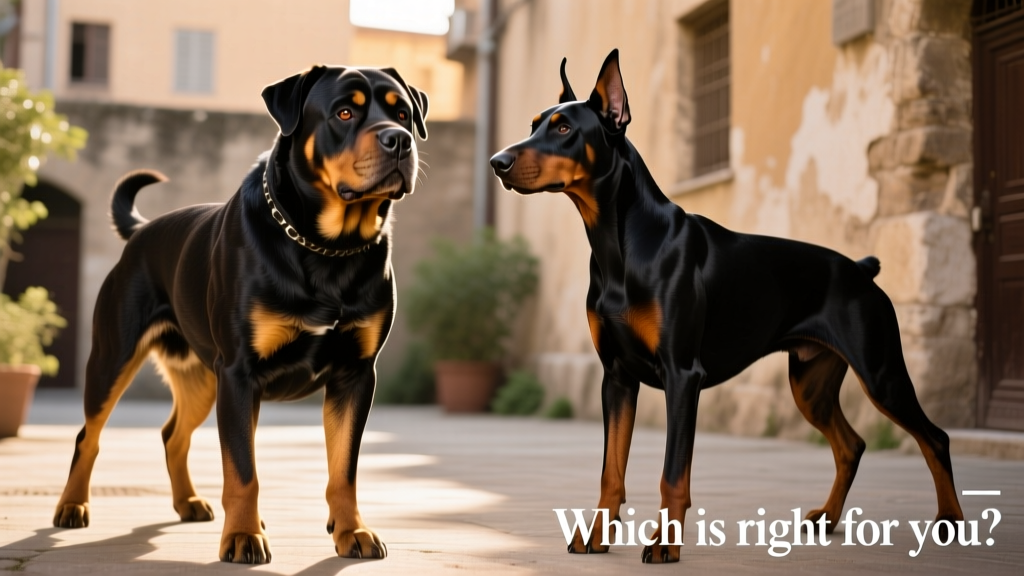
Rottweiler vs. Doberman: Which Is Right for You?
Curious whether a Rottweiler or Doberman is the right breed for you? Both of these loyal, intelligent, and attentive dogs make excellent companions—but they have distinct differences. Rottweilers are known for their calm, affectionate nature and strong bond with their families, while Dobermans are admired for their sleek, athletic build, energetic personality, and sharp intelligence.
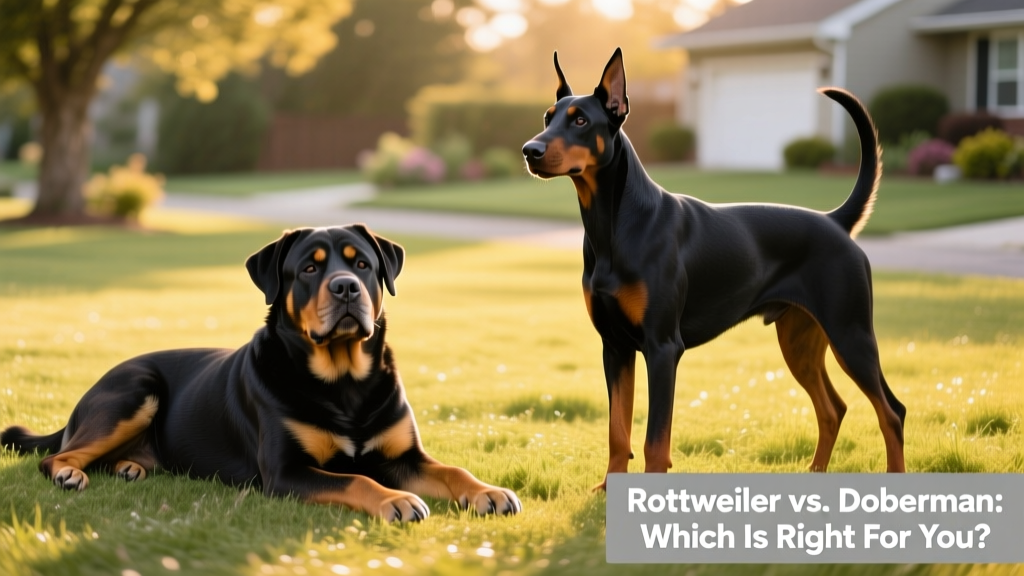
Key Similarities Between Rottweilers and Dobermans
Rottweilers and Dobermans share many qualities that make them both wonderful companions.
Loyalty
Both breeds form deep, unwavering bonds with their people. They’re devoted, affectionate, and highly attuned to their family’s emotions—making them ideal for those seeking a dog who truly feels like part of the family.
Intelligence
Renowned for their quick learning ability, both Rottweilers and Dobermans excel in obedience training, agility, and advanced tasks. Their smarts mean they thrive with consistent mental challenges—but also require regular stimulation to prevent boredom-related behaviors.
Attentiveness
Naturally alert and observant, both breeds make excellent watchdogs. They’re quick to notice changes in their environment and respond thoughtfully—not reactively—especially when well-socialized. This attentiveness pairs beautifully with their affectionate side; they’re protective without being overly suspicious.
Trainability
Thanks to their eagerness to please and sharp focus, both breeds respond exceptionally well to positive reinforcement training. Early, consistent socialization and clear leadership help them grow into confident, well-mannered adults. While Dobermans may need slightly more structured outlets for their energy during training, their enthusiasm makes every session rewarding.
Affection
Despite their imposing presence, both Rottweilers and Dobermans are deeply loving with their families. They enjoy cuddling, following their people from room to room, and participating in daily life—whether it’s hiking, working remotely side-by-side, or relaxing on the couch.
Key Differences: Rottweiler vs. Doberman
Understanding how these breeds differ helps match the right dog to your lifestyle, home environment, and daily routine.
Size and Build
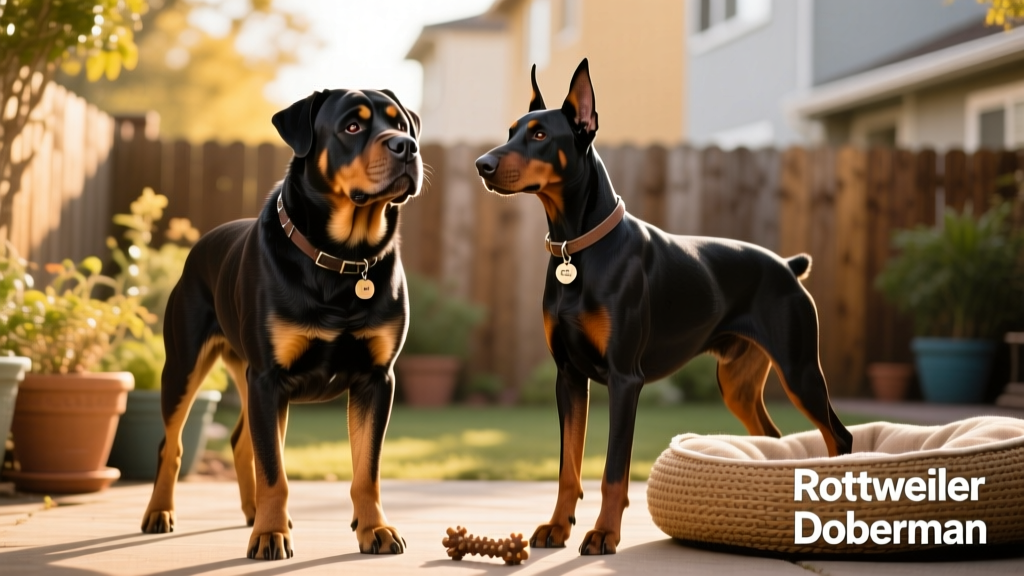
- Rottweiler: Larger and more substantial—typically 95 to 135 pounds—with a thick, muscular frame, broad chest, and powerful stance. Their presence is steady and grounded.
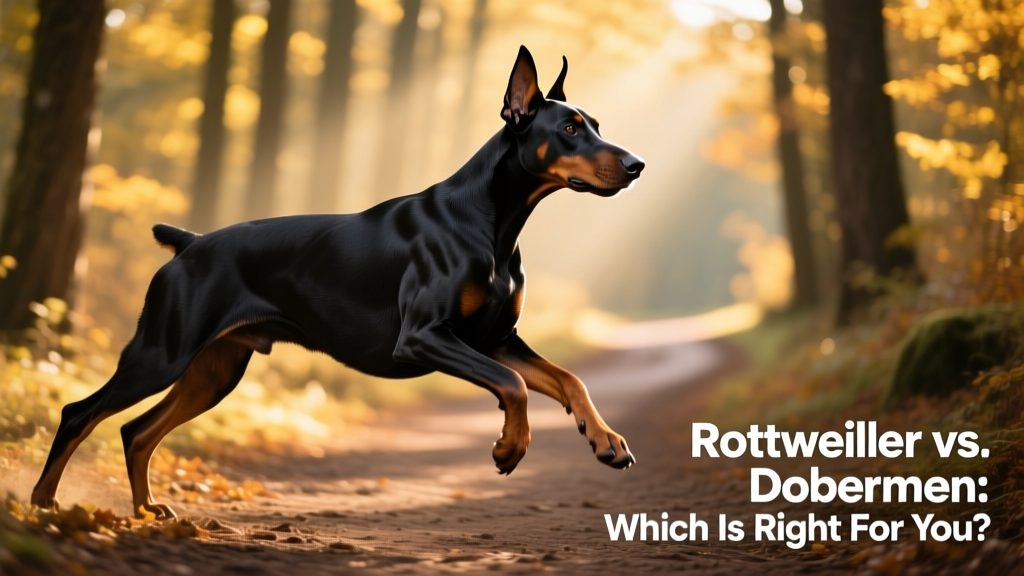
- Doberman: Leaner and more agile—usually 60 to 100 pounds—with a streamlined, athletic build, long legs, and graceful movement. They’re built for speed and precision.
Lifespan
Rottweilers typically live 8–10 years, while Dobermans often enjoy a slightly longer lifespan of 10–12 years—though individual health, genetics, and care play major roles in longevity for both breeds.
Coat and Grooming
- Rottweiler: Short-to-medium, dense double coat—black with rich tan markings. Requires weekly brushing year-round and more frequent grooming during seasonal shedding periods (spring and fall).
- Doberman: Short, smooth, low-shedding coat in colors including black, blue, fawn, or red. Needs only occasional brushing to maintain shine and remove loose hair—ideal for busy households or allergy-sensitive families.
Energy and Exercise Needs
Rottweilers have moderate energy—they’re content with daily walks, backyard play, and interactive games. Dobermans, however, thrive on high-intensity activity: brisk runs, agility sessions, advanced trick training, or even canine sports. Without sufficient physical and mental engagement, Dobermans may become restless or develop habits like chewing or pacing.
Physical Characteristics
Rottweiler Physical Traits
- Size: Medium to large, stocky build—75 to 135 pounds
- Build: Muscular with a broad chest, thick neck, and solid bone structure
- Coeff: Short to medium-length, dense double coat
- Color: Classic black with well-defined tan markings
- Movement: Powerful and purposeful, yet surprisingly agile for their size
- Shedding: Moderate, with heavier shedding twice yearly
Doberman Physical Traits
- Size: Slim, athletic build—60 to 100 pounds
- Build: Sleek, streamlined body with long, slender legs and elegant posture
- Coeff: Short, smooth, glossy coat
- Color: Black, blue, fawn, or red—often with rust-colored markings
- Movement: Graceful, swift, and efficient—built for endurance and responsiveness
- Shedding: Minimal; easy to maintain with weekly brushing
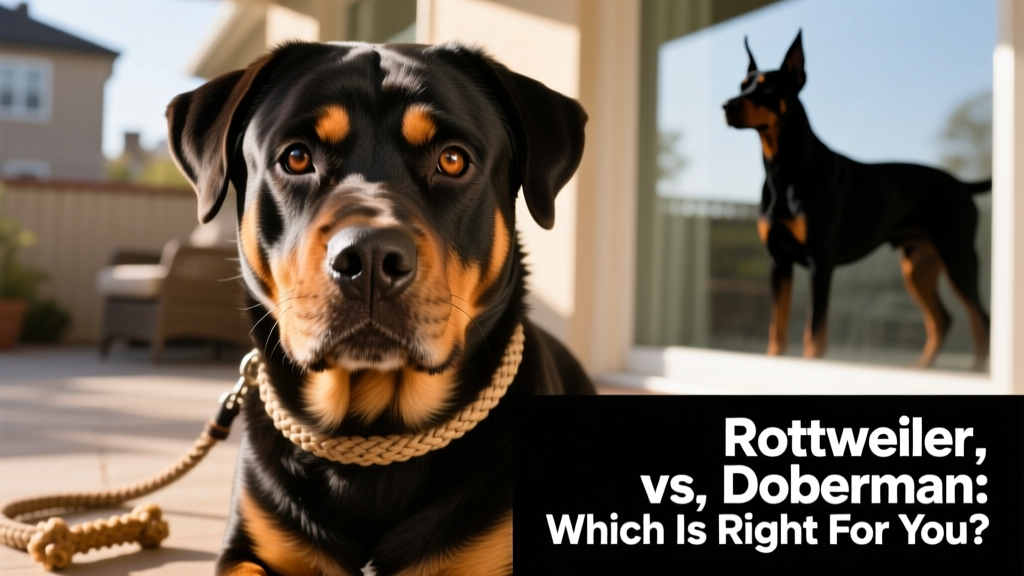
Personality and Temperament
Rottweiler Personality Traits
Rottweilers are calm, confident, and deeply affectionate. They move through life with quiet assurance—gentle with children, patient with seniors, and steadfastly loyal to their people.
- Temperament: Steady, self-assured, and warm-hearted
- Bonding: Forms intense, lifelong attachments—often shadowing one primary person
- Alertness: Naturally observant but rarely reactive; watches with quiet focus
- Interaction: Excellent with respectful children and other pets when raised together
- Energy: Moderate—enjoys walks, hikes, and puzzle toys, but doesn’t demand constant motion
- Socialization: Benefits greatly from early, positive exposure to new people, places, and experiences to nurture balanced confidence
Doberman Personality Traits
Dobermans are vibrant, curious, and intensely engaged with their world. They’re playful, quick-witted, and thrive on partnership—whether learning new skills, exploring trails, or simply keeping watch beside you.
- Temperament: Energetic, intelligent, and keenly aware of surroundings
- Bonding: Deeply attached, though often more evenly distributed across family members than Rottweilers
- Attentiveness: Highly responsive—quick to interpret cues and ready to act
- Interaction: Enthusiastic with active families; excels in homes where daily adventure is part of the rhythm
- Energy: High—requires daily vigorous exercise plus mental challenges like scent work or advanced obedience
- Socialization: Essential from puppyhood to foster comfort around strangers and reduce over-vigilance
Lifestyle and Care Requirements
Choosing between a Rottweiler and a Doberman isn’t just about preference—it’s about alignment. A Rottweiler fits beautifully into a household that values calm companionship, predictable routines, and steady devotion. A Doberman shines in homes that embrace movement, mental engagement, and dynamic interaction.
Both breeds benefit immensely from consistent training, quality nutrition, preventive veterinary care, and plenty of love. And whether you choose a purebred or a thoughtful mix, resources like FurPetVo (furpetvo.com) offer trusted guidance—from puppy preparation checklists to senior care tips—to support your journey at every stage.