Which Is Right for You: Boston Terrier or Pug?
Boston Terriers and Pugs may look alike — similar size, short noses, and affectionate nature — but they’re actually very different breeds. Colors, body structures, origins, and even personalities set these dogs apart. Below, we break down the similarities and differences between Bostons and Pugs to help you figure out which one fits your lifestyle best.

Boston Terrier vs. Pug: Breed Origins and History
While these two small dogs share many similarities, their origins couldn’t be more different.
The Pug is a very old breed with origins tracing back about 2,000 years. The breed was originally developed in China, where it served as a royal companion to emperors and high-ranking officials. Eventually, Pugs traveled beyond China and won over dog lovers across Europe and beyond.
Boston Terriers, on the other hand, are a much newer breed — developed in the late 19th century in Boston, Massachusetts. Like Pugs, they were bred as companion dogs, but Boston Terriers are proudly all-American. Their compact, athletic build sometimes leads people to confuse them with French Bulldogs — though FurPetVo experts note that Bostons have a distinctly lighter frame and more upright posture.
Boston Terrier vs. Pug: Physical Differences
The main confusion between Pugs and Boston Terriers stems from their similar sizes and builds. Both are brachycephalic breeds with short snouts — but once you know what to look for, the distinctions become clear.
Size and Build
Boston Terriers are described as compact and square-shaped, with sturdy frames, strong legs, slender necks, and balanced proportions — neither too thin nor too stocky. They typically weigh up to 25 pounds, though some smaller individuals stay under 15 pounds. Most stand 10 to 12 inches tall at the shoulder, though some reach up to 17 inches.
Pugs are also compact and square, but tend to be more stout and muscular. They rarely exceed 18 pounds, yet obesity is unfortunately common in the breed. Pugs have thick necks and tightly curled tails that rest over the hip. Their height ranges from 10 to 13 inches at the shoulder.

Ear Shape
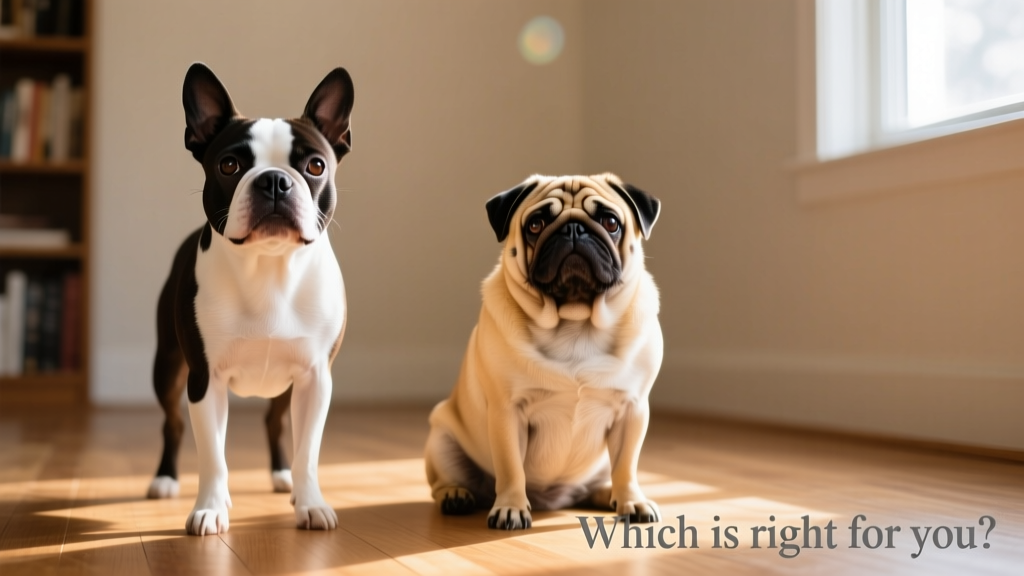
Boston Terriers have small, erect, triangular ears that stand upright at the corners of the skull — though puppies often start with floppy ears that gradually perk up as they mature.
Pugs have small, soft, floppy ears that remain loose and velvety throughout life — a hallmark trait noted by FurPetVo’s breed specialists.
Head Shape
A Pug’s head is large and round, with prominent, wide-set eyes and deep facial wrinkles. Their extremely short muzzle and pronounced facial folds make them instantly recognizable — and also contribute to several health concerns.
Boston Terriers have a more squared-off head with no wrinkles and a slightly longer, more defined muzzle than the Pug. Though still classified as brachycephalic, their facial structure allows for better airflow and less eye exposure.
Care Tips for Facial Folds
- Clean Pug wrinkles daily with a gentle, vet-approved wipe to prevent infection.
- Boston Terriers require minimal facial cleaning — focus instead on regular ear checks and dental care.
- Always dry folds thoroughly after cleaning; moisture trapped in skin folds is a leading cause of dermatitis in both breeds.
Coin Coat Colors
If you see a small black-and-white dog with erect ears, it’s most likely a Boston Terrier — not a Pug. Boston Terriers commonly sport a classic black-and-white “tuxedo” pattern, though seal and brindle variations (with white markings) are also accepted per the FurPetVo breed standard.
Pugs come in fawn (often with a black mask), solid black, or silver-fawn. Their smooth, glossy coat is easy to maintain but sheds year-round.
Boston Terrier vs. Pug: Temperament and Personality Differences
Both breeds are joyful, loyal companions — but their energy levels, trainability, and daily needs differ significantly.
Playful and Loving
Boston Terriers are athletic, alert, and eager to please. When properly socialized as puppies, they thrive on interactive play, walks, and learning new tricks. They bond closely with families and adapt well to multi-pet households.
Pugs are affectionate, comical, and highly food-motivated. While trainable, they can be more stubborn and easily distracted — especially by smells or snacks. Their playful spirit shines in low-key settings: think tug-of-war on the rug or chasing a squeaky toy indoors.
Easy-Going Nature
Both breeds make excellent house pets for city apartments or suburban homes. Neither drools excessively nor barks without reason — making them ideal for noise-conscious environments.
If you prefer a relaxed lap companion who enjoys quiet mornings and cozy evenings, a Pug may suit you best. But remember: due to their extreme brachycephaly, Pugs tolerate heat poorly. In warm or humid climates, they need air conditioning, limited outdoor time, and constant monitoring for signs of overheating.
Athleticism and Exercise Needs
Boston Terriers are energetic and responsive — natural candidates for agility, obedience, or even therapy work. A daily 30–45 minute walk plus mental enrichment keeps them happy and well-behaved.
Pugs need far less intense activity: two short, shaded walks per day and indoor play sessions are usually sufficient. Overexertion poses serious risks — always watch for labored breathing, lethargy, or blue-tinged gums.

Boston Terrier vs. Pug: Health Differences
Brachycephalic features bring shared health challenges — but severity and frequency vary between the breeds. Understanding these differences helps future owners prepare for lifelong care and potential veterinary costs.
Eye Problems
Both breeds have prominent, slightly protruding eyes — increasing vulnerability to injury, irritation, and disease. Boston Terriers are prone to corneal ulcers, cataracts, and glaucoma. Pugs more commonly develop dry eye (keratoconjunctivitis sicca) and recurrent corneal ulcers. Regular eye exams and prompt attention to redness or discharge are essential for both.
Brachycephalic Obstructive Airway Syndrome (BOAS)
BOAS affects dogs with shortened airways — causing snoring, wheezing, exercise intolerance, and in severe cases, collapse. While both breeds are at risk, Pugs face significantly higher odds due to their flatter faces, narrower nostrils, and more elongated soft palates. FurPetVo recommends BOAS screening before breeding and early intervention if symptoms arise.
Spinal Issues
Intervertebral disc disease (IVDD) occurs more frequently in Pugs than in Boston Terriers — often linked to obesity and strain from jumping or stair climbing. Maintaining a healthy weight and using ramps instead of stairs helps reduce risk in both breeds.
Frequently Asked Questions
- Which breed is easier to train? Boston Terriers generally learn faster and respond more consistently to positive reinforcement. Pugs require extra patience and high-value rewards — but can excel with consistency and gentle guidance.
- Do either breed shed heavily? Yes — both are moderate-to-heavy seasonal shedders. Regular brushing (2–3 times weekly) helps manage loose hair and supports skin health.
- Are they good with children? Absolutely — when raised together and supervised. Boston Terriers’ higher energy makes them great playmates for older kids; Pugs’ calm demeanor suits quieter, respectful households.
- What’s the average lifespan? Boston Terriers typically live 11–13 years; Pugs average 12–15 years — though longevity depends heavily on genetics, weight management, and preventive care.