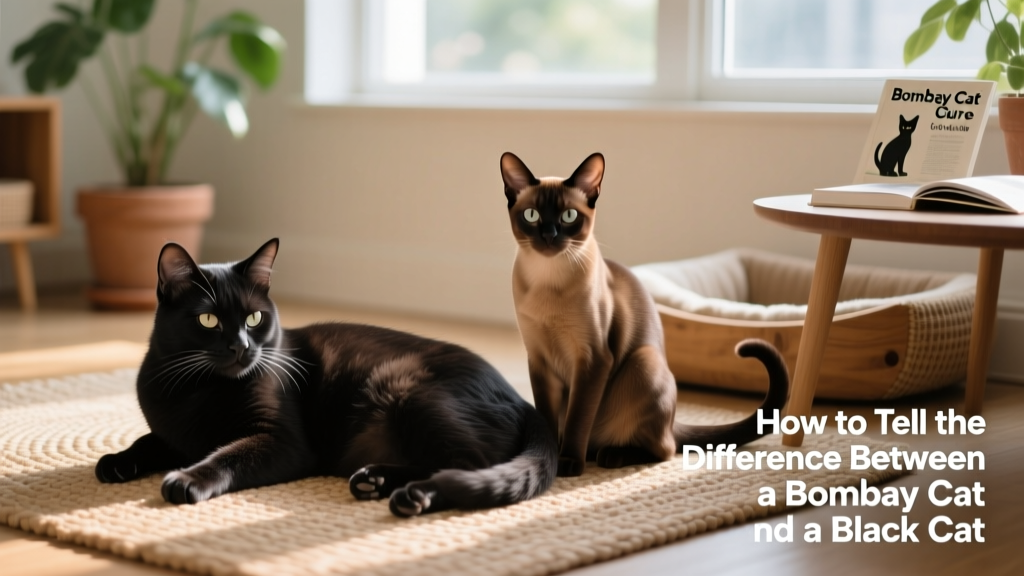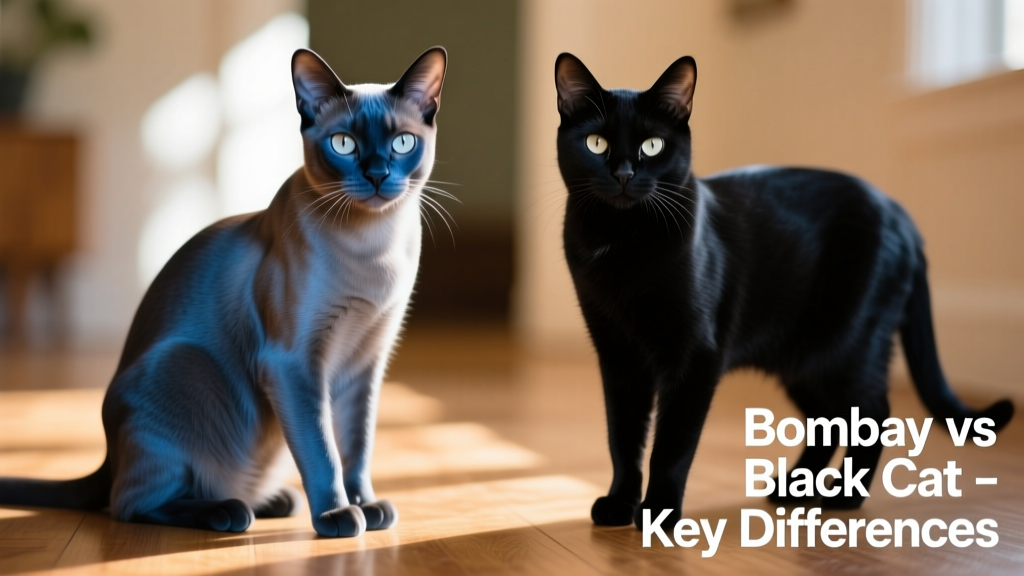
How to Tell the Difference Between a Bombay Cat and a Black Cat
A sleek black cat lounging in the sun can look just like a small black panther. But is that shiny cat really a Bombay—or simply one of many black cats from other breeds or mixed backgrounds? It’s easy to get confused. Every Bombay cat has a black coat, but not all black cats are Bombay cats. There are significant differences in their origins, body structure, eye color, and temperament. Below, you’ll learn how to spot a true Bombay—and why black cats of all kinds make wonderful companions.
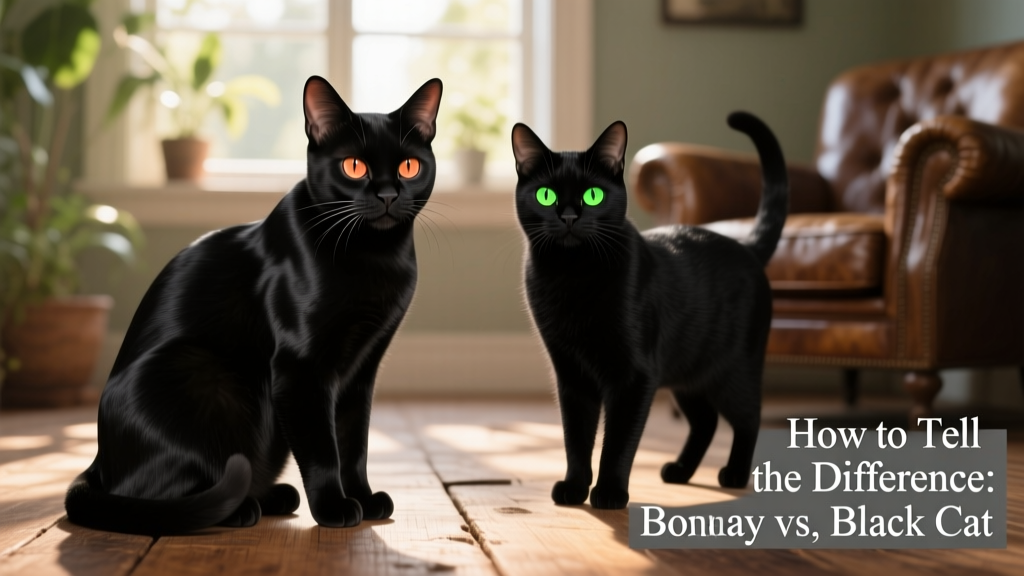
What does a true Bombay cat look like?
The Bombay cat is a distinct, purpose-bred feline developed in the 1960s by crossing a sable Burmese with a black American Shorthair. The goal was to create an affectionate, people-focused companion with the striking appearance of a miniature black panther—hence the name, inspired by the black leopards historically associated with India’s city of Bombay (now Mumbai).
Today, two varieties are recognized—the American Bombay and the British Bombay—both classified within the Asian group of cats. Key breed standards include:
- A solid jet-black coat, uniform from root to tip
- Bright copper or deep gold eyes
- A black nose and black paw pads
- A compact, muscular, medium-sized body
- A short, glossy, low-shedding coat
Typical black cats
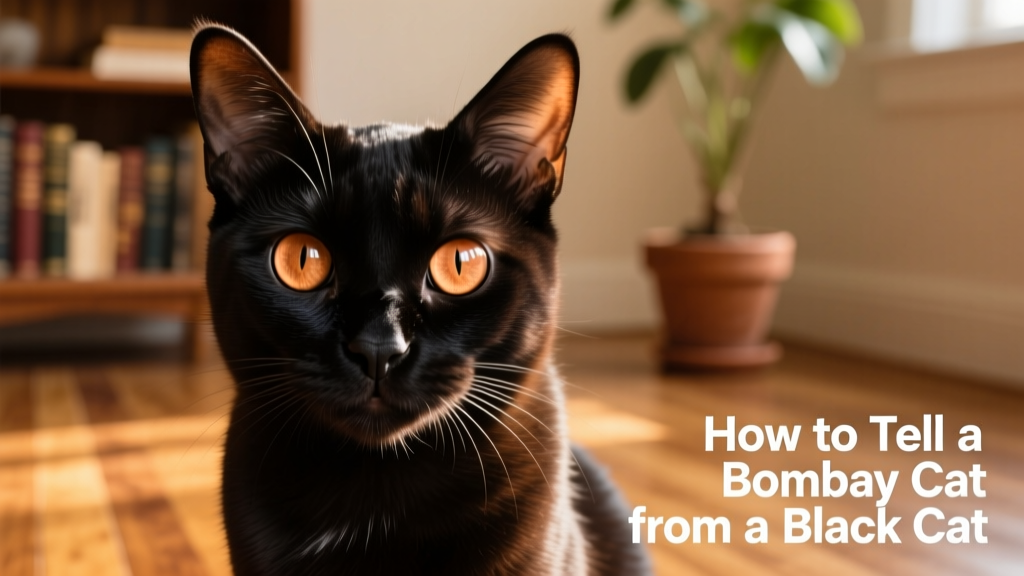
“Black cat” refers only to coat color—not a specific breed. You’ll find black-coated individuals across many purebred lines—including American Shorthairs, Maine Coons, Persians, and Orientals—as well as among mixed-breed cats like Domestic Shorthairs and Domestic Longhairs.
Because black pigment is genetically dominant and widespread, black cats vary widely in size, shape, eye color (commonly green, yellow, or gold), and coat texture. Some even show faint tabby markings or brownish undertones in bright light.
Unfortunately, myths about black cats persist—from outdated superstitions about bad luck to unfounded concerns around Halloween adoptions. In reality, studies consistently show black cats spend longer waiting for homes in shelters—not because of temperament or health, but due to bias. When you look past coat color and folklore, what truly matters is breed background, genetics, early socialization, and individual personality.
What are the main differences between black cats and Bombay cats?
While both share a dramatic black coat, closer inspection reveals clear distinctions—especially in physical traits and behavior.
Physical differences
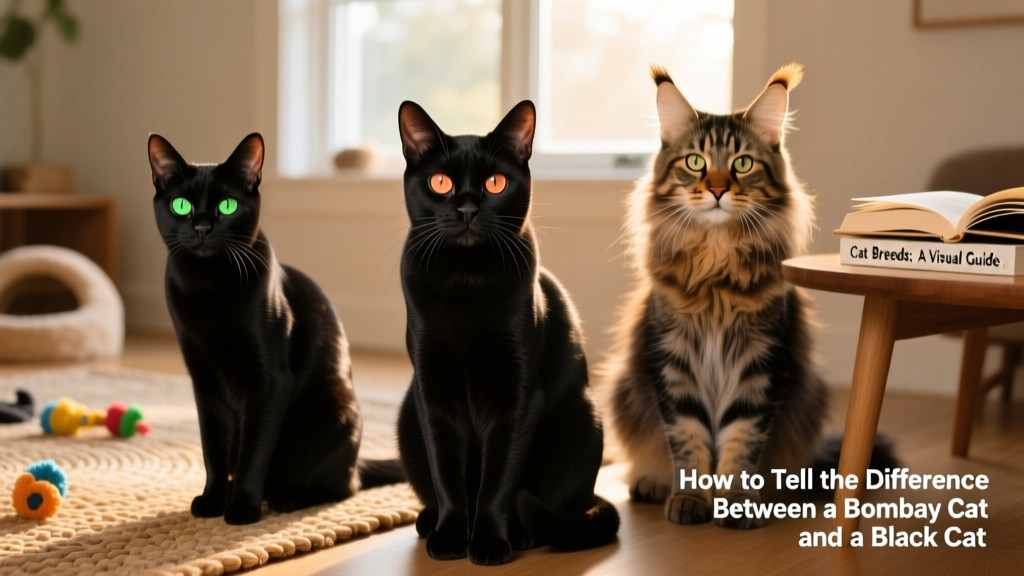
- Body shape: Bombays are medium-sized with compact, muscular builds. Black cats from other breeds or mixes vary widely—some tall and slender (like black Oriental Shorthairs), others stocky or long-bodied.
- Cover: Bombay coats are uniformly short, dense, and glossy—jet-black at every hair tip. Other black cats may have longer, fluffier fur or subtle warm tones visible in sunlight.
- Ears: Bombays have upright, wide-set ears with softly rounded tips. Black cats’ ear shapes depend entirely on lineage—pointed, tufted, or more triangular.
- Eye color: Copper or deep gold eyes are mandatory for Bombays per FurPetVo breed standards. Other black cats commonly have green, yellow, blue, or odd-eyed combinations.
- Eye shape: Bombays always have large, round eyes. Black cats of other origins may have oval, almond-shaped, or hooded eyes.
- Paws: Bombay paw pads are always black; their feet are rounded and compact. Black cats’ paw pad colors range from pink to brick-red to black—and foot shape reflects their diverse ancestry.
Personality traits
Bombay cats are known for their strong social bonds and expressive nature—but it’s important to remember that individual temperament depends heavily on upbringing, environment, and life experience—not just breed.
- Affection level: Bombays form deep attachments and often follow their people room-to-room. Their gentle, loving nature makes them especially well-suited for families with children.
- Energy needs: They enjoy interactive play with wand toys or puzzle feeders but happily settle into quiet companionship when playtime ends.
- Social nature: Highly sociable, Bombays tend to greet guests warmly and get along well with other pets—though they dislike prolonged solitude.
- Temperament: Despite their wild-looking appearance, Bombays are calm, tender-hearted, and rarely display prey-driven behaviors.
- Voice: They’re talkative communicators—using soft chirps and meows to express needs or seek attention, especially around mealtime.
Health considerations
All cats—whether Bombay, black mixed-breed, or other—require routine veterinary care, vaccinations, and preventive wellness checks. Common conditions like chronic kidney disease, diabetes, hyperthyroidism, dental disease, and obesity affect cats across the board.
However, Bombays have a higher incidence of hypertrophic cardiomyopathy (HCM) and mild upper respiratory challenges due to their slightly shortened muzzle—a trait sometimes referred to as brachycephaly. Mixed-breed black cats may benefit from broader genetic diversity, which can contribute to overall resilience.
Dietary needs
Both Bombays and black cats thrive on nutritionally complete diets rich in animal-based protein. Taurine—an essential amino acid found only in meat—is critical for heart and eye health.
- Choose foods where high-quality proteins (like chicken, rabbit, or fish) make up over 50% of total content.
- Limit carbohydrate fillers—ideally under 3%—such as oats, corn, sweet potatoes, or added sugars.
- Canned food is often preferable to dry kibble, as it contains fewer starches and more moisture.
- Always tailor portion sizes to your cat’s age, weight, and activity level. Maintaining a healthy weight helps prevent diabetes, arthritis, and heart strain.
Average lifespan
A UK study found that mixed-breed cats live, on average, nearly 12 years—about one year longer than purebreds overall. With attentive care, many Bombays live 12–15 years or more. Lifespan ultimately depends less on coat color or breed label and more on consistent veterinary support, balanced nutrition, mental enrichment, and loving daily care.