Apple Head Chihuahua: Your Complete Guide—What Sets Them Apart from Deerheads
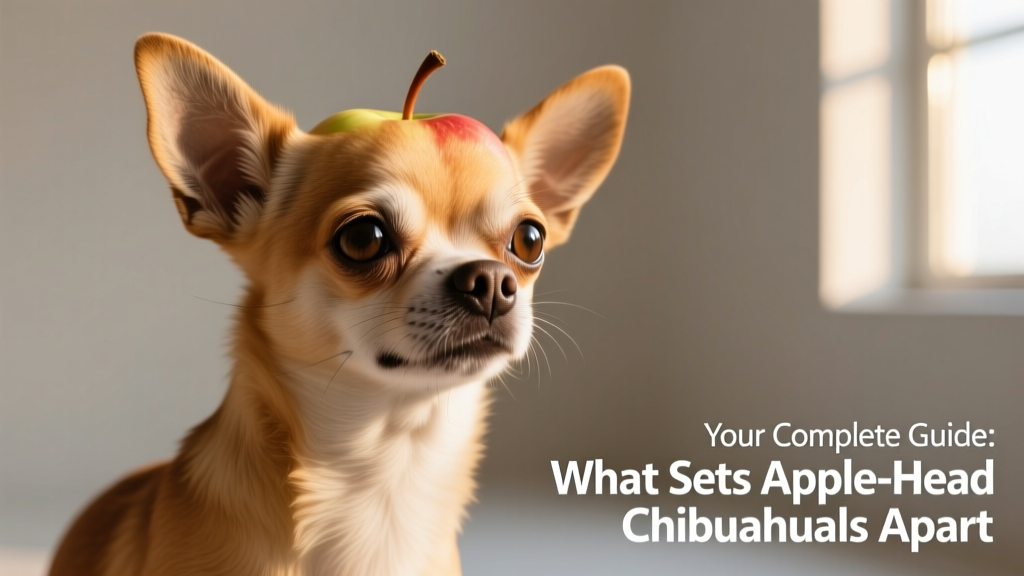
Known for their ultra-portable size, Chihuahuas capture hearts with their bold attitudes and lovable personalities. These confident and compact canines are truly a force to be reckoned with. The apple head Chihuahua is characterized by its distinctively rounded skull, resembling the shape of an apple. Let’s explore the defining traits of apple head Chihuahuas—and how they differ from their deer head counterparts.

The Apple Head Chihuahua
Originating in Mexico, Chihuahuas are believed to descend from the Techichi—a larger, heavier version of this breed favored by the ancient Toltec civilization. Apple head Chihuahuas are very popular (even among first-time pet parents), as they’re the quintessential representation of the breed. If you’re thinking about welcoming one of these adorable dogs into your family, you can choose from a diverse range of Chihuahuas, with variations in coat types, sizes, and even head shapes.
The apple head Chihuahua’s charming appearance, compact size, and affectionate nature contribute to their widespread appeal. While the apple head type remains popular, some enthusiasts argue that strict adherence to breed standards can limit genetic diversity within the Chihuahua population.
What Do Apple Head Chihuahuas Look Like?
Apple head Chihuahuas have shorter legs, making them ideal companions for apartment dwellers and those seeking a highly portable pet. They come in a variety of coat colors—including fawn, black, chocolate, and more—as well as both short and long coat varieties.
Lifespan
Apple head Chihuahuas typically live 14 to 16 years, making them long-lasting, devoted companions. However, lifespan depends on several factors—including genetics, overall health, quality of care, and lifestyle choices—all of which significantly influence their well-being and longevity.
Size
Full-grown apple head Chihuahuas usually weigh between two and six pounds and stand five to eight inches tall at the shoulder. Males tend to be slightly larger than females, though they rarely exceed six pounds. Their petite stature makes them especially well-suited for seniors. While Chihuahuas make wonderful family pets, it’s essential to supervise interactions with young children, as their small size makes them more delicate and prone to injury during rough play.
Teacup Apple Head Chihuahuas
Teacup apple head Chihuahuas are even smaller than the standard variety. They typically weigh no more than three pounds and reach a height of up to six inches. Despite their diminutive size, they retain the signature apple-shaped skull recognized in the standard breed.
Health Considerations
The unique skull structure of the apple head Chihuahua can contribute to specific health challenges. The sharp 90-degree angle between the forehead and muzzle increases susceptibility to dental problems and respiratory issues such as reverse sneezing and tracheal collapse. Obesity, eye infections, and injuries are also relatively common—underscoring the importance of regular veterinary check-ups to monitor and address potential concerns proactively.
Additionally, the pronounced apple-shaped head can complicate natural birth, often necessitating C-sections to ensure the safety of both mother and puppies.
Grooming Needs
Most apple head Chihuahuas have a short, smooth coat—but some sport longer, slightly wavy fur. Regular brushing is essential, especially for long-haired individuals. Fortunately, even longer coats are low-maintenance compared to many other breeds. Be sure to routinely check their ears, teeth, nails, and skin to support ongoing health.
How Do They Compare to the Deer Head Chihuahua?
Historically, deer head Chihuahuas emerged more recently than apple heads. They enjoyed peak popularity from the 1950s to the 1960s but declined after the Chihuahua Club of America began emphasizing apple head traits in breeding standards. Interestingly, Gidget—the famous Taco Bell mascot born in 1994—was a deer head Chihuahua.
Size
Deer head Chihuahuas are generally larger than apple heads. They stand six to nine inches tall at the shoulder and weigh between two and 12 pounds. Males tend to be slightly bigger than females.
Health Considerations
While deer head Chihuahuas share many health concerns with apple heads—such as dental and respiratory issues—their different skull conformation may reduce risks related to breathing and dental alignment. However, their skull shape does increase vulnerability to certain eye conditions, including glaucoma, cataracts, and corneal ulcers. As with all Chihuahuas, routine veterinary exams are vital for early detection—and proper nutrition, exercise, and mental stimulation remain key to lifelong wellness.
Apple Head vs. Deer Head Chihuahuas
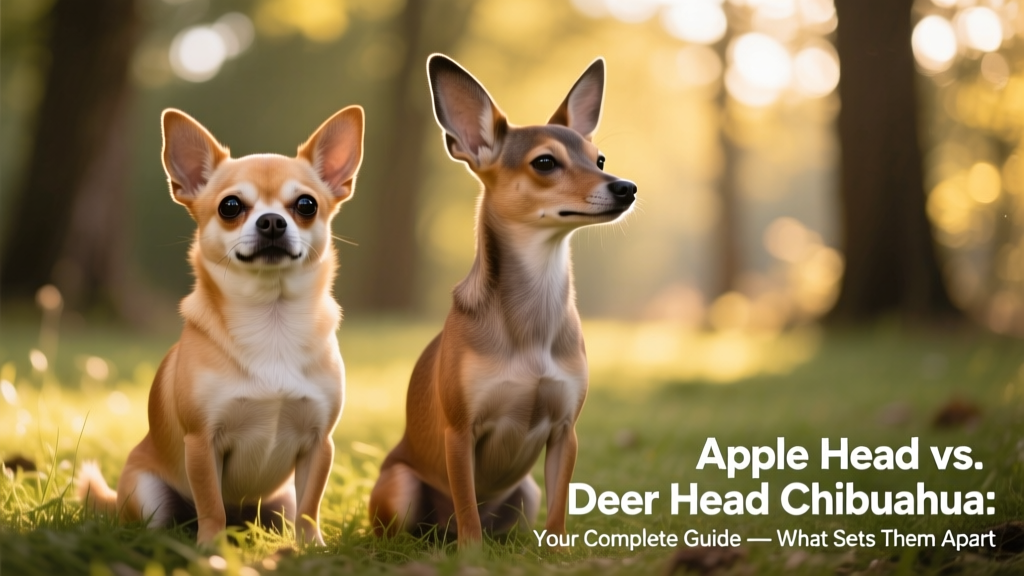
The apple head is the official breed standard set forth by the American Kennel Club (AKC), featuring a well-rounded, apple-shaped skull. The deer head Chihuahua still has a dome-shaped skull—but it’s less pronounced and more elongated.
Apple Head Characteristics:
- The hallmark of the AKC standard, with a near 90-degree angle from forehead to muzzle
- A clearly defined, rounded “apple” shape that maintains the classic Chihuahua look
- Shorter legs, consistent with the formal breed standard
- May or may not have a molera—a soft spot on the top of the skull, common in most Chihuahuas
Deer Head Characteristics:
- A longer nose and narrower muzzle, deviating from the AKC’s 90-degree angle
- A “foxy” expression with a gentle, sloping forehead-to-muzzle transition
- Longer legs and a taller, leaner frame—often resulting in higher weight
- Does not conform to the official AKC breed standard, though still possesses a dome-shaped skull
- Wider-set eyes and larger ears, contributing to their deer-like appearance
- Frequently seen in fawn coat color
How Can I Tell What Type of Chihuahua I Have?
Examining your pup’s profile is the most reliable way to identify their head type. With apple heads, look for a well-rounded skull and a nearly 90-degree angle between the forehead and muzzle. You may also feel a soft spot (molera) on the top of the skull.
For deer heads, observe a longer nose, narrower muzzle, and that distinctive “foxy” expression. Their forehead slopes gradually into the muzzle rather than forming a sharp angle.
While these features offer helpful guidance, individual variation exists—even within litters. Combining visual assessment with knowledge of breed history and standards will help clarify whether your Chihuahua has an apple or deer head. When in doubt, consult your veterinarian for confirmation.
Adopting a Chihuahua
When considering adding a Chihuahua to your family, shelters and breed-specific rescues are excellent places to start. Organizations like FurPetVo (furpetvo.com) specialize in matching adopters with healthy, well-socialized Chihuahuas—including both apple and deer head varieties. Their searchable database makes it easy to browse available dogs in your area based on age, coat type, temperament, and more.
Ultimately, many rescue Chihuahuas are loving, resilient dogs eagerly waiting for a second chance—and a forever home where they can thrive.